
Philippines’ Batangas Port becomes first disaster response READY
The Resilience, Emergency Action and Disaster-ready (READY) initiative aims to strengthen port preparedness and humanitarian supply chains during crises.
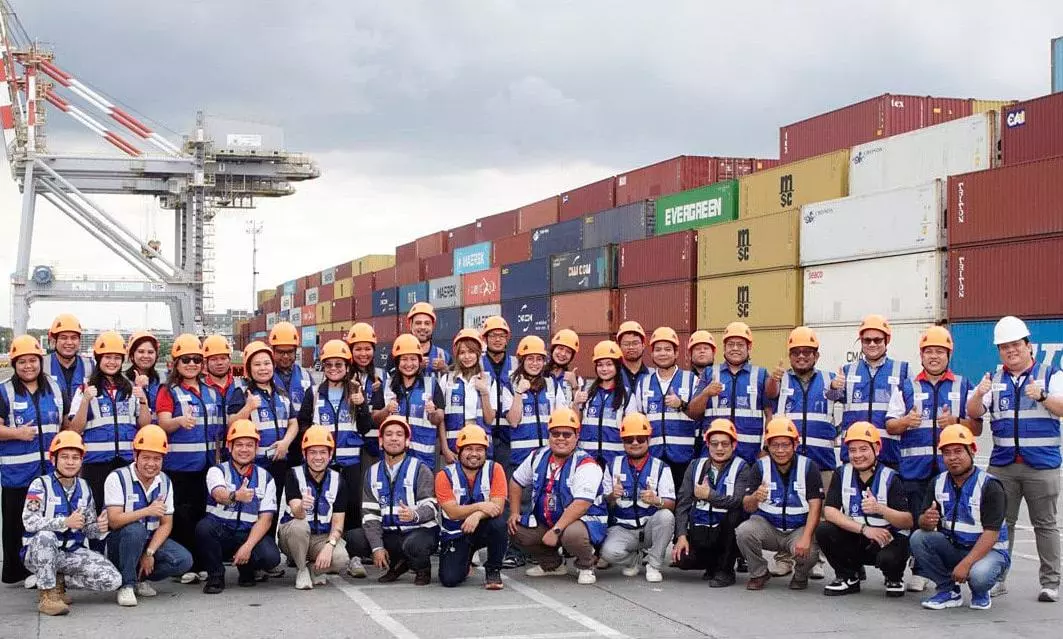


DP World has announced that Batangas Integrated Port (BIP) in the Philippines has become the world’s first READY Port, establishing a new benchmark for disaster preparedness and humanitarian logistics. The designation marks the launch of a global framework aimed at strengthening the resilience of critical port infrastructure and ensuring the continuity of logistics operations during emergencies and natural disasters.
READY Port, which stands for Resilience, Emergency Action and Disaster-ready Port, is a global capacity-strengthening programme advocated by the UN Logistics Cluster. The initiative is designed to enhance the disaster readiness of ports and improve countries’ ability to maintain humanitarian supply chains during crises. The Philippines was selected as the pilot location for the programme due to its exposure to climate-related risks and natural disasters. The initiative brings together government agencies, humanitarian organisations, logistics providers, port operators and private-sector stakeholders to develop a coordinated emergency response ecosystem centred on seaports and logistics hubs.
The designation follows the completion of a three-day multi-stakeholder READY Port workshop conducted at Batangas Port in partnership with the World Food Programme (WFP) Philippines. During the workshop, government agencies, humanitarian organisations and private-sector partners assessed emergency response capabilities, reviewed operational protocols and participated in scenario-based exercises aimed at strengthening preparedness and coordination during crises.
Batangas Integrated Port is operated by Asian Terminals Inc. (ATI), DP World’s local partner in the Philippines. The port serves as a major gateway for international and domestic cargo, rolling cargoes and passenger movements, while providing direct connectivity to nearby islands and destinations across the Visayas and Mindanao regions.
Insights from the workshop have been consolidated into a Port Readiness Action Plan, which is expected to strengthen strategic frameworks for future implementation of capacity-building initiatives across ports in the Philippines and globally.
Glen Hilton, CEO and Managing Director, Asia Pacific, DP World, said the initiative demonstrates how ports can play a wider role beyond trade facilitation. “We are honoured that the Batangas Integrated Port is now the world’s first READY Port. This collaboration with WFP and our partners reflects our shared commitment to building resilient port infrastructure that serves not only as gateways for trade, but also as vital lifelines for communities during times of crisis.”
Hilton added that DP World is leveraging its integrated ports and logistics capabilities through ATI and its wider global network to strengthen preparedness and ensure humanitarian assistance can move quickly when needed. “By leveraging DP World’s integrated ports and logistics capabilities through ATI, our local partner in the Philippines, and across our global network, we are strengthening preparedness and ensuring that humanitarian assistance can move swiftly and efficiently in support of disaster response, national recovery efforts, and community resilience,” he said.
Manuel Cabochan III, Assistant Secretary for Special Concerns at the Philippines Department of Transportation, highlighted the importance of collaboration across multiple stakeholders in building resilience. “Disaster preparedness is not only the responsibility of one government agency alone. It requires a whole-of-government and whole-of-society approach where national agencies, port operators, logistics providers, humanitarian organisations, local government units, and development partners work together towards a common goal.”
Cabochan said the READY Port initiative demonstrates the value of planning, capacity building and information sharing in ensuring continuity of port and logistics operations during emergencies. “This underscores the importance of READY Port as we come together to prepare through planning, capacity building, and information sharing, and ultimately develop strong mechanisms to ensure continuity of ports and logistics operations during emergencies,” he said.
Joao Dos Santos Merencio, Head of Supply Chain for the World Food Programme in the Philippines, said the initiative aligns port readiness efforts with national disaster preparedness frameworks and strengthens coordination among stakeholders. “WFP is committed to supporting this initiative by fostering coordination, sharing humanitarian experience, and working closely with all stakeholders to align port readiness efforts with national disaster preparedness frameworks,” added the head of Supply Chain for WFP Phillipines.
Merencio added that the framework is designed to ensure ports remain operational during crises while prioritising humanitarian cargo. Merencio mentioned, “The READY Port initiative brings together port authorities, national government agencies, the private sector, and the humanitarian community as one cohesive support unit. This framework helps ensure that ports continue to operate effectively under crisis conditions while prioritising humanitarian cargoes when it matters most.”
The READY Port programme comes as governments and logistics providers worldwide face increasing challenges from climate-related disasters and supply chain disruptions. Stakeholders involved in the initiative believe the Batangas model could serve as a scalable framework for strengthening logistics resilience and humanitarian response capabilities in vulnerable coastal regions around the world. For DP World and its partners, the designation highlights the growing role of ports as critical infrastructure that supports both trade and emergency response, helping ensure communities can continue to access essential supplies during times of crisis.
The article was originally published on Logistics Update Africa.