
Mundra empty-container strike disrupts EXIM movement as APSEZ plans new yard
A strike by Mundra's empty-container depot operators has halted empty movements, with transporters joining the stoppage as APSEZ prepares a new yard inside the port SEZ.
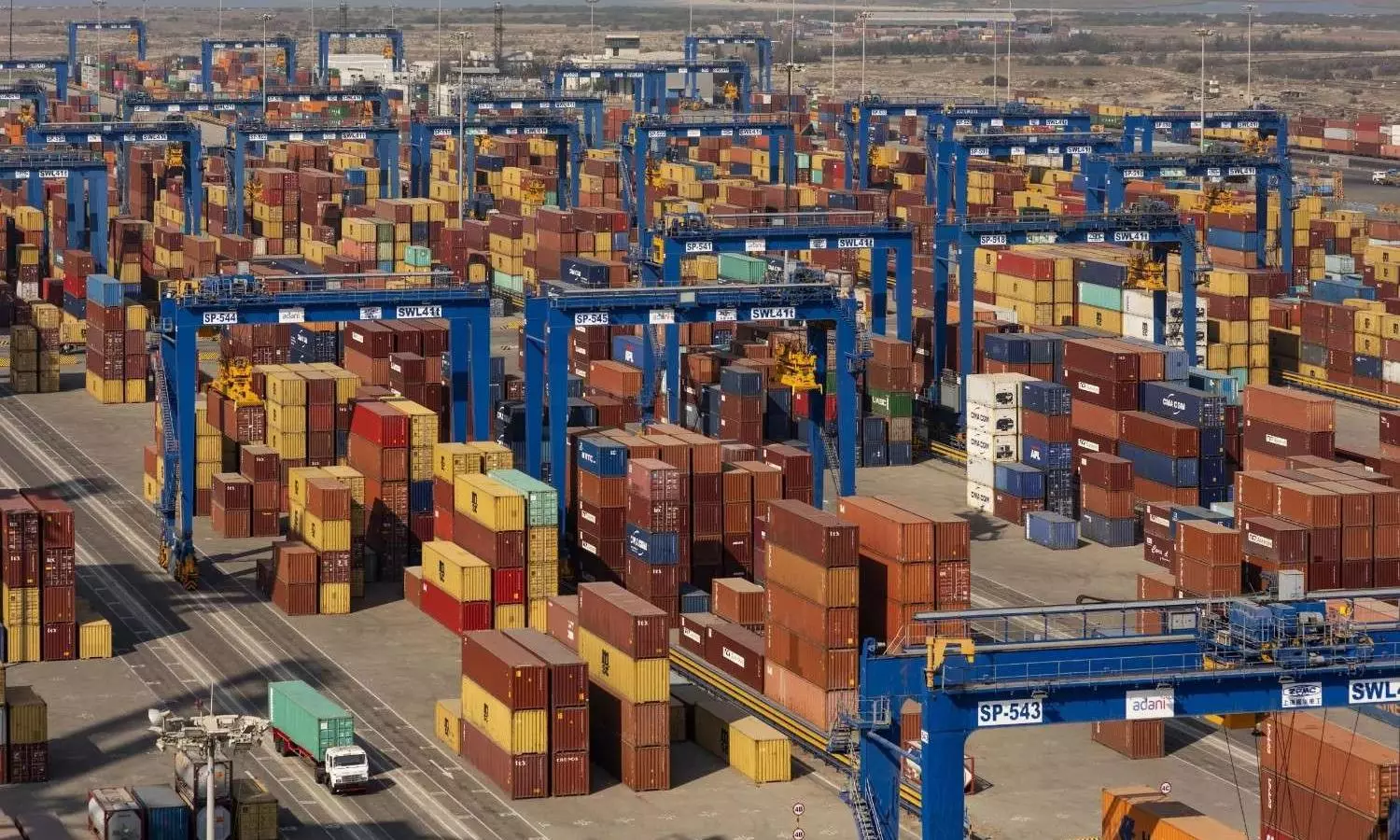


A strike by empty-container depot operators at Mundra Port has disrupted the movement of containers for exporters and importers, with transporters also stopping operations as the industry faces restrictions on empty-container releases and returns.
The disruption began after the Mundra Empty Container Yards & Allied Services Provider Association (MECYASA) suspended operations from August 28. The stoppage came ahead of Adani Ports and Special Economic Zone's (APSEZ) decision to freeze empty-yard codes outside the Mundra port limits from September 1.
Under the new arrangement, shipping lines are required to nominate empty containers to designated facilities within the Mundra Port and Special Economic Zone (SEZ).
The strike has since spread to container transporters. The Kandla Mundra Container Transport Welfare Association (KMCTA) has stopped container movements in support of the depot operators, further restricting the movement of empty equipment.
Strike halts empty-container movement
The impact is already being felt by shipping and logistics companies.
Kartik Iyer of SVAP Shipping said the company's empty-container operations at Mundra are currently completely stopped.
“Everything is stopped,” Iyer said when asked about the availability of empty containers for SVAP's customers.
He also said several customers had cancelled shipments from Mundra because of the disruption.
The problem affects the first stage of many export shipments. Once a shipping line releases an empty container, a transporter has to collect it and take it to the exporter's factory for stuffing. The laden container then has to reach the terminal before the vessel cut-off.
A stoppage in the empty-container network can therefore prevent an export shipment from moving even when the container terminal itself continues to operate.
The same disruption can affect import containers when empty equipment needs to be returned to a nominated yard.
Hapag-Lloyd confirmed the operational impact in an August 31 customer advisory. The shipping line said empty-container yard operations connected to Mundra were affected by an ongoing strike.
It suspended empty-container allotments for factory stuffing and empty-container gate-ins at the affected yards until further notice. CFS stuffing and gate-ins, however, remained available.
Kuehne+Nagel also reported the strike in its port operational update for August 26 to September 1. It said the ongoing strike at empty-container yards was disrupting container movements at Mundra and affecting both empty returns and the availability of containers for export cargo.
Transporters join the stoppage
The stoppage has become wider with the involvement of container transporters.
Sarjak Container Lines said the Kandla Mundra Container Transport Welfare Association had reported that around 1,500 container transporters had stopped movements.
The Mundra Customs Brokers' Association has also estimated that around 5,000 containers a day are being held up.
Both figures are industry estimates and have not been independently verified.
The effect is not limited to empty containers sitting in yards. When transporters stop moving equipment, exporters can struggle to collect empty boxes, while importers can face problems returning empty containers.
This creates a risk of missed vessel cut-offs and shipment rollovers, as well as additional trucking, handling and detention costs.
Supal Shah, CEO of Sarjak Container Lines, said the main concern is whether the replacement system was ready before the established external depot network was withdrawn.
He said empty-container handling involves more than storage. The facilities need to receive, inspect, repair, wash and release containers, while trucks and shipping-line systems also need to support the new locations.
Capacity becomes the next concern
The strike has also raised questions about whether the designated facilities inside Mundra Port and SEZ can handle the volume previously managed by several external depots.
Iyer of SVAP Shipping said there is space inside the port but questioned whether it would be enough to accommodate the volume moving through Mundra.
He referred to the large share of containers moving from Mundra to inland locations and said accommodating such volumes within the port could be difficult.
Sarjak has raised a similar concern, saying there is not enough public information to establish whether the new facilities have the capacity required to replace the external depot network.
The issue is significant given the scale of Mundra's container business.
APSEZ set to launch dedicated yard
Against this backdrop, APSEZ is set to launch a Dedicated Empty Container Yard (ECY) with integrated warehousing at Mundra.
In its official release, APSEZ said the facility will cover the empty-container lifecycle, including storage, maintenance, inspection and movement to exporters and Container Freight Stations.
The facility will be operated by APSEZ and/or partners, including CFSs and shipping lines.
APSEZ said bringing empty-container operations within the Mundra Port SEZ will allow closer coordination between Customs authorities, shipping lines, terminal operators and transporters.
The company said the ECY is intended to improve turnaround times, reduce unnecessary container movements and optimise logistics costs.
Ashwani Gupta, Whole-time Director and CEO of APSEZ, said the dedicated yard would improve efficiency across the container ecosystem.
The scale of the empty-container operation is considerable. APSEZ said Mundra handles nearly 35% of India's container trade, while around 1.6 million TEUs of empty containers are handled at the port annually.
APSEZ also said it has a 45.5% share of India's container market as of FY2025-26 and plans to add more than 6 million TEUs of container-handling capacity over the next five years.
However, the ECY is yet to become the answer to the immediate disruption. The current problem is that the existing empty-container network has been disrupted while the new arrangement is being introduced.
Exporters and importers bear the cost
The disruption is ultimately creating pressure on cargo owners.
“The exporter and the importer, both,” Iyer said when asked who ultimately bears the cost.
Sarjak said the possible costs include missed vessel cut-offs, cargo rollovers, detention, additional trucking and handling.
Shah also said the new system should be assessed on the total cost of moving a container. Any reduction in empty movements and road congestion would need to be weighed against additional waiting, trucking, repositioning or handling costs if these arise.
The dispute, therefore, goes beyond where empty containers are stored.
For exporters, the immediate requirement is access to an empty container when it is needed and enough time to move the stuffed container to the terminal before the vessel cut-off. For importers, empty equipment needs to be returned to an acceptable location without creating additional delays and costs.
The immediate focus now is on restoring empty-container movements while APSEZ prepares to bring its dedicated ECY into operation.
The longer-term test for the new system will be whether the designated facilities can handle Mundra's large empty-container volumes while providing the faster turnaround, lower road congestion and cost efficiencies that APSEZ expects.