
How Chennai's ports, parks, and production power India’s supply chain
With continued investment and innovation, the city is set to strengthen its role as India’s multimodal logistics capital.
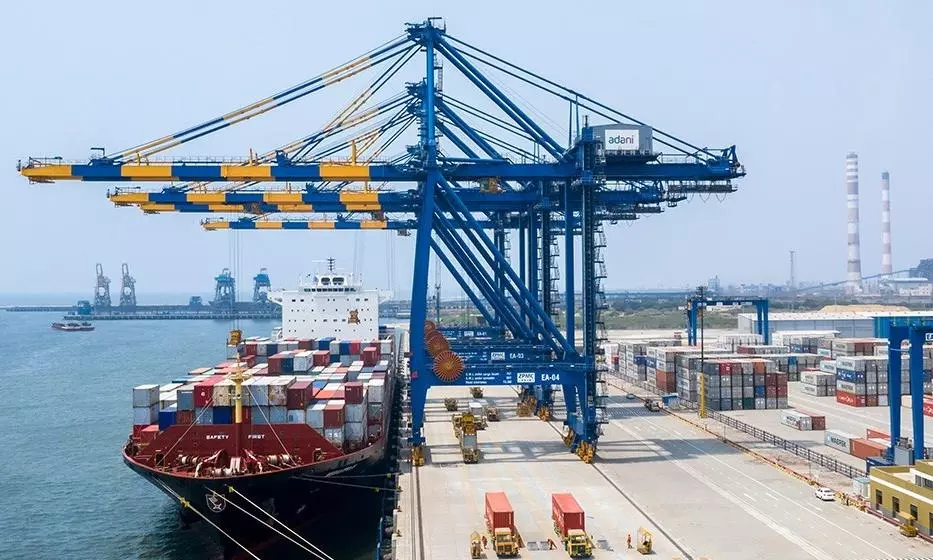
Kamarajar Port Limited (formerly Ennore Port Limited)


Chennai is emerging as South India’s logistics hub, powered by manufacturing strength, strong maritime links and expanding infrastructure. Its role as a key export gateway aligns with national efforts to streamline freight movement and cut logistics costs, which have fallen from 14% to under 8% of GDP, supporting resilient supply chains.
The ascent of Chennai unfolds through three interconnected pillars: its manufacturing and electronics corridor, a tri-port maritime system, and its rapidly expanding network of warehousing and industrial parks.
Manufacturing and export base
According to the Department of Scientific and Industrial Research, Tamil Nadu produces about a quarter of India’s automobiles, and 35 per cent of its auto components are largely concentrated around Chennai. Chennai’s automotive corridor stretches about 60 kilometres and hosts major OEMs, including Hyundai, Renault-Nissan, Daimler India, Ashok Leyland and BMW, supporting strong manufacturing and export activity.
The Make in India programme has intensified this momentum, drawing new global investments, especially in electric vehicles and electronics. Foxconn’s US$1.5 billion expansion to produce Apple components locally and Mercedes-Benz’s fresh investments signal the rising tide of manufacturing in Tamil Nadu.
Electric mobility is now the new frontier. The region’s pivot toward EV manufacturing is reshaping supplier networks and logistics practices—emphasising just-in-time delivery and integrated component flows. India's rapid recovery after the pandemic, with a GDP growth of 15.3% over 2021-2022 and sustained real rates at 6.5%, has fuelled confidence in the region’s strategic importance.
Key logistics companies are enabling this shift with multimodal, tech-enabled solutions designed for automation-rich factories. “Demand for Grade A industrial and logistics space in the Chennai region is currently experiencing unprecedented growth, solidifying its position as one of the most dynamic and critical markets in India,” says Norbert Sumisławski, Managing Director – International Project Management, Panattoni. “We have observed that transaction volumes in the first nine months of 2025 have already surpassed the city's previous full-year peaks, a clear indicator of robust occupier confidence and underlying economic strength. This surge is characterised by a definitive flight to quality, with Grade A assets consistently accounting for over 60% of total absorption.”
Maritime gateways to the world
Chennai has a unique tri-port advantage: Chennai Port, Kamarajar (Ennore) Port and Kattupalli Port each support distinct cargo needs. Chennai Port leads in Ro-Ro automotive shipments, Kamarajar handles coal and vehicles, while Adani-operated Kattupalli specialises in containers and project cargo.
All three ports are undergoing modernisation via dredging, new terminals, automation and improved rail links. The 20.93 km elevated corridor from Chennai Port to Maduravoyal, set for completion in 2027, will provide a signal-free link to national highways, cut congestion and slash vessel wait times by six hours, raising port capacity by 48%. India’s first greenfield multi-modal logistics park at Mappedu, operational by 2026, will integrate warehousing, cold chain and container handling for seamless connectivity.
“Chennai’s multi-port ecosystem is the single most defining factor in real estate investment and location decisions,” Sumisławski explains. “Triple-port access offers unparallelled reliability, capacity, and efficiency, making Chennai a vital gateway for global trade.”
Chennai’s multi-port ecosystem is the single most defining factor in industrial real estate investment decisions.
Norbert Sumisławski, Panattoni
Warehousing & industrial growth strengthening South India’s supply chain
Chennai plays a central role in India’s Multi-Modal Logistics Park programme under Bharatmala. These parks are designed to integrate road, rail, port and warehousing infrastructure into a single hub. The upcoming parks around Chennai aims to cut logistics costs, speed up freight movement and improve value-added services for industries in the region. “With robust demand centred in industrial corridors along the State Industries Promotion Corporation of Tamil Nadu (SIPCOT) Belt, SH-48 and SH-57, these areas are driving the future of Grade A logistics and warehousing,” notes Sumisławski.
The shift towards larger, sustainable logistics estates is accelerating—major parks now cater to 3PL consolidation, include EV charging, and prioritise energy-efficient operations. Initiatives like the Freight Greenhouse Gas (GHG) Calculator and Rail Green Points are nudging both big and small firms toward greener supply chains, driving demand for low-emission logistics zones near Chennai.
Multimodal integration: Connecting the dots
Chennai’s supply chain ecosystem thrives on its ability to connect factories, ports and warehouses by road, rail and air. The Outer Ring Road, the upcoming Peripheral Ring Road, improvements along the Chennai–Bengaluru and Chennai–Gudur rail freight corridors, and ongoing motorway expansion are strengthening Chennai’s industrial connectivity. Recent infrastructure projects, including the Bengaluru-Chennai Motorway, reduce travel time for goods from Bengaluru to Chennai from over six hours to just two or three—supercharging interstate trade.
Digital platforms like the Unified Logistics Interface Platform (ULIP) and the Logistics Data Bank now enhance supply chain visibility, enabling manufacturers to track exports, manage inventories, and streamline operations. These initiatives directly mirror the National Logistics Policy’s goals of reducing logistics costs and integrating data across modes.
Chennai’s role in India’s logistics transformation
Chennai’s logistics ascent faces port bottlenecks, land limits and rising competition, but its tri-port system, manufacturing clusters and advanced warehousing keep it ahead. According to an August 2025 PIB report, India’s logistics sector was valued at USD 215 billion in 2021 and is growing at over 10 per cent annually, highlighting the importance of cities with strong multimodal links. With continued investment and innovation, the city is set to strengthen its role as India’s multimodal logistics capital.
This article was originally published in the Indian Transport & Logistics News' Nov-Dec 2025 issue.