
Asia congestion drives capacity back to Suez
Asia-Europe shipping rates soften as port congestion in Asia and renewed Suez Canal services drive carriers to reposition capacity across key trade lanes.
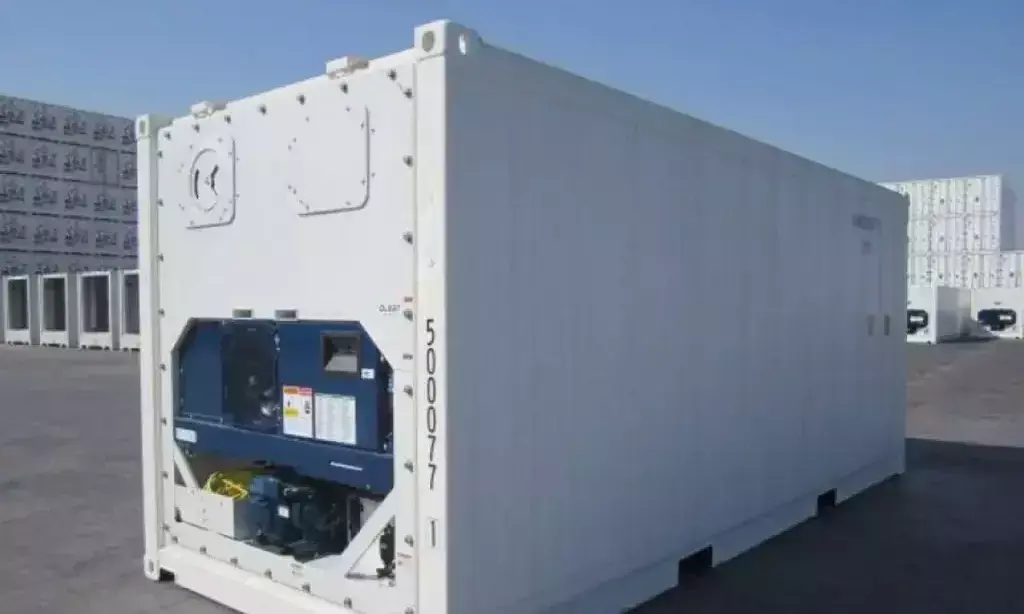
20 FT Offshore Reefer


Asia-Europe container freight rates are declining as congestion at Asian ports prompts carriers to shift more services back towards the Suez Canal, according to Sogese’s September Europe Container Market Update.
Drewry’s World Container Index (WCI) on September 3 showed the Shanghai–Genoa rate falling 10% week on week to $4,368 per 40ft container, while the Shanghai–Rotterdam rate declined 5% to $4,092 per 40ft container.
Capacity is also beginning to return to the trade. Blank sailings on the Asia-Europe route are expected to fall from four this week to one next week, signalling a potential increase in available capacity.
Sogese’s monthly report noted that the container shipping market is increasingly fragmenting across individual trade corridors, prompting carriers to adjust and reallocate capacity in response to changing market conditions.
Andrea Monti, CEO of Sogese S.r.l, Italy’s leading container logistics company, said, “The container market is becoming increasingly fragmented by trade corridor, with freight rates, cargo demand and available capacity moving in different directions across major routes. Asia-Europe rates have started to soften from their mid-year highs while transpacific markets remain firmer, prompting carriers to adjust individual services and vessel deployments rather than manage capacity uniformly across their networks.”
Monti noted that the selective resumption of services through the Suez Canal introduces another variable, as shorter voyage times can effectively increase capacity on Asia-Europe routes without requiring additional vessels. For shippers, this means global fleet capacity may no longer accurately reflect the capacity available on individual trade lanes or at specific ports.
He added that the container market is becoming increasingly fragmented, with cargo demand, freight rates and available capacity developing differently across trade corridors. As a result, the next phase of the market is likely to be shaped less by global supply and demand and more by how and where carriers deploy capacity and cargo.
The report highlights that differences across major trade corridors are increasingly influencing carriers’ network decisions. Instead of making broad adjustments across their global networks, carriers are modifying individual services, port rotations and vessel deployments based on variations in cargo demand and freight market conditions.
Recent service changes demonstrate this route-by-route approach. Ocean Alliance has revised its CPNW and MTE transpacific services, removing Qingdao, Ningbo and Kwangyang from CPNW in favour of Kaohsiung and Yantian, while MTE will drop Haiphong and add Port Klang. Maersk’s seasonal TPX service, launched in May to meet peak-season demand between Vietnam, South Korea and the US West Coast, is scheduled to conclude at the end of the third quarter.
Meanwhile, COSCO and OOCL have strengthened their presence in the Red Sea market through two new services. One provides a direct China–Jeddah connection linking Shanghai, Ningbo and Nansha with Saudi Arabia’s key Red Sea gateway, while another seven-vessel Asia–Red Sea service connects Northeast Asia with Jeddah via Singapore and the Suez Canal. Together, these developments indicate that carriers are recalibrating their networks on a service-by-service basis rather than making uniform capacity increases or reductions.
For European shippers, this is creating a less predictable service environment. Even where a trade remains commercially viable, carriers may alter port rotations, sailing frequencies or transshipment arrangements. As carriers become more selective in deploying vessels, schedule reliability could become increasingly uncertain despite sufficient overall capacity in the market.
Congestion in Asia is now the real force pulling capacity back through Suez
Asian port congestion has reached 4.3 million TEU, according to Linerlytica data, higher than the 4.0 million TEU stranded at the peak of the pandemic. Cape of Good Hope diversions are absorbing between 5% and 7% of global container capacity, roughly 1.7 to 2.4 million TEU. MSC, Maersk and Hapag-Lloyd have all announced partial returns to Suez in recent weeks.
Italy's national numbers reveal deeper strain than regional port data shows
In the Western Ligurian port system, which includes Genoa, Savona and Vado Ligure, container volumes declined 2.7% year on year in the first half of 2026 to approximately 1.45 million TEU. While gateway traffic increased 1.6%, transshipment volumes dropped sharply by 21.3%.
Fedespedi’s first-quarter data indicates a broader decline across Italy, with national container volumes falling 4.6%. Trieste recorded the steepest drop at 23.6%, followed by Savona at 14.1% and Genoa at 4.9%. The declines came despite Italian exports increasing 1.3% during the same period.
Gioia Tauro handled a record 4.5 million TEU in 2025, marking a 14% increase from the previous year and reinforcing its position as Italy’s leading transshipment hub. In comparison, Tanger Med processed 11.1 million TEU, up 8.4% year on year, according to data from the port authority.