
How India's Dedicated Freight Corridors are redrawing the logistics map
From double-stack container trains to faster port connectivity, India's DFCs are reshaping how long-haul cargo moves across the country.
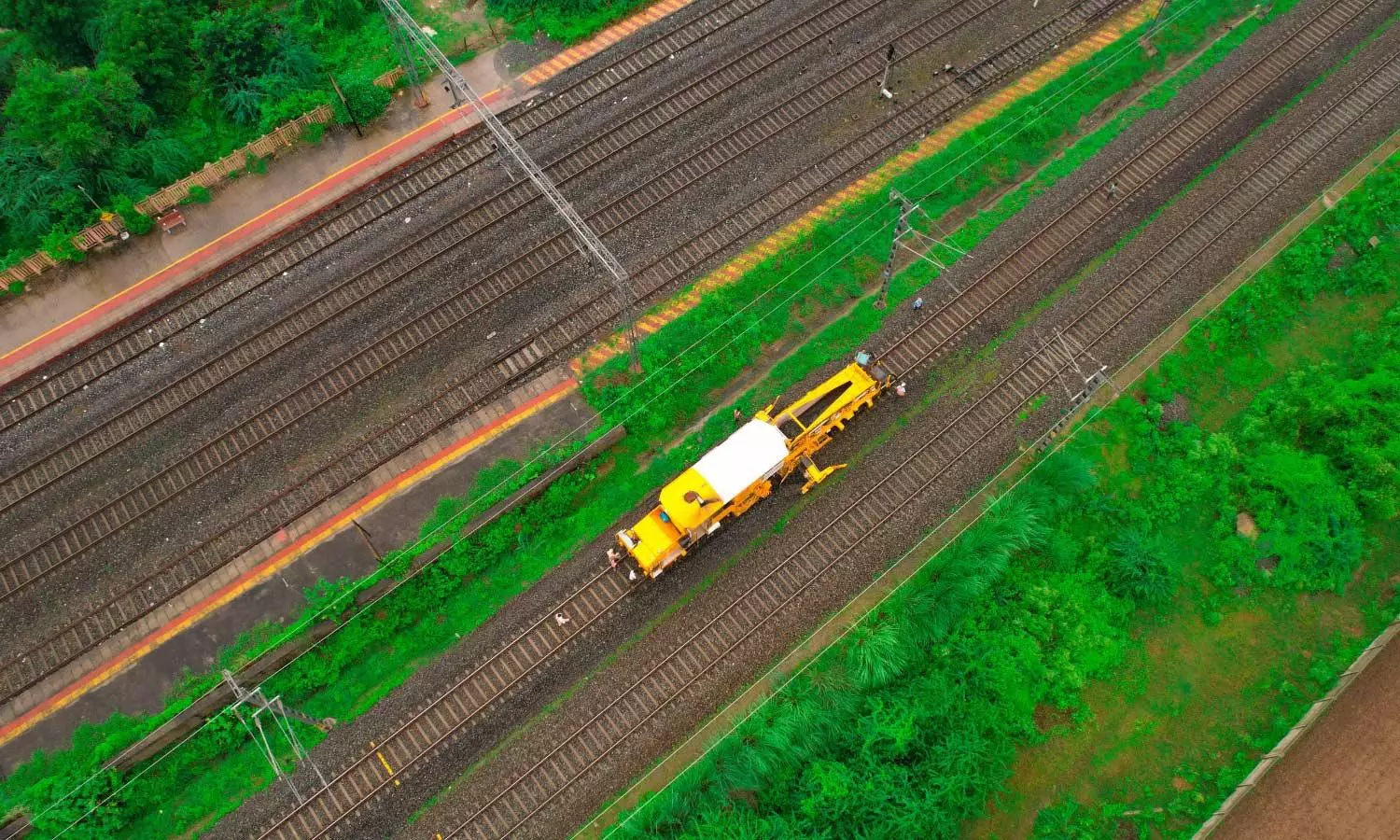


For decades, India's freight economy depended heavily on highways. Trucks moved factory output, retail inventory and export cargo across long distances despite congestion, toll delays, fuel price volatility and border bottlenecks. Road transport remained dominant because it offered manufacturers something rail often could not: predictable movement schedules. Freight trains were largely associated with bulk commodities such as coal, iron ore and foodgrain, while time-sensitive industrial cargo rarely shifted to rail.
The DFC is beginning to change that equation in commercially visible ways. The project repositions rail within India's industrial and logistics economies, with the effects now visible in freight planning, port connectivity, and long-haul cargo movement patterns.
The Eastern and Western DFCs together span 2,843 kilometres across nine states and 77 districts. Built at a cost of ₹1.25 trillions, with an additional ₹210 billion spent on land acquisition, the project took nearly two decades to complete, with the final sections commissioned on March 31, 2026. The investment comes as Indian Railways expands its network-wide freight operations, crossing 1 billion tonnes of cumulative freight loading in FY 2025-26, driven by coal, iron ore, cement and container traffic, according to the Ministry of Railways.
Despite constituting only about 4% of the overall rail network, the DFC is already handling over 13% of India’s rail freight traffic.
SP Verma, DFCCIL
Much of the pressure on rail freight capacity stemmed from a network structure that prioritised passenger services over cargo movement. Freight trains operated at average speeds of 20–25 kilometres per hour on shared rail lines because passenger traffic received scheduling priority. Consignments were regularly held at sidings, making inventory planning and production scheduling difficult for manufacturers.
The DFC separates freight and passenger traffic. According to SP Verma, Group General Manager, Business Development and Analytics at Dedicated Freight Corridor Corporation of India (DFCCIL), transit times have reduced by 40 to 50%, with trains now operating at speeds between 60 and 100 kilometres per hour. Cargo moving between Mumbai and Delhi, which previously required more than three days on the conventional network, can now move in under 48 hours. “This segregation has also significantly enhanced reliability and schedule adherence, as freight operations are no longer impacted by passenger traffic prioritisation,” he noted.
For manufacturers and logistics operators, the operational gain lies in schedule consistency. Stable transit windows can reduce warehousing dependency, tighten inventory cycles and improve planning across production and distribution networks. In sectors such as automotive, consumer goods and industrial manufacturing, delays often increase downstream logistics and inventory costs.
The DFC has also increased haulage capacity through larger train formations, including the 25,488-tonne Rudrashtra service and the 25,962-tonne Super Vasuki train. Larger train formations improve asset utilisation and reduce long-haul logistics costs for industrial cargo operators.
DFC is emerging as a game-changer for Exim trade by increasing trade volume.
Ashish Chandna, Allcargo Terminals
Rail's cost advantage over road transport has existed for years, but the DFC is improving its viability for containerised and industrial freight. According to NITI Aayog estimates, rail freight costs roughly half as much as road transport on a per-kilometre basis.
Traffic data from FY 2025-26 indicate growing usage of the corridors. Although the DFC accounts for around 4% of the Indian Railways network length, it handles more than 13% of India's total rail freight traffic. DFCCIL operated 15,484 rakes carrying 15.87 million tonnes during the fiscal year. The corridors also handled 203.6 billion gross tonne kilometres (GTKMs) during the year, averaging about 558.4 million GTKM per day, reflecting high freight density across the network.
Containerised freight has emerged as the corridor's fastest-growing segment. In FY 2025-26, container traffic reached 10.06 million tonnes across 9,621 rakes. Cement traffic also recorded growth, with 4.42 million tonnes moved across 1,830 rakes, supported by infrastructure and construction demand.
On the Eastern DFC, coal continues to account for 68% of total freight movement because the corridor links eastern mining regions with power plants in northern India. At the same time, containerised cargo is gaining share across long-haul freight movement that previously relied heavily on trucking.
The DFC's impact extends into port connectivity and inland cargo movement. The Western DFC now provides faster links between ports such as JNPT, Mundra and Pipavav and inland consumption centres, reducing cargo dwell times and improving schedule reliability for exporters and importers. Port-to-NCR transit time has reportedly fallen by nearly 50%.
"The commissioning of the DFCs is transforming how cargo moves across India by enabling faster, more reliable, and higher-volume movement between ports and inland markets," said Adhendru Jain, Chief Executive Officer, Rail and Inland Terminals at DP World.
Jain said freight train movements on the Eastern and Western DFCs grew 47% during 2024-25, with containers accounting for 24% of total cargo. "The completion of the 1,506-km Western DFC from JNPT to Dadri is a major milestone that will further strengthen capacity and accelerate port-led connectivity to northern consumption centres and reduce truck traffic and waiting times, leading to lower fuel consumption per unit of cargo transported."
DFCCIL plans to establish 114 Gati Shakti Multi-Modal Cargo Terminals along the network to support cargo aggregation, distribution and intermodal movement. The terminals are intended to connect industrial clusters, inland container depots and ports more efficiently. On January 5, 2026, the DFC network handled 892 interchange trains in a single day across five Indian Railways zones, reflecting deeper integration with the wider rail system.
Private logistics operators are also redesigning services around DFC access. DP World operates more than 90 container trains, including double-stack services linking inland markets with gateways such as Mundra and Nhava Sheva, supported by eight rail-linked inland container terminals. Its rail service for Reliance Industries on the Ahmedabad-Jamnagar-Mundra corridor consolidated up to 45 containers into a single movement while shifting nearly 700 kilometres of cargo flow from road to rail.
"We are improving the competitiveness of rail compared to road for long-distance container movement," said Jain. "Integrated rail services are helping reduce dependence on long-haul trucking while improving throughput for manufacturers and MSMEs."
The DFC is also expanding into cargo categories that rail previously struggled to handle competitively. DFCCIL has operationalised high-speed small cargo services between New Sanand North and New Rewari, targeting FMCG, e-commerce and parcel freight. Truck-on-train services between New Palanpur and New Rewari cover roughly 630 kilometres, allowing loaded trucks to move long distances by rail while reducing highway congestion. In FY 2025-26, high-speed small cargo services operated 2,896 rakes, while Truck-on-Train services operated 724 rakes. DFCCIL has also demonstrated the movement of perishables, including a full rake of fresh chikoos from Gujarat to Delhi.
Infrastructure investment is also shifting around freight access. "We have partnered with Haryana Orbital Rail Corporation as part of the ₹60 billion initiative led by Haryana Rail Infrastructure Development Corporation," said Ashish Chandna, CEO of Allcargo Terminals. "This project will enhance our DFCC access for our proposed ICD at Farukhnagar."
Road transport still dominates first-mile and last-mile movement because of its flexibility and reach. As Chandna noted, "Rail is generally more cost-efficient than road for containerised freight, but each mode has its own strengths and limitations in terms of transit time consistency, last-mile connectivity, and flexibility."
Unlocking the DFC’s full potential will require continued focus on first and last-mile connectivity, terminal capacity and service standardisation.
Adhendru Jain, DP World
The Eastern DFC still does not extend fully to Dankuni near Kolkata because of land acquisition delays, limiting complete eastern port connectivity. Terminal capacity, first-mile infrastructure and intermodal integration remain ongoing challenges. Verma said first-mile and last-mile connectivity depend on external infrastructure, land availability and connecting rail links that involve multiple agencies and approvals. He added that DFCCIL is working through the PM Gati Shakti framework to improve integrated planning and execution.
Rail-based logistics can also reduce CO₂ emissions compared to long-haul trucking, a factor becoming more relevant for exporters facing pressure to reduce supply chain emissions.
With the Western DFC fully operational and additional freight corridors under planning, India's rail logistics network is entering a new phase of expansion. For logistics operators and manufacturers, the corridor is increasingly becoming core freight infrastructure rather than a standalone rail project.