
India-EU FTA reshapes pharma, auto and specialised logistics
The India–EU FTA could accelerate pharmaceutical exports, redraw automotive sourcing networks, and increase demand for specialised logistics between both regions.


For years, India and Europe have been important trading partners, connected through the movement of medicines, engineering goods, automotive components, chemicals, machinery and technology.
The proposed India–European Union Free Trade Agreement (FTA), often described as the “mother of all deals,” is targeted for implementation by 2027 and is expected to become one of the most consequential trade agreements in India’s economic history.
Trade in goods between India and the EU has grown by 83.7% over the past decade. In 2025, the EU was India’s third-largest trading partner, with bilateral goods trade valued at €118 billion, representing 11.1% of India’s total merchandise trade. India, meanwhile, ranked as the EU’s ninth-largest trading partner, accounting for 2.3% of the bloc’s total goods trade.
Industry executives believe the agreement could reshape pharmaceuticals, automotive manufacturing and the logistics networks.
Pharmaceuticals expected to gain from lower trade barriers
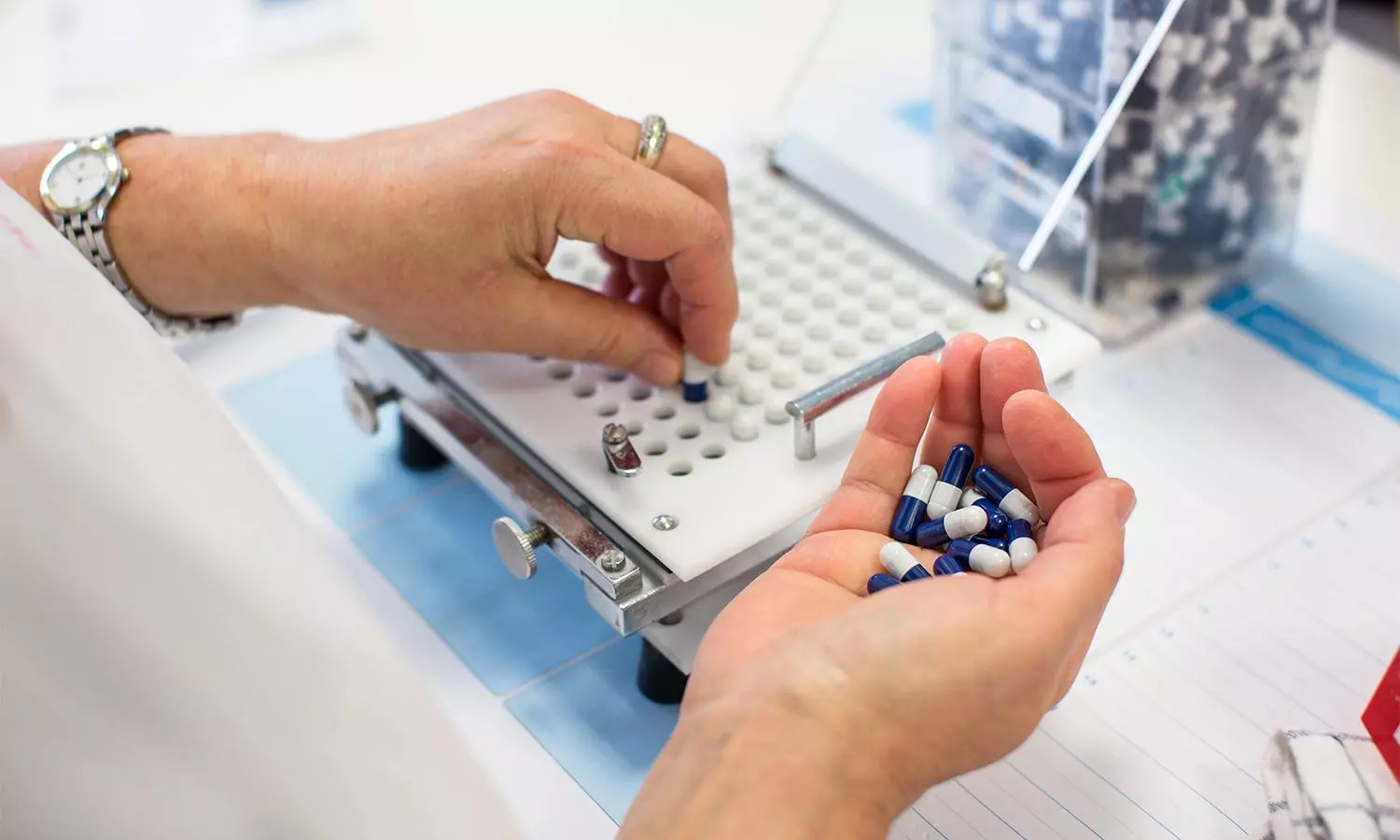
The pharmaceutical industry is likely to be among the earliest beneficiaries. India’s pharmaceutical sector ranks third globally by volume and eleventh by value, with more than 3,000 companies and 10,500 manufacturing units, according to Government of India data released in 2025.
Yuvraj Sharma, Head of Sales and Marketing at Kuehne+Nagel India, Sri Lanka and the Maldives, said, “Once implemented, it is expected to progressively reduce tariffs and simplify customs procedures, which would support smoother cross-border trade, improve shipment predictability, and strengthen supply chain connectivity between India and Europe, including for pharmaceutical products.” Pharmaceutical exports from India grew by 9.4% to $30.47 billion in FY2024–25, reflecting sustained global demand and Europe’s continued importance as a destination market.
“The real long-term advantage will come not merely from lower costs, but from India’s ability to combine regulatory excellence, manufacturing scale, supply reliability, and logistics sophistication to become an indispensable partner to the European pharmaceutical ecosystem.”Anshul Agrawal, OLON
Beyond pharmaceuticals, the proposed agreement is also expected to influence automotive manufacturing, component sourcing and specialised freight flows, potentially strengthening India’s role within global supply chains while creating new opportunities for logistics providers operating between India and Europe.
Adding to that, Anshul Agrawal, Head Supply Chain and Strategy at OLON, said lower tariffs would significantly enhance India’s cost competitiveness and support expansion into complex generics. However, he emphasised that the longer-term opportunity extends beyond tariff savings. “The real long-term advantage will come not merely from lower costs, but from India’s ability to combine regulatory excellence, manufacturing scale, supply reliability, and logistics sophistication to become an indispensable partner to the European pharmaceutical ecosystem.”
The agreement is also expected to influence freight demand between India and Europe. According to Sharma, “India–EU free trade agreement is expected to further support the movement of formulations, APIs, and specialty medicines by improving market access and reducing trade friction. Over time, this should have a positive influence on freight volumes between India and Europe.” Agrawal added that demand for temperature-controlled logistics, validated packaging, and specialised air and ocean freight solutions is likely to increase as pharmaceutical trade expands.
Biologics, biosimilars, generic medicines and APIs could see some of the largest logistics shifts as market access improves. Agrawal noted that even moderate export growth would affect transport demand. “Even a 15–20% increase in export volumes would materially impact freight flows, particularly through temperature-controlled air cargo and specialised ocean freight lanes connecting India’s pharma manufacturing hubs to major European distribution centres.”
“India–EU free trade agreement is expected to further support the movement of formulations, APIs, and specialty medicines by improving market access and reducing trade friction. Over time, this should have a positive influence on freight volumes between India and Europe.”Yuvraj Sharma, Kuehne+Nagel
At the same time, India’s dependence on China for APIs remains a structural challenge. According to ICRA, India imported APIs and bulk drugs worth €3.5 billion in FY2025, meeting around 35% of its total API requirements, with nearly 74% sourced from China. Commenting on this dependence, Vishal Jaiman, Senior Director and Sector Head (Healthcare) at DP World, said: “Our dependency on China for API is largely centred towards generic medicine marketing. The way I foresee Indian companies surpassing China without directly competing in their own game is by creating value through the specialty drug market.”
Agrawal noted that improved export economics, greater access to European partnerships and supply-chain diversification could gradually reduce this dependence. However, regulatory approvals, inspections, compliance requirements, serialisation, traceability and documentation remain key non-tariff challenges.
“Our dependency on China for API is largely centred towards generic medicine marketing. The way I foresee Indian companies surpassing China without directly competing in their own game is by creating value through the specialty drug market.”Vishal Jaiman, DP World
Apart from the pharmaceutical industry, FTA is equally significant for the automotive sector, where sourcing strategies, manufacturing footprints and supply chains are already evolving.
How can the India–EU trade deal redraw automotive supply chains
From luxury vehicles and precision-engineered components to steel, electronics and industrial materials, the proposed India–EU trade agreement is expected to influence multiple layers of the automotive ecosystem. Although the agreement is yet to come into force, companies are already preparing for closer manufacturing and sourcing integration between India and Europe.
Much of the attention has focused on potential tariff reductions for fully built European vehicles entering India. Current discussions suggest duties on eligible EU passenger vehicles, which can be as high as 110%, may be reduced gradually through phased cuts and quota-based mechanisms, potentially improving market access for brands such as BMW, Mercedes-Benz, Audi and Porsche.
“The clearest shift is not ‘EU-to-India sourcing overnight,’ but an increased focus on rules-of-origin and value-add logic when designing supply chains.”
Sahil Seshadri, Knorr-Bremse Systems for Commercial Vehicles
Industry executives, however, believe the bigger impact will be within supply chains. Lower tariffs on automotive components, industrial materials and specialised sub-assemblies could reduce sourcing costs and create new export opportunities for Indian suppliers. At the same time, India is increasingly being viewed as a strategic manufacturing and sourcing hub as Europe navigates geopolitical uncertainty, rising energy costs and supply-chain disruptions. For instance, Sahil Seshadri, Head of Global Sourcing – India & SEA at Knorr-Bremse Systems for Commercial Vehicles India, said the industry is currently witnessing more preparation than immediate trade shifts.
“So far, we’re seeing more ‘pre-positioning’ than an immediate step-change in trade flows,” Seshadri said. “The India–EU discussions are still in a stage where industry is being consulted, especially around technical equivalence/standards,” mentioned Seshadri. According to Seshadri, the agreement is currently being viewed more as a medium-term structural enabler rather than an immediate operational trigger. “Internally, we are tracking the EU agreement as a medium-term structural lever (tariffs/customs simplification), but with legal review/ratification still pending in most scenarios—so current export/import patterns are not being driven by tariff changes yet,” he said.
What is already changing is how automotive companies are preparing their sourcing and compliance strategies. Documentation, product-list mapping and readiness planning are increasingly focused on rules of origin, which determine whether products qualify for tariff benefits under modern trade agreements. For automotive manufacturers and component suppliers operating across multiple regions, where products are manufactured, assembled and substantially transformed has become commercially critical.
“The clearest shift is not ‘EU-to-India sourcing overnight,’ but an increased focus on rules-of-origin and value-add logic when designing supply chains,” Seshadri explained. “This is becoming more central in sourcing decisions.”
At the same time, higher energy prices, carbon compliance costs and weaker demand in parts of Western Europe, coupled with geopolitical uncertainty and scrutiny of China-centric supply chains, are driving diversification. “India and Southeast Asia continue to stand out as growth and sourcing vectors,” Seshadri noted.
Executives at ZF Group echoed similar views, particularly around the importance of predictability and long-term supply-chain visibility. “From ZF’s perspective, the recent India–EU and India–UK trade developments are important signals for long-term industrial planning, though their impact on exports, imports and sourcing will be gradual rather than immediate,” said Mandar Vaidya, Head of Procurement, ZF Group Region India.
“For a global technology company managing complex value chains, what matters most is predictability. Clearer trade frameworks can enhance better sourcing visibility, improve supply-chain agility and strengthen the competitiveness of advanced components engineered and manufactured in India for global programs,” added Vaidya.
ZF said procurement decisions continue to depend more on engineering capability, localisation depth and programme requirements than tariffs alone, though greater trade clarity could strengthen India’s role in manufacturing higher-value automotive systems. The agreement may also improve cost efficiency across steel, aluminium, chemicals and engineering supply chains.
“From ZF’s perspective, the recent India–EU and India–UK trade developments are important signals for long-term industrial planning, though their impact on exports, imports and sourcing will be gradual rather than immediate.”Mandar Vaidya, ZF Group
However, executives cautioned that competitiveness increasingly depends on compliance, logistics efficiency and supply-chain resilience. Geopolitical tensions in the Red Sea and Strait of Hormuz continue to disrupt shipping routes and freight costs. “Current updates show restricted/limited container traffic through the Strait of Hormuz and sustained rerouting via the Cape of Good Hope,” said Sahil Seshadri of Knorr-Bremse Systems for Commercial Vehicles India.
The disruption is affecting both ocean freight and air cargo. “Air is also affected: internal logistics updates indicate air import rates increasing materially (reported ranges ~30–150%) and capacity shortages affecting exports out of India, which is especially relevant for urgent, high-value shipments,” he added.
ZF similarly said it continues to closely monitor freight routes, logistics costs and supplier exposure. “While global supply chains remain exposed to volatility, ZF’s regionalised sourcing approach and diversified supplier base help us manage disruption risk to a large extent,” Vaidya said.
Despite the uncertainty, the proposed India–EU trade deal could accelerate the shift toward diversified and resilience-focused automotive supply chains, positioning India as a larger manufacturing and sourcing hub while offering Europe scale, engineering capability and greater supply-chain flexibility amid rising geopolitical and cost pressures.