
Trump orders blockade of Iranian ports
US to enforce Iran port blockade from April 13 after talks fail; CENTCOM confirms action targets Iranian port traffic
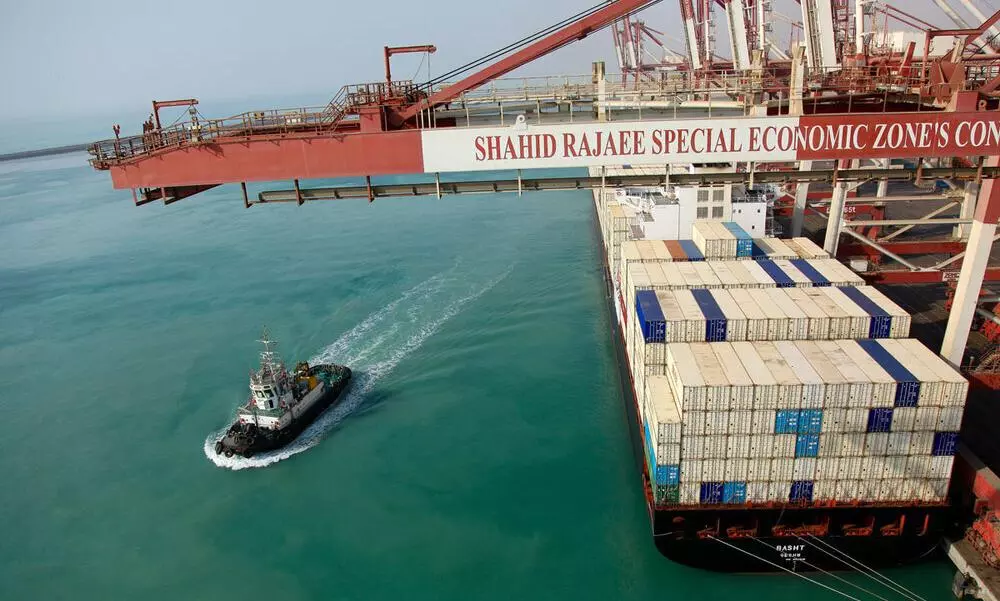
Iran's largest container port, Port of Shahid Rajaee at Bandar Abbas.


The United States President Donald Trump on April 12, 2026, announced that the US would impose a naval blockade on Iranian ports, with enforcement expected to begin on April 13 at around 10 a.m. Eastern Time (7:30 p.m. IST).
This began with high-level negotiations between the US and Iran held in Islamabad, Pakistan which lasted for around 21 hours and concluded on April 12, 2026. The talks were aimed at easing tensions and addressing key issues, including Iran’s nuclear programme, but ended without any agreement. These negotiations followed the two week ceasefire that happened on April 8 between the two countries.
Immediately after the talks collapsed, Trump made a public statement through his Truth Social media account. In this first communication, he said that “effective immediately” the United States Navy would begin the process of “blockading any and all ships trying to enter, or leave, the Strait of Hormuz.” This marked the initial announcement of enforcement action and indicated a broad approach that appeared to target vessel movement through the entire strait, a critical global shipping route.
Following this, his next statement stated that the blockade would apply to “all maritime traffic entering or exiting Iranian ports.” It further added that the measure would be enforced on vessels of all nations engaged in such movements. This communication effectively narrowed the scope of the earlier statement, defining the action as a blockade targeting Iran-linked shipping and maritime trade flows rather than a complete closure of the Strait of Hormuz. “The blockade will be enforced impartially against vessels of all nations entering or departing Iranian ports”, said the US Central Command release.
Iran rejected the proposed blockade, calling it illegal. Iranian officials said any attempt to restrict access to its ports would be treated as an act of war, according to Reuters,. The Islamic Revolutionary Guard Corps warned that enforcement would draw a response and added that security of shipping in the Gulf could be affected if Iranian exports are blocked. Tehran also reiterated that it holds control over the Strait of Hormuz and opposed any foreign interference in its operations. It has previously stated that restrictions on its trade would impact wider maritime movement in the region.
The announcement follows weeks of disruption in the Strait of Hormuz, where vessel movements have been affected by heightened tensions. Shipping activity has seen increased naval presence and tighter monitoring, with periodic restrictions on transit linked to the ongoing conflict.