
India’s pharma logistics faces the patent cliff head‑on
As blockbuster drugs lose exclusivity, India’s supply chains are gearing up for a surge in generics, tighter EU rules, and a cold‑chain future that demands speed and visibility.


India’s pharmaceutical industry is preparing for a very important change. On the surface, it may look like another phase of generic drug growth. But when you look closely, something much bigger is happening behind the scenes.
Over the next few years, several major drugs across the world will begin losing patent protection. Once patents expire, other companies can manufacture cheaper generic versions of those medicines. India, already known as one of the world’s biggest generic medicine producers, is expected to play a major role in this shift. But this is not only a manufacturing story.
It is also a story about warehouses, refrigerated trucks, airport handling, API movement, compliance paperwork, temperature monitoring and Europe-bound freight corridors.
In simple words, India’s pharma supply chain is entering a new phase and everyone across the industry is trying to understand whether the system is truly ready for what is coming next.
The timing is important because this patent expiry wave is arriving at the same time as discussions around the India–EU Free Trade Agreement. If the agreement moves forward, Indian pharmaceutical exports to Europe could become more competitive because of lower tariffs and easier market access.
That means higher movement of medicines. And higher movement means more pressure on supply chains.
What is making the situation even more interesting is that this shift is no longer theoretical.
It has already started happening in India. In March, several Indian pharmaceutical companies launched generic semaglutide products almost immediately after Novo Nordisk’s core Indian patent expired. Companies including Dr. Reddy's Laboratories, Zydus Lifesciences, Alkem Laboratories, Sun Pharmaceutical Industries and Glenmark Pharmaceuticals all entered the market with their own semaglutide brands as soon as the patent protection ended.
Dr. Reddy’s launched Wegovy-related products under the brand name Reslim, while Zydus introduced Semaglyn, Alkem launched Slimigo, Glenmark introduced Lirafit and Sun Pharma entered the space with its own semaglutide offerings as competition intensified across the market. Some companies launched pre-filled injection pens. Others introduced reusable multi-dose devices. Prices also dropped sharply as competition increased.
According to the Pearce IP report, monthly treatment costs began falling from earlier premium pricing levels to nearly ₹1,800–₹4,200 depending on the product and dosage. And the rush may only grow bigger.
Reuters reported that more than 40 Indian drugmakers are expected to introduce over 50 semaglutide brands following the patent expiry. This matters because semaglutide is not a niche medicine anymore.
The drug sits at the centre of the global obesity and diabetes discussion today. And in India, where diabetes and obesity cases continue rising, companies see a massive future market.
But the moment so many players enter at the same time, pressure automatically shifts towards the supply chain.
Factories need to produce at scale. Injection pens need handling systems. Warehouses need temperature control. Transport networks need refrigerated movement. And distribution systems suddenly need to support a much larger patient base than before.
That is why the semaglutide wave is becoming one of the clearest examples of how patent expiry is now directly influencing India’s pharma logistics ecosystem.
A long list of drugs is preparing to go off patent
The shift is not being driven by one or two medicines alone.
The GreyB report on drug patents expiring between 2026 and 2030 shows a long list of important drugs scheduled to lose patent protection over the coming years.
These include therapies linked to cancer, diabetes, obesity, liver disease, antivirals and rare diseases. Medicines such as Epclusa, Vosevi, Verzenio, Rinvoq, Kisqali and several others are part of this larger patent expiry cycle.
And this is where the story becomes interesting. Many of these are not simple medicines that can move through normal logistics systems without special handling. Some require controlled temperatures. Some are injectables. Some are highly sensitive therapies. Some are extremely expensive.
That changes everything for logistics companies. For years, pharma logistics mainly focused on moving large volumes safely from factories to markets. But now, products themselves are becoming more complex.
And when products become more complex, supply chains also become more complicated.
Why everyone is suddenly talking about GLP-1 drugs
If there is one category that is creating the most discussion inside pharma companies today, it is GLP-1 drugs.
What is also making this category important is that not all GLP-1 drugs work in the same way.
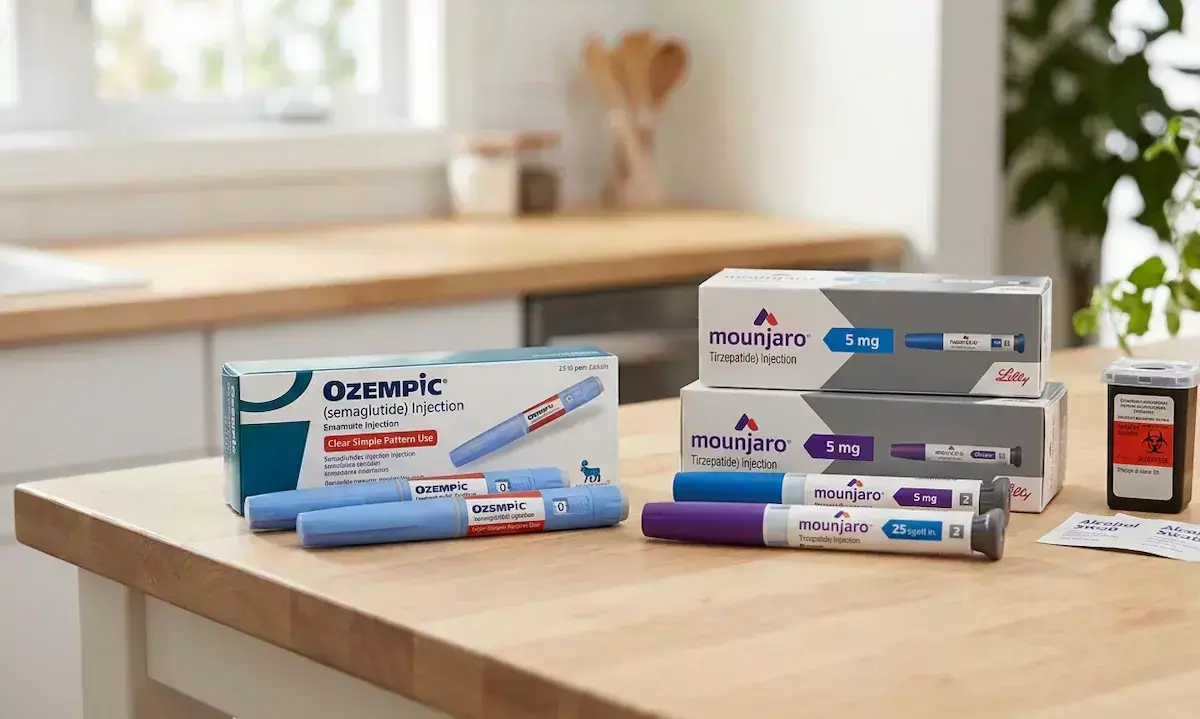
Semaglutide-based medicines such as Wegovy and Ozempic mainly work through the GLP-1 hormone pathway. But Mounjaro, whose active ingredient is tirzepatide, works differently because it targets both GLP-1 and GIP hormones together. That dual action is one of the reasons why many companies and healthcare experts believe tirzepatide-based therapies may become even bigger in the coming years.
The difference may sound technical, but inside the pharma industry it is becoming a major discussion because these therapies are showing stronger appetite suppression and higher weight-loss results in many studies compared to earlier GLP-1 drugs.
That is also why companies are watching drugs like Mounjaro very closely even while semaglutide continues dominating headlines.
And for supply chains, the importance is even bigger. Whether it is semaglutide or tirzepatide, these medicines usually move through highly controlled cold-chain systems and require temperature-sensitive handling during storage and transport. As more Indian companies enter this space, logistics networks will increasingly need refrigerated warehousing, compliant transport systems and real-time shipment visibility to support rising demand.
According to Sreenivas Rao, Global Head of Supply Chain at Sun Pharmaceutical Industries, the biggest excitement in the industry right now is not only around semaglutide, but around drugs like Mounjaro and the larger GLP-1 class.
These medicines were first linked mainly with diabetes treatment. But today they are also connected with obesity prevention and lifestyle-related health management.
Rao explains that these drugs are changing the way pharma companies think about healthcare itself. “It all started with saying that we will cure blood sugar,” he says. “But now these drugs are more about prevention.”
That changes demand patterns completely. Normally, companies can estimate how many patients may need a medicine. But with prevention-based drugs, the market becomes much larger because even people without major illness may begin using them.
“The moment a drug like that goes off patent, it is not only the number of patients who are coming on board,” Rao says. “People who are not patients are also coming on board.” That is where capacity planning becomes difficult.
The real challenge begins after patent expiry
One important thing many people outside the industry do not realise is that patent expiries are not sudden events. Pharma companies know years in advance when a drug is expected to lose protection. Rao says companies have often been preparing for these opportunities for nearly a decade before the actual expiry happens.
And Ratish Mukhoti, Head Regional SCM - EMEU & API, Cipla shares a similar view. “This was a planned one,” he says. “It’s not that it has gone all of a sudden.”
Mukhoti also does not see immediate pressure on API production because companies have already prepared ecosystems around future generic manufacturing. But even if production planning is manageable, another problem begins once demand suddenly rises after generic entry. That is where logistics starts becoming difficult.
Because the challenge is no longer only about making medicines. The challenge is about moving them properly.
India’s cold-chain system is still catching up
Many of the newer medicines now entering the market need temperature-controlled handling. And this is where Indian pharma logistics still faces gaps.
Rao explains this very simply. “There are three temperature zones pharma talks about,” he says. “15 to 25°C is air conditioning. 2 to 8°C is your refrigerator. -20°C is your freezer.”
The problem is that many new therapies, including GLP-1 drugs, need transportation in the 2 to 8°C range. That means they need refrigerated movement throughout the journey. “We do not have too many trucks who can actually take 2 to 8°C,” Rao says.
That one line explains why pharma logistics is becoming such an important topic inside boardrooms today. Because if even one part of the chain fails like a warehouse, a truck, an airport transfer or a delivery point then the medicine itself may become unusable.
Logistics companies are now redesigning their networks
Across the logistics industry, companies are already preparing for this shift. Kuehne+Nagel says it is expanding healthcare-focused logistics infrastructure near India’s major pharma hubs.
According to Yuvraj Sharma, Head of Sales & Marketing, Kuehne+Nagel the company now operates six HealthChain- and CEIV Pharma-certified branch offices in India along with temperature-controlled facilities in Bengaluru and Hyderabad. But Sharma says the real issue is no longer only about building facilities. The bigger challenge is consistency across the entire network.
“At a national level, the priority is now to ensure these advances are applied consistently across the full network, particularly at the first and last mile,” he says. That becomes important as shipment volumes rise and products become more sensitive.
The gaps become bigger outside metro cities
Inside major pharma hubs, cold-chain infrastructure has improved significantly over the years. But once shipments move outside those clusters, the situation changes.
Blue Dart says there are still major gaps in smaller cities and regional locations. According to Vikram Manuskhani, National Operations Head at Blue Dart, temperature-controlled transport and storage remain limited across Tier II, Tier III and rural regions. And that matters because healthcare demand is spreading far beyond large urban centres.
“The country needs meaningful investment in refrigerated transport, decentralised storage and monitoring systems,” Manuskhani says. This is especially important as biologics, insulin, vaccines and specialty medicines continue growing.
Pharma cargo itself is changing
Another major shift happening quietly is the nature of the cargo itself. The medicines entering future supply chains are becoming more specialised.
Mansukhani says it is seeing a growing movement of biologics, vaccines, clinical trial material and specialty medicines. That means logistics companies are no longer handling only cartons of tablets. Now they are dealing with products that may need constant monitoring, strict temperature control, faster movement, and detailed compliance checks.
Express logistics therefore becomes extremely important. Whether it is APIs, raw materials, diagnostic samples or clinical trial shipments, timing becomes critical. “Temperature assurance, precise handling and real-time coordination are not optional,” Manuskhani says.
Warehouses are also changing
The pressure is not only on transport systems. Warehouses are also undergoing major change as pharmaceutical supply chains become larger, faster and more sensitive. For years, pharma warehouses mainly focused on storage and inventory movement, with products arriving from factories, remaining stored and later moving to distributors, hospitals or export markets. But that model is changing quickly.
Today, warehouses are expected to do far more than store medicines. They are becoming compliance-driven control centres where companies need visibility over inventory, temperature conditions, batch movement and product handling at every stage.
Allcargo Logistics says pharmaceutical supply chains are becoming “more volume intensive and compliance driven” as generic volumes rise. According to Suresh Narayanan, Head of Operations at Allcargo Logistics, the company is strengthening pharma logistics through a nationwide network of distribution centres, transshipment hubs and strategically located warehouses across key logistics corridors.
That network is important because pharmaceutical cargo cannot afford delays or handling gaps as shipment volumes increase. Medicines may move through multiple points before reaching customers, including warehouses, distribution hubs, airports, hospitals, pharmacies and export gateways. At every stage, companies need visibility over product location, batch identity, storage duration and compliance with handling conditions.
Narayanan says integrated warehouse management systems are helping standardise inventory management, batch tracking and compliance while improving coordination across networks.
As patent expiries continue to drive higher generic volumes, pharmaceutical supply chains are becoming more volume intensive and compliance driven
Suresh Narayanan, Allcargo Logistics
As medicines become more sensitive and valuable, companies need greater control over storage and movement, especially for temperature-sensitive products. Some medicines require refrigerated storage, while others need tightly controlled handling before dispatch. As more specialty drugs, injectables and biologics enter the market after patent expiry, warehouses will increasingly require temperature-monitoring systems, controlled handling zones and faster turnaround.
Pressure is also rising as pharma companies move products faster while maintaining strict compliance, turning warehouses from passive storage spaces into active operational hubs that maintain product quality, visibility and regulatory control.
Digital tracking is becoming essential
One of the strongest themes across the industry today is visibility. Logistics companies want to know where a shipment is, what temperature it is moving at and whether there is any risk during transit. At Kuehne+Nagel, digital monitoring systems now combine carrier data with IoT-based temperature and location tracking.
According to Sharma, the company’s HyperCare teams monitor shipments continuously so that action can be taken before problems damage product quality. That kind of monitoring is becoming important because future pharma supply chains will carry more high-value and sensitive cargo than before. And when products become more sensitive, there is less room for mistakes.
Europe could become a bigger opportunity for Indian pharma
The India–EU Free Trade Agreement could add another layer to this entire story. According to Kuehne+Nagel, India already exports around $5.8 billion worth of pharmaceuticals to Europe every year. But the removal of European tariffs of up to 11% could make Indian pharmaceutical products more competitive in regulated markets. That may lead to stronger movement of complex generics, injectables and biosimilars. As a result, logistics companies are already preparing for higher activity on the India–Europe corridor.
“We are seeing clients expand production in India and integrate it more deeply into their global supply networks through new and direct export lanes,” Sharma says. This means Europe is no longer only a trade opportunity. It is becoming a logistics opportunity as well.
Supply chains are moving closer to the boardroom
One thing becomes very clear after speaking with both pharma companies and logistics operators. Supply chains are no longer sitting quietly in the background. They are becoming central to pharma strategy itself. That is because the next phase of medicines will require more than just manufacturing strength.
They will require better temperature control, stronger compliance, faster movement, better visibility, and more reliable distribution systems.
Rao says pharma companies are now discussing compliance and distribution practices much more seriously than before. And that is because medicines themselves are changing.
Items like semaglutide will create an issue with respect to capacity because you do not know what is the actual size of the marketSreenivas Rao Nandigam, Sun Pharma
Some future therapies may be personalised for individual patients. Some may have very short shelf lives. Some may need extremely precise handling. All of that increases the importance of logistics.
The next few years could reshape India’s pharma movement
India has spent decades building itself into a global generic medicine powerhouse. But the next phase may demand something different.
The coming patent expiry wave is not only about making cheaper medicines after patents end. It is about whether India’s supply chain ecosystem can handle larger volumes, more sensitive products, stricter regulations, and faster global movement at the same time.
The industry appears confident about manufacturing preparedness. But logistics companies are clearly signalling that distribution networks, cold-chain systems and compliance infrastructure will now face greater pressure.
For years, pharma logistics was treated as a support function. Today, it is slowly becoming one of the most important parts of the pharmaceutical business itself. And perhaps that is the biggest change of all.