
Edgistify opens 68,000 sq ft warehouse at IndoSpace Luhari for brands
Anticipating festive season volume spikes, supply chain firm Edgistify has launched a third major fulfilment centre near Gurugram to support brands.
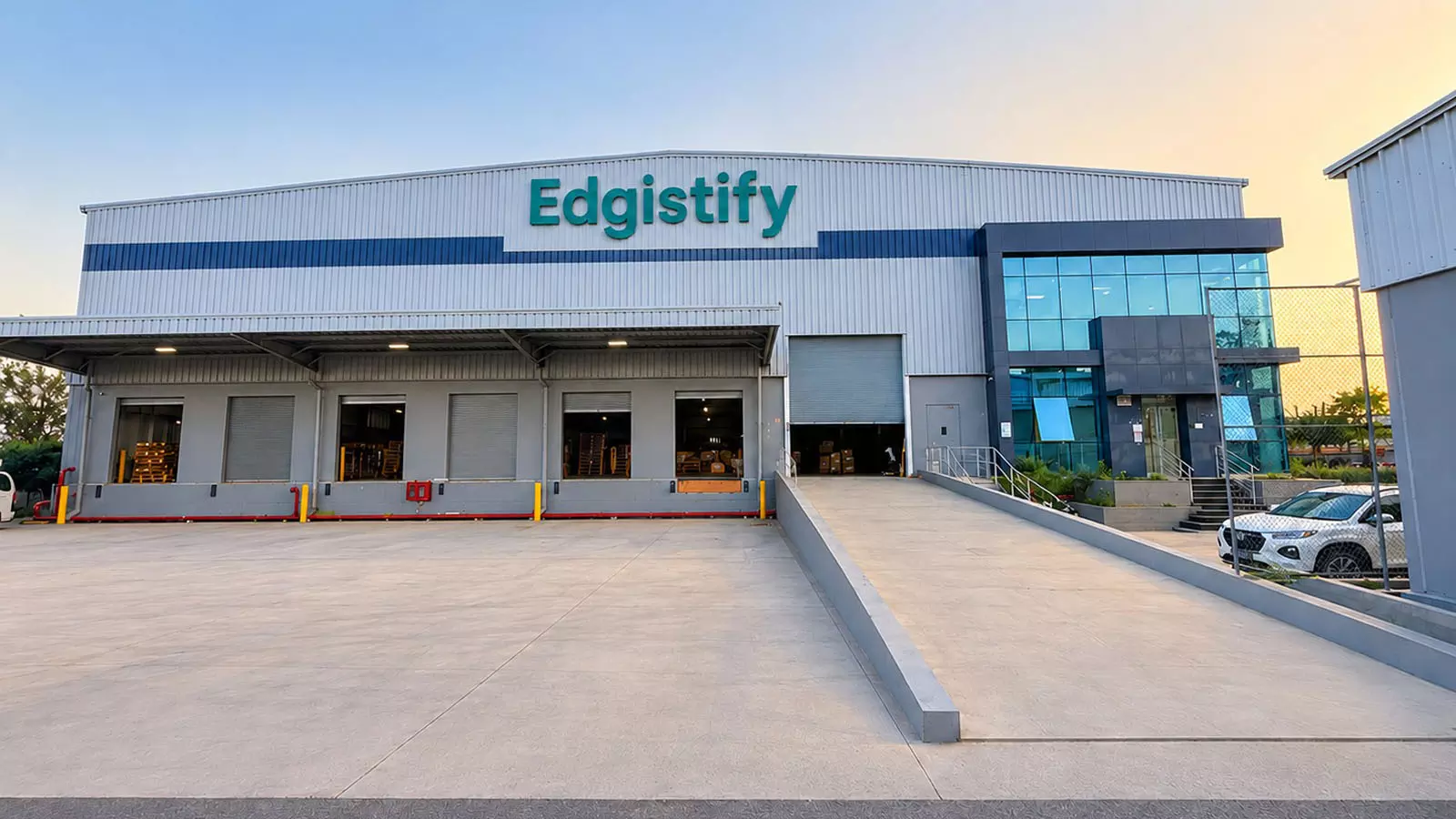


Just in time for the most demanding retail period of the year, Edgistify, a leading supply chain and fulfilment provider for over 70 consumer brands, has officially expanded its physical infrastructure in North India. On 16 October 2026, the company announced the launch of a new 68,000 sq ft Grade A warehouse located within the IndoSpace logistics park at Luhari, Haryana.
This significant addition marks the company’s third high-grade fulfilment centre in the crucial Gurugram region. According to corporate representatives, the facility is already fully operational, with both new and existing customers actively shipping commercial orders from the site.
The strategic timing of the launch is deliberately aligned with the approaching festive season, which remains the busiest and most lucrative time of the year for consumer brands operating across the Indian subcontinent. Edgistify noted that its two existing sites in the Gurugram area had recently reached their maximum capacity. The opening of the Luhari location provides rapidly growing brands with a centralised, state-of-the-art facility to stock up on essential inventory early. This unified approach prevents companies from having to spread their stock across multiple third-party logistics partners during peak demand, a fractured strategy that often leads to operational inefficiencies, stockouts, and delayed end-consumer deliveries.
Designed for robust scale, the company’s regional operations have been expressly built to handle sudden order spikes of up to 2.5 times their normal daily volume. Furthermore, the Luhari facility operates as a highly capable omnichannel hub. It efficiently dispatches commercial shipments for direct-to-consumer websites, digital marketplaces, quick-commerce applications, and modern trade retail outlets, all orchestrated seamlessly from a single, consolidated inventory pool.
The exponential rise of the quick-commerce sector has notably shifted business-to-business logistics requirements. Today, quick-commerce platforms increasingly demand that consumer brands deliver smaller consignments more frequently, often requiring strict adherence to rigidly fixed delivery slots. Meeting these stringent criteria necessitates placing stock in close physical proximity to consumer demand hubs whilst maintaining an adequate number of loading docks to turn commercial transport trucks around swiftly.
Umang Shukla, Co-founder and Chief Executive Officer of Edgistify, highlighted the operational necessity of the recent expansion. "Our brands have grown faster than our existing space could keep up with, and the festive season is when that pinch shows most," he explained. "We chose IndoSpace because they build some of the best warehouses in India. Luhari is run by the same team as our other sites, so for our customers it is simply more room in a network they already know."
Technology plays a fundamental role in maintaining these smooth, integrated operations. Brands that prefer to utilise their own proprietary warehouse management systems can continue to do so without interruption, whilst the experienced Edgistify team manages the physical floor operations. For those lacking sophisticated internal software, the company offers EdgeOS, its proprietary in-house digital platform. EdgeOS integrates seamlessly with major digital storefronts, top-tier marketplaces, and established enterprise resource planning systems. Ultimately, this technical flexibility means that existing clients can effortlessly migrate or expand their stock into the Luhari warehouse without undergoing the tedious friction of a new vendor onboarding process.
Through this expansion, Edgistify continues to cement its position as a critical enabler for modern consumer brands, ensuring that the supply chain remains a competitive advantage rather than a seasonal bottleneck.