
Smart & future-ready
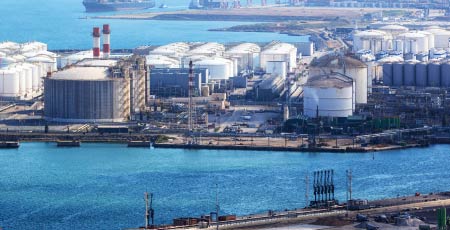


From security to asset protection; from monitoring to access control and from compliance to communication; modern seaports from around the world are rapidly using network-centric and future-ready smart innovations for security and operational efficiencies.
ITLN Bureau
The modern, global economy lives by one rule: faster is better. As technology breakthroughs and innovations take hold, the world’s markets demand efficiency, fluidity and speed. Nations that fail to keep up watch as other countries reap the benefits. Just look at seaports around the world. Many of them require huge investment to keep pace with the rapidly evolving global trade and commerce. By acting as gateways to domestic and international markets, our ports play a critical role in our ability to quickly and efficiently transport raw materials, finished products and everything in between. The very idea of ‘seaport of the future’ is rapidly getting established as port authorities are increasingly using the innovations of the latest technology and network -centric communications to improve security of cargo, including containers, bulk and break-bulk shipments, as well as passengers. Seaport commissioners and directors are facing an increasingly complex range of operational challenges in their management of highly complex, multi-tenant port environments. Significant competitive challenges, ongoing labor issues, and new security requirements mandated by respective governments and the International Maritime Organization (IMO) are straining already scarce resources. For instance in the US in addition to the growing need for more advanced applications and systems, the US Customs Service’s Container Security Initiative (CSI), pilot programmess such as Operation Safe Commerce, and requirements in Part A of the new IMO-sanctioned International Ship and Port Facility Security (ISPS) Code are placing unprecedented pressure on port managers to innovate and adapt quickly to the new realities of port security. According to an industry white paper on the latest innovations in technology being used at seaports, all these new technologies must be integrated into an existing port information infrastructure that, today, is often highly fragmented across both port authority and tenant operations. “Port managers must use investments in security upgrades to enhance overall productivity. This is the future for port operations,” recommends the white paper. The need to safely manage an ever-expanding cargo and passenger load is driving many port officials to evaluate new technologies that drive increased efficiency, improved security, and revenue for port authorities, as well as tenants. There is greater usage of smart solutions to improve decision making and responsiveness at ports. Compliance and communication with government organizations and other ports are more seamless because of the greater integration of technology into every process of port operations. Innovative solutions have made port managers to be more flexible and agile. All these leading to increased satisfaction among terminal operators and other tenants. Essentially a converged communications infrastructure is an important enabler of integrated security and operational efficiency. Security technology is developing at a rapid rate, both in terms of affordability and potential. Security at a modern seaport is at the centre of a complex and multi-faceted challenge. Seaports demonstrate the principle that different sites possess unique features that influence the design and operation of security measures. Their sheer size, the need for widely dispersed multiple points of access and the constant need to accommodate high volumes of people and traffic provide a classic example of the importance of integration and flexibility. Modern security technology is making the key element of surveillance increasingly effective and affordable by enabling the centralised control of security over the largest of installations. The advent of digital video has now eliminated all the former constraints on transmission distance. Digital quality, real-time images can be transmitted via Local and Wide Area Networks and Internet links and viewed literally anywhere, allowing centralised monitoring across even the largest ports. In order to meet projected 2025 freight volumes, the American Association of Port Authorities says nearly a third of the US ports need $100 million each in upgrades. This level of underinvestment doesn’t just affect seaside communities. America’s chronically underfunded ports negatively impact our entire economy and undermine our already shrinking middle class. The inability of the US ports to keep up with demand puts a significant strain on America’s entire supply chain. Seventy percent of the US imports and 75 percent of the US exports go through seaports. This means inadequate infrastructure at a single port can create a ripple effect felt by millions. Ports in the US handle about six million incoming containers each year, or approximately 17,000 containers each day. However, inspectors open only about two percent of these containers. An important priority for seaports is therefore to ensure the security of containers and to prevent unauthorised parties from tampering with cargo. Shippers are using novel methods such as seals with embedded radio-frequency identification (RFID) tags to detect container tampering. In the future, RFID may be combined with global positioning systems (GPS) on ships, land transport vehicles, and gantry cranes to ensure container integrity while tracking and documenting container movement and storage. In addition to ensuring that containers remain intact, shippers, seaports, and customs authorities must inspect containers to ensure they do not hold proscribed goods such as stolen automobiles or weapons. Mobile, noninvasive inspection systems are being employed to allow for the inspection of containers with minimum effect on the flow of commerce. These systems create low-resolution pictures of cargo inside containers, using x-ray and gamma ray technologies. These images can be viewed directly, transmitted to appropriate authorities using wireless networks, or archived for later reference. Seaports are also deploying numerous other sophisticated sensors to secure the complete spectrum of seaport operations and physical assets. New technologies such as intelligent fence systems, chemical and biological detectors, underwater cameras, and infrared perimeter motion detectors are other examples. Emerging biometric and remote sensing applications can be greatly enhanced by a robust and flexible network infrastructure. In order to improve operational efficiencies seaports are on a mission to move cargo quickly and safely through the port. To accomplish this mission, a reliable, flexible, and secure flow of information is vital and port authorities are quickly adopting information-driven infrastructure to improve overall efficiency.