
Small change but big impact
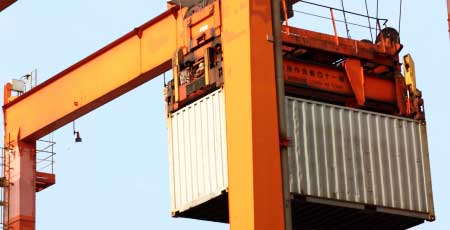


A new rule effective from July 1, 2016 makes shippers whose name appears on the bill of lading to verify the gross mass of a container carrying cargo when tendering the container to the ocean carriers and terminals. What are its implications? And how challenging it is to fully implement it from day one.
On July 1, 2016, a new regulation from SOLAS (Safety of Life at Sea convention of the International Maritime Organization or IMO) takes effect requiring shippers whose name appears on the bill of lading to verify the gross mass of a container carrying cargo when tendering the container to the ocean carriers and terminals. The new rules come in the form of an amendment to the Safety of Life at Sea Convention’s (Solas) container weighing stipulations. The move is designed to prevent shipping casualties; mis-declared box weights have contributed to a number of incidents in recent years, including the capsizing of a feeder ship in Spain last year. On July 1 the rule becomes not just international law under the IMO but national law within the 162 countries that are signatories to the SOLAS convention. The legally responsible party for providing a verified gross mass (VGM) signed either electronically or on paper is the shipper. Carriers will not load containers anywhere in the world unaccompanied by a VGM, because doing so would leave their ships out of compliance with flag state and insurance rules. Post July 1, loading a container without verified container weight will be considered as a violation of SOLAS by the vessel operator and marine terminal operator. It is estimated that approximately 300,000 container weights will need to be certified each day globally, and roughly half of all booking requests and shipping instruction submissions each day are non-digital, in other words, in paper form. Overall, as the first quarter of 2016 came to a close, shippers worlwide were very busy determining how they will be in compliance, but many questions remain particularly around governments' plans for penalties for non-compliance, or allowable tolerances from stated VGMs. In India the Directorate General of Shipping (DGS) said it will issue guidelines with respect to container weight verification soon. "We will be one of the first few countries on a task as daunting as this," said Deepak Shetty, Director General, Shipping, Deepak Shetty during his meeting with Mumbai and Nhava Sheva Ship Agents Association (MANSA).
For the shipper Under the new rule, the shipper named on the ocean bill of lading is the party responsible for providing the container carrier and the terminal operator with the verified gross mass of a packed container. The carrier and the terminal operator must not load a packed container aboard a ship unless they have the verified gross mass for that container. The “shipper” according to MSC 1 / Circ. 1475 (the IMO’s guidance on VGM), is “a legal entity or person named on the bill of lading or sea waybill or equivalent multimodal transport document as shipper, and/or who (or in whose name or on whose behalf) a contract of carriage has been concluded with a shipping company.” It is mandated that the shipper responsibility doesn’t go away if a shipper uses a forwarder to pack and weigh a container, forward it to the port and even make the booking with the carrier. If the forwarder is acting purely on the instructions of the shipper to undertake that work on his behalf, and the shipper’s name is still what appears on the bill of lading, it’s the shipper that is responsible for verifying the gross mass weight.
Risks for shippers The rule will be officially enforced by the maritime authorities of individual nations, whose implementing regulations will vary, potentially widely depending on country and region. Enforcement agencies may implement measures to satisfy themselves that compliance is achieved, which could include documentation checks, auditing or random weight checks. The carriers and terminals are expected to be disciplined in their unwillingness to accept containers tendered to them without the required VGM documentation in order to avoid costs and penalties such as delayed sailings, to avoid costs for the storage and handling of affected containers which could congest terminals and which might be difficult to recover from the shipper, and especially to avoid liability in the event of a casualty whether at the dock or at sea. No container lacking a VGM will be included on the "terminal load list" which is the list of all containers to be loaded provided to the terminal by the ocean carrier prior to the commencement of vessel loading
For 3PL companies Most shippers use third-party logistics companies (3PLs) to pack and transport containers to ports. Therefore, it is fair to expect that contracts for contract logistics and freight forwarding services will be amended to reflect the VGM requirement. Shippers can expect 3PLs to try to assess an incremental fee to weigh containers. It is unrealistic to expect the shipper themselves to perform this work themselves in most cases since they lack resources, space and staff able to undertake the actual weighing of cargo or loaded containers. Therefore all 3PLs and freight forwarders will have to offer such services in some form, but in order to minimize supply chain disruption as the implementation date approaches in 2016, a customer should inquire early to be certain that the requirement can be met. In situations where the manufacturer loads the container, the shipper - who is the responsible party under the rule - will have to leverage vendor-compliance tools and processes to ensure that the weight the manufacturer states for the bill of lading is the real weight that will hold up in an inspection.
For partial loader versus master loader Shippers that only tender partial loads to a forwarder are not responsible for providing a VGM. The responsibility for providing the accurate, verified gross mass of a co-loaded container remains with the shipper named on the maritime carrier’s bill of lading, i.e. the “master” loader or freight forwarder or NVOCC. The contractual terms between the ultimate shipper and a co-loader may require the shipper to provide a weight to the master loader, or the master loader or forwarder might undertake the weighing process themselves, but either way this would be a commercial arrangement between those parties. However, the situation will be different in the case of full container loads that move under NVOs' contracts with the carriers.
Time of weighing process The question is whether the weighing should be done at the port or earlier in the supply chain? There is a lot of debate around this issue currently. Some ports have offered the weighing process at the port, while others have made it clear that they don’t have the ability to and thus want shippers to obtain the VGM earlier in the supply chain. It is believed that it is unrealistic to expect weighting units to be installed at ports in even close to a necessary quantity to weigh every container prior to loading, thus in many if not most cases shipper will need to have their cargo weighed prior to arrival at the port. At some ports, even if the capital and equipment existed, there is simply not enough physical space or related infrastructure to accommodate weighing of containers.
For container turned away at the terminal gate Containers may get turned away at the gate if they lack the required VGM. Marine terminal operators, already combating congestion due to mega-vessels are concerned that accepting non-compliant containers which by law cannot be loaded risk further congesting their facilities. There are two scenarios if a container gets turned away, one if the container does not arrive at the terminal with the required VGM document and is turned away, and two if it is allowed into the terminal but is subject to a random check and the weight is determined to be different from the declared VGM weight. In the first case arrangements will have to be made to transport, store and weigh the container so a certified VGM can be presented to the carrier and terminal. This will by definition involve additional trucking and storage cost to the shipper, which is leading carriers to be particularly focused on assisting shippers to ensure that containers don't arrive at the gate without the VGM. In the second scenario, the terminal will initially sequester and store the container and will most likely charge appropriate fees, on top of any fines assessed.
Deadline to give container weight verification The VGM "cutoff" will vary by carrier and port and is not mandated by the SOLAS requirement. However practically speaking the shipper must submit it early enough for the carrier to use the VGM figure in its stowage plan, which is a requirement the SOLAS rule puts specifically on the terminal and carrier. Carriers can be expected to provide shippers with cut-off times within which the carrier must receive the required container weight verification from the shipper for vessel stowage planning prior to shipment. This will likely be a newly imposed cutoff time separate from terminal arrival cutoff to make a certain vessel sailing.
Cost of non-compliance Actual payment fees for non-compliance have largely not been established or published yet by national governments, but the costs for failing to present a certified VGM document in terms of storage or re-handling can be expected to go way beyond any actual official penalties assessed. In terms of penalties, these could depend on national legislation; national maritime administrations can levy punishments ranging from fines and sanctions to jail time. Carriers can thus be expected to put preventative measures in place to avoid these costs by ensuring they receive the VGM and refuse to accept containers without it. In a broader sense, multi-national corporations adhere to a policy of 100 percent legal compliance throughout their operations, judging the costs for non-compliance irrespective of the law or jurisdiction to be inconsistent with responsible corporate governance. Thus large shippers are digging deep into their supply chains, making extensive process and operational adjustments in order to ensure they will be in compliance by July 1 irrespective of what guidance, or lack thereof, they are receiving from carriers, governments and other parties. The accuracy standards The weighing equipment to be used must meet the applicable accuracy standards and requirements of the country in which the equipment is being used. There is no such thing under SOLAS as a “verified weigher.” The only obligation under SOLAS for any party weighing a packed container is to use equipment certified by the relevant national standards. But national standards may get more specific, for example national governments may as part of their enforcement policies implement requirements applicable to owners of weighing equipment and could determine acceptable levels of accuracy of the weighing equipment used. There is no provision in the SOLAS rule for any margin of error; the rule is only a physical weighing requirement, thus verified gross mass derived using compliant equipment and procedures will meet the legal requirements.
Cost of implementing new rule Shippers should expect their costs to increase as a result of the SOLAS rule. According to a report released in March, complying with the rule could add 10 percent to the cost of international container transport. For instance according to a report from financial services firm Cowen & Co. says the cost to ship a container from Los Angeles to Shanghai could increase by 14 percent.