
VOC Port cuts carbon emissions by 45%, leads green growth
VOC Port reduced net carbon emissions by 45%, with renewable energy offsetting nearly 94% of energy use.
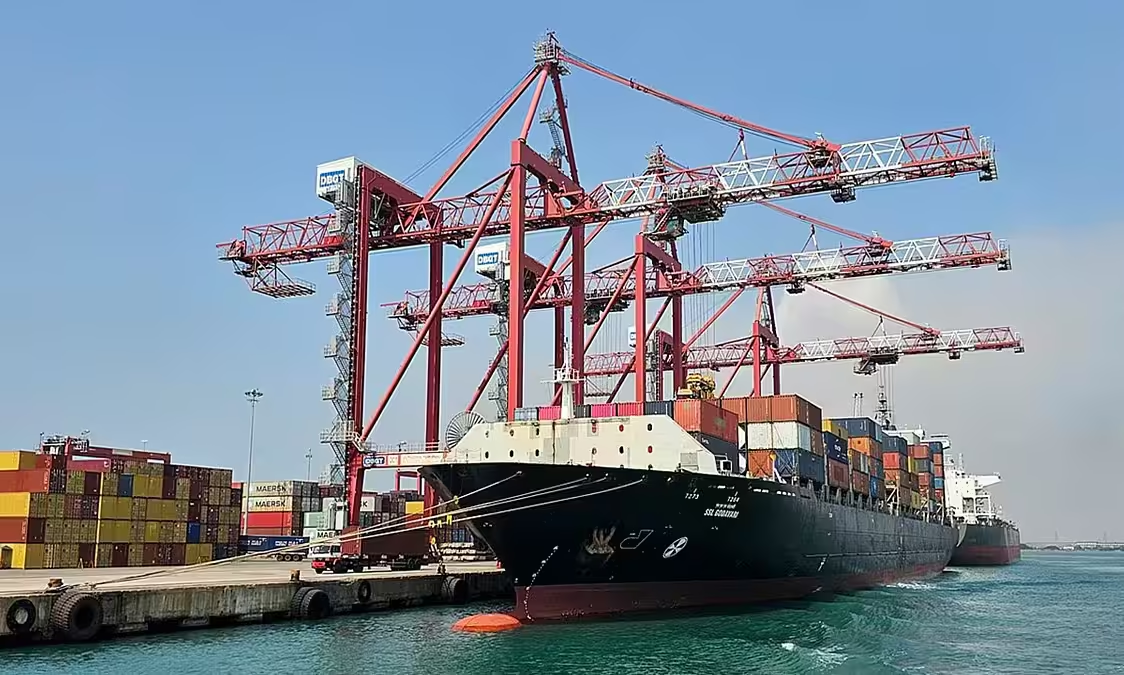


Union Minister of Ports, Shipping and Waterways Sarbananda Sonowal on Tuesday announced that V.O. Chidambaranar Port Authority (VOCPA) has emerged as a leading example of sustainable maritime development in India after reducing net carbon emissions by around 45%, according to the port’s first Sustainability Report. The announcement was made during the inauguration of multiple sustainability, education and innovation initiatives at VOC Port in Tamil Nadu, where the minister highlighted how renewable energy adoption, green infrastructure and technology-driven transformation are helping position the port as a future-ready maritime hub.
According to the Sustainability Report released during the event, renewable energy now offsets nearly 94% of VOC Port’s energy-consumption equivalent, while carbon intensity per tonne of cargo has declined by nearly half over the last four years.
The minister said the progress reflects a broader strategy of combining infrastructure growth with environmental responsibility and community development.
“VOC Port is demonstrating what can be achieved when infrastructure development is guided by sustainability, innovation and community welfare. The reduction in net carbon emissions is an important milestone in India’s transition towards greener and more responsible maritime growth,” Sonowal said.
A key announcement during the event was the formal commencement of academic activities at Kendriya Vidyalaya, VOC Port, for the 2026–27 academic session. Established with approval from Kendriya Vidyalaya Sangathan, the school will initially operate from the Port School campus and offer CBSE education to children of port employees, Central government personnel and the local community.
The initiative is expected to strengthen educational infrastructure in Tuticorin and improve access to quality and affordable education. The event also marked the release of an IIM Calcutta case study titled, The Hydrogen Pivot: Orchestrating the Green Transition at V.O. Chidambaranar Port Authority, documenting the port’s shift from a conventional cargo gateway to a green energy and sustainable maritime hub.
The study highlights VOC Port’s initiatives in renewable energy deployment, electrification and green hydrogen development, including India’s first green hydrogen pilot project at a major port.
Further strengthening its environmental credentials, VOC Port received recognition as a Scope-2 Emission Free Port, acknowledging its transition toward cleaner energy and lower-carbon operations. In another development, VOC Port Authority signed a Memorandum of Understanding with Gati Shakti Vishwavidyalaya, Vadodara, to collaborate on research, innovation, logistics education, skill development and sustainable port operations.
The partnership is expected to support the creation of a Centre of Excellence in Maritime Logistics and Port Management and deepen industry-academia collaboration. The minister also launched the PortGPT mobile application, making VOC Port the first major port in India to extend an enterprise-grade generative AI platform through a dedicated mobile application.
The application is expected to improve operational efficiency, strengthen knowledge management and support data-driven decision-making as part of the port’s broader digital transformation strategy.