
Strait of Hormuz disruption begin to rattle global shipping
Carriers suspend bookings, vessels divert and freight rates rise as security risks escalate in the Gulf.
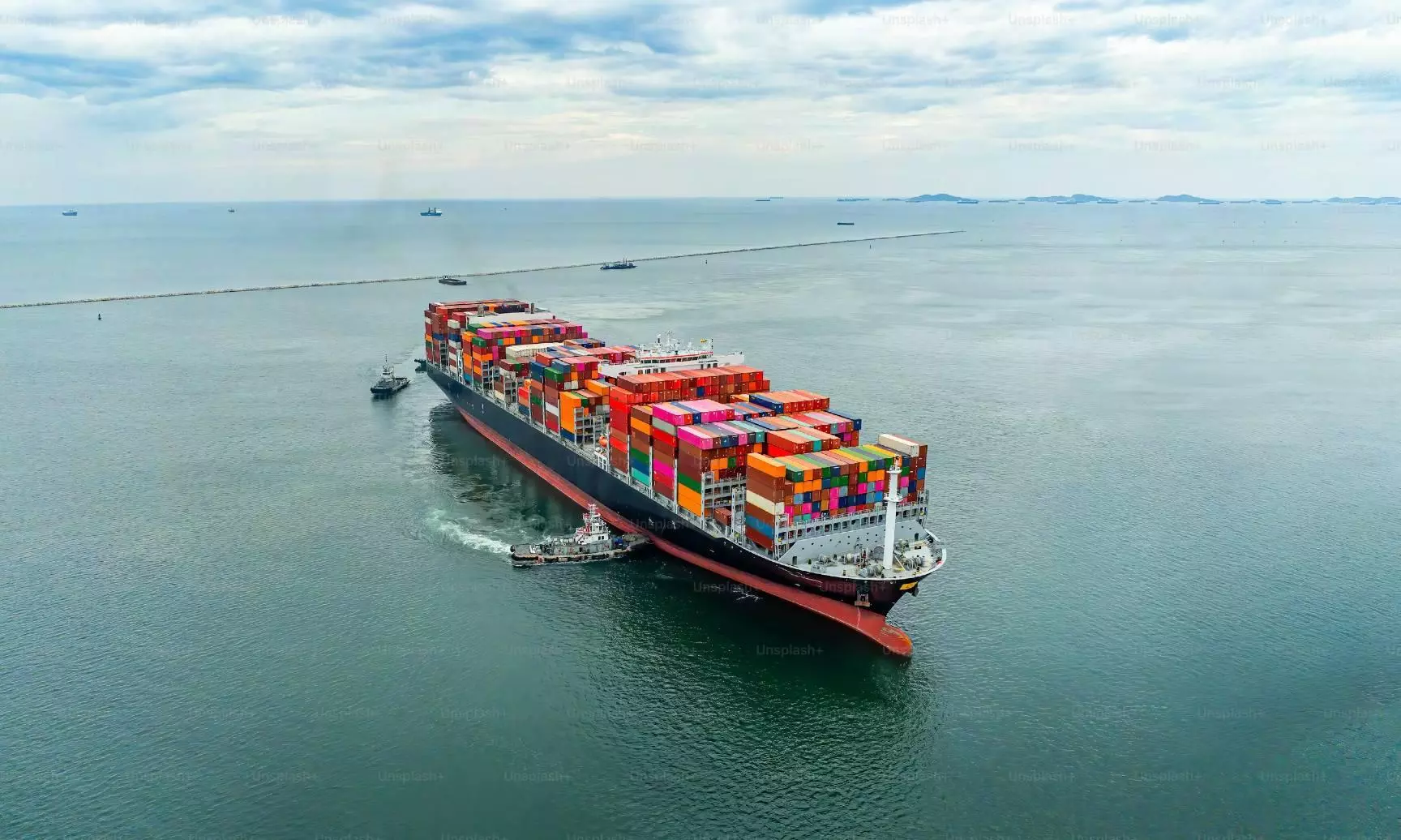
Representative Image


Tensions in the Gulf are continuing to ripple through global shipping as fresh security incidents, booking suspensions and growing security concerns deepen uncertainty around the Strait of Hormuz.
What began as military strikes over the weekend is now turning into a growing maritime crisis that is beginning to worry shipowners, cargo operators and governments across the world.
According to the United Kingdom Maritime Trade Operations (UKMTO), a fresh security incident was reported on March 4 about 30 nautical miles southeast of Mubarak Al Kabeer in Kuwait. The master of a tanker at anchor reported hearing a large explosion and seeing a small craft leave the area shortly after. Authorities later confirmed that oil had leaked into the water from a cargo tank, though there were no fires and the crew remained safe. Investigations are ongoing, and vessels in the region have been advised to transit with caution and report any suspicious activity.
The incident has added to growing concerns that the Strait of Hormuz, one of the world’s most critical maritime chokepoints, could face prolonged disruption similar to what global shipping experienced in the Red Sea since 2023.
According to several media reports, industry concerns have already reached policymakers in India. The Indian National Shipowners’ Association (INSA) has written to the country’s shipping ministry warning that 27 Indian-flagged vessels are currently operating in or around the affected region. The association said shipping assets worth more than ₹10,000 crore are exposed to potential risks if tensions escalate further.
For India, the stakes are high. A significant share of the country’s oil imports and container trade passes through the Gulf. Any disruption in the Strait of Hormuz could therefore affect both energy flows and maritime trade.
Shipping lines are already taking precautionary steps. Chinese carrier COSCO has reportedly suspended new bookings to six Middle East countries as the security situation continues to evolve. Other major container lines are also tightening operations, cancelling sailings or halting bookings to ports in the Persian Gulf region.
According to analysis from Judah Levine, Head of Research at Freightos, six tanker vessels in or near the Strait of Hormuz came under attack earlier this week, effectively bringing traffic in the waterway to a halt by Sunday before Iran’s Revolutionary Guard Corps formally announced the closure on Monday, according to media reports.
Levine said the escalating conflict between the United States, Israel and Iran is already creating logistics disruptions that could spread across global supply chains if the conflict continues.
“The strikes and retaliation since the weekend are driving significant logistics disruptions in the region which could start to be felt more broadly if the conflict stretches on,” Levine noted.
The crisis has also triggered political responses in Washington. In a post on social media platform X, former US president Donald Trump said he had ordered the United States Development Finance Corporation (DFC) to provide political risk insurance and financial guarantees for maritime trade moving through the Gulf, particularly energy shipments. According to the post, the coverage would be made available to shipping lines operating in the region. Trump also said the US Navy could begin escorting tankers through the Strait of Hormuz if required to ensure the continued flow of global energy supplies.
Another development adding complexity to the crisis is Iran’s reported decision to allow only Chinese vessels to transit the Strait of Hormuz. According to multiple media reports, Tehran has signalled that ships linked to China may still be permitted to pass through the strategic waterway while restrictions remain in place for most other international traffic.
On the container shipping side, operational disruptions have already begun. DP World temporarily suspended activities at the massive Jebel Ali port in Dubai after debris from an aerial interception caused a fire at one of the berths over the weekend. The port, the largest container hub in the Middle East, later confirmed that all four terminals have now resumed normal operations after a brief precautionary shutdown.
Even though most regional ports remain operational, the security risks around the strait are forcing carriers to rethink their schedules. Several major shipping companies have already stopped accepting bookings connected to Persian Gulf ports. Hapag-Lloyd and MSC have suspended bookings both from and to ports across the region, including those in Oman and the UAE located on the Gulf of Oman side of the strait. CMA CGM has halted all bookings linked to Persian Gulf ports, while Maersk has paused new reefer bookings to the region and bookings from India to Gulf destinations.
These decisions are creating immediate delays for cargo moving to and from the Gulf. With sailings being cancelled, containers bound for the region are beginning to pile up at origin ports, including in India. According to Freightos analysis, this could lead to congestion at container yards if the disruption continues for an extended period.
Cargo that was already at sea is now being diverted to alternative transshipment hubs across Asia. Ports in Singapore, Malaysia and Sri Lanka are expected to absorb a large share of these diverted containers.
Even so, the longer ships remain stranded in the Persian Gulf, the greater the pressure on global shipping networks. The Strait of Hormuz normally handles around 2% to 3% of global container volumes. According to analysis from Judah Levine, roughly 100 container vessels are currently stuck in or around the Persian Gulf region. This represents between 1% and 10% of global effective container shipping capacity.
If these vessels remain out of circulation for an extended period, the reduction in available capacity could eventually be felt across other trade lanes, particularly on the Asia–Europe and trans-Pacific routes. When the Strait of Hormuz eventually reopens, the delayed arrival of ships could also lead to “vessel bunching”, a situation where multiple ships arrive at a port around the same time after earlier delays disrupt their schedules, creating congestion and operational pressure at terminals.
Freight markets are already beginning to react. Data from Freightos shows that container rates for shipments from Shanghai to Jebel Ali surged from around $1,800 per forty-foot container to more than $4,000 within just a few days. The sharp increase is largely linked to emergency surcharges imposed by carriers operating in the region.
French shipping line CMA CGM has already introduced a $3,000 per FEU emergency surcharge for containers heading to Gulf destinations.
On the major east-west trade lanes, however, rates have remained relatively stable so far. The Freightos Baltic Index shows Asia–US West Coast rates holding steady at $1,843 per FEU, while Asia–US East Coast rates remained at $3,022 per FEU. Prices to Northern Europe slipped slightly to $2,460 per FEU, and Asia–Mediterranean rates eased to $3,649 per FEU.
Even so, the situation could change quickly if fuel prices rise or if vessels remain stranded for longer. The war’s ripple effects are also being felt in the Red Sea. Yemen’s Houthi movement has warned that it could resume attacks on vessels in the region. In response, several carriers that had recently restarted limited Red Sea transits have again diverted vessels around the Cape of Good Hope.
If the conflict spreads or continues for several weeks, global shipping could once again face two major maritime chokepoints under pressure at the same time. For now, however, the direct disruption remains largely concentrated around Gulf trade routes. But shipping industry observers say the longer the conflict continues, the more likely it is that the impact will spread across global shipping networks.
In many ways, the question now facing the logistics industry is similar to the one raised during the Red Sea shipping crisis: how long global supply chains can absorb repeated shocks before the effects begin to ripple across the wider trade system.
And with tensions still rising in the Gulf, that answer remains uncertain.