
Middle East tensions push ocean freight rates higher globally
Middle East disruptions tighten ocean freight capacity, raising rates and extending transit times across key global routes
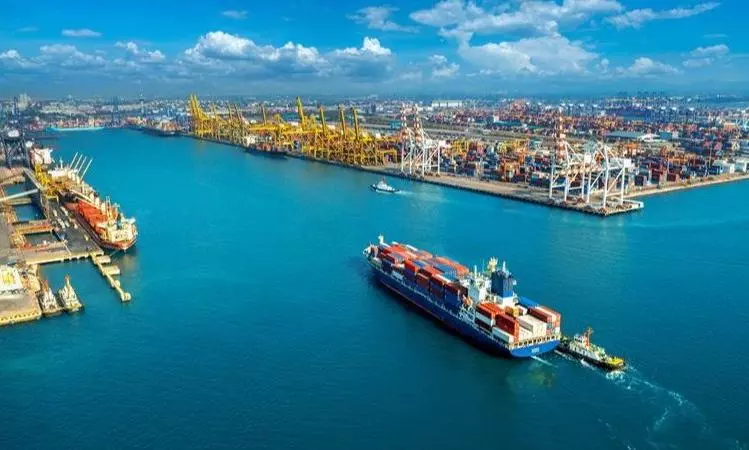


Ocean freight rates across Asia Pacific are rising as supply chains tighten due to ongoing instability in the Middle East, according to Dimerco’s April 2026 Asia Pacific Freight Report. Disruptions in the Persian Gulf are affecting shipping schedules, increasing fuel surcharges and causing congestion at key ports, with overall shipping costs expected to trend upward despite no peak season demand.
The report notes that the shipping industry is already seeing restricted shipments to the Middle East, particularly for temperature-controlled and dangerous goods. At the same time, rising fuel costs are being passed through the supply chain via bunker adjustment factors (BAF) and additional surcharges such as emergency bunker adjustment factors (EBAF), further pushing up freight rates.
Across regions, ocean freight markets are tightening. In Asia Pacific, both ocean and rail markets are firming, supported by surcharges and modal shifts. In Europe, rerouting of vessels via the Cape of Good Hope is absorbing capacity and extending transit times, which is contributing to higher rates. In North America, blank sailings and surcharges are also pushing ocean freight rates upward.
In Northeast Asia, the market is tightening with carriers actively managing capacity alongside rate increases. From South Korea, Europe-bound ocean freight rates have risen by more than 30% and are expected to remain firm, while capacity adjustments are being made in response to demand fluctuations.
China’s ocean freight market shows a mixed trend. In North China, Europe-bound shipments are facing volatility with risks such as blank sailings, cargo rollovers and forced discharges. In East China, carriers are implementing emergency bunker surcharges to offset rising fuel costs, while also attempting to push rates higher ahead of new contract cycles. South China and Hong Kong are seeing stronger demand on long-haul routes, with upward rate momentum and emergency fuel surcharges being applied.
In Southeast Asia, India and Australia, ocean freight rates are trending upward across major trade lanes, particularly to the US and Europe. Emergency bunker surcharges are being applied, and shippers are advised to pre-book space one to three weeks in advance due to schedule disruptions and tight capacity.
Country-level challenges are adding further pressure. In India, reduced sailing frequency on US and Europe routes is being observed, while in Vietnam there is a risk of short-term equipment shortages due to carrier prioritisation of long-haul cargo. In Singapore, carriers are applying emergency fuel surcharges per container or per trip, and in the Philippines, port congestion and trucking constraints are affecting overall transit reliability.
In North America, continued blank sailings on transpacific routes are causing delays and longer transit times. Rising fuel costs and geopolitical tensions are also affecting sailing schedules, routing and overall capacity, leading to higher rates for both full container load (FCL) and less-than-container load (LCL) shipments.
Similarly, in Europe, most Asia–Europe services have been rerouted via the Cape of Good Hope, reducing available capacity and supporting upward rate pressure. Longer transit times are further tightening supply in the global container market.
Overall, the report highlights that rising fuel costs, geopolitical tensions and ongoing disruptions are tightening ocean freight capacity across key trade lanes, with rates expected to remain elevated in the near term.