
Maersk returns to Suez
Maersk has restored its MECL service via Suez, while carriers warn a rapid return could disrupt global container networks.
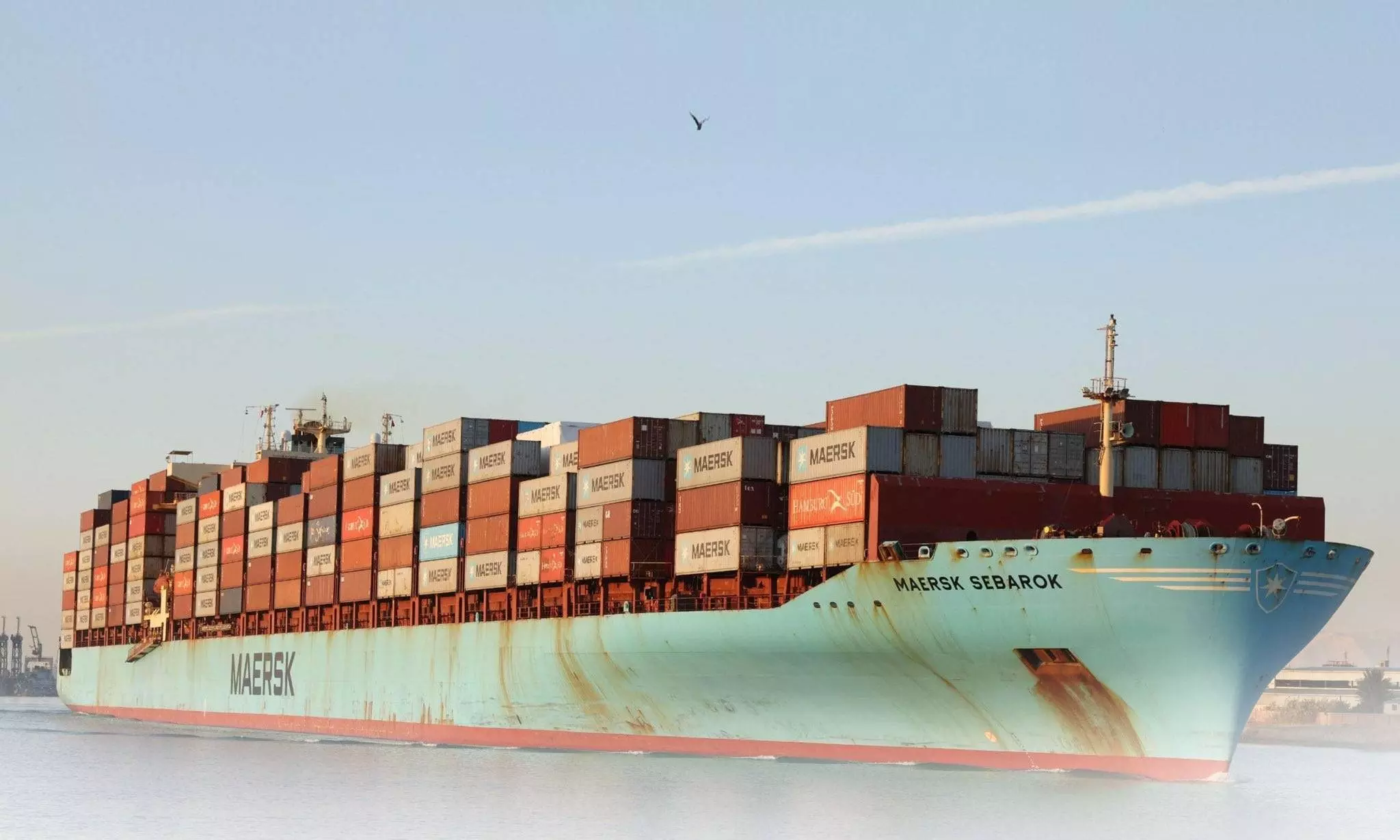


Maersk has announced that its MECL service has returned to the trans-Suez route, marking a structural shift back to the Suez Canal after a prolonged period of diversion around the Cape of Good Hope. Following the successful trans-Suez transits of the Maersk Sebarok and the Maersk Denver, A.P. Moller - Maersk (Maersk) has decided to implement the first structural change of a service back to the trans-Suez route. This applies to the MECL service, allowing Maersk to return to the service pattern originally designed and to provide customers with the most efficient transit times. The MECL service is solely operated by Maersk and connects the Middle East and India with the US East Coast.
In a statement, the Danish container carrier said the service began transiting the Suez Canal again on 15th January 2026, restoring the shorter Asia–Middle East–Atlantic routing. Maersk said the decision followed continuous monitoring of the security situation and added that contingency plans remain in place should conditions in the region worsen.
From caution to controlled return
Maersk’s move comes as a continuation of the wider industry debate over whether container shipping is ready for a sustained return to the Red Sea and Suez Canal. In the month of November carriers within the Gemini Cooperation, a long-term operational alliance between Maersk and Hapag-Lloyd, were still holding on to Cape of Good Hope routings, citing security concerns and the need for long-term stability before making large network changes.
While risks in the Red Sea had eased, carriers remained cautious after restructuring schedules and vessel rotations around longer routes. Against this backdrop, Maersk’s MECL return stands out as one of the first clear service-level shifts back to Suez by a major carrier.
Hapag-Lloyd warns of congestion risk from a rapid return
Hapag-Lloyd has warned that a large-scale and fast return of container vessels to the Suez Canal could create serious congestion across key global trade lanes. In comments via online session, Hapag-Lloyd CEO Rolf Habben Jansen said the second major uncertainty facing the market is how and when ships return to the waterway.
Jansen said experts believe a mass return could put heavy pressure on ports in Europe, the Mediterranean and Asia. He added that while the Asia–Europe trade would feel the impact first, other trades calling Europe could also face congestion as vessel schedules tighten and port calls bunch together.
According to Jansen, a sudden shift back to Suez could also create a ripple effect beyond Europe, disrupting services on the US East Coast as network changes spread across global liner trades.
Testing the waters, not a full network shift
Maersk has made clear that flexibility remains central to its approach, with the option to revert to alternative routes if security conditions change. CMA CGM sent an ultra-large container vessel through the Suez Canal in late 2025, a move seen as a confidence signal rather than a full-scale return. This transit strengthened expectations that traffic through the canal could gradually increase during 2026, but not in one sudden wave.
Market impact: capacity, rates and disruption risks
Xeneta report, published on December 23rd 2025, in its analysis on the large-scale return of container ships to the Red Sea, said a sustained shift back to Suez would release capacity back into the market by cutting voyage times. The data firm said this could place downward pressure on freight rates if demand remains soft.
However, Xeneta also warned that a quick return could cause disruption rather than stability. Ports and inland networks have adjusted to longer transit times over the past two years, and reversing these changes too quickly could result in congestion, schedule delays and unreliable arrivals.
Shippers urged to stay flexible
Kuehne+Nagel report, published on December 21st 2025 in a separate analysis on US restocking trends, said uncertainty around routing decisions continues to affect shipper planning. The logistics group said a return to the Red Sea would support faster inventory replenishment, but warned that mixed routing strategies are likely to continue through 2026.
According to the Kuehne+Nagel report, shippers should continue to plan with buffers, as carriers balance security concerns with cost, reliability and network stability.
A slow and uneven road back to Suez
Taken together, the reports suggest the return to the Suez Canal will be gradual rather than immediate. While Maersk’s MECL decision is a meaningful step, most carriers are expected to move carefully to avoid network disruption.
As previously reported, confidence in the Red Sea corridor will depend on long-term stability rather than short-term improvements. Maersk’s move signals progress, but the global container shipping industry is still some distance away from a full and coordinated return to the Suez route.