
JNPA pushes direct delivery, rail evacuation to ease container pile-up
The acute shortage of drivers, which caused the situation, is seasonal, as drivers return to their native places during this period for agricultural activities, vacations, and social commitments.
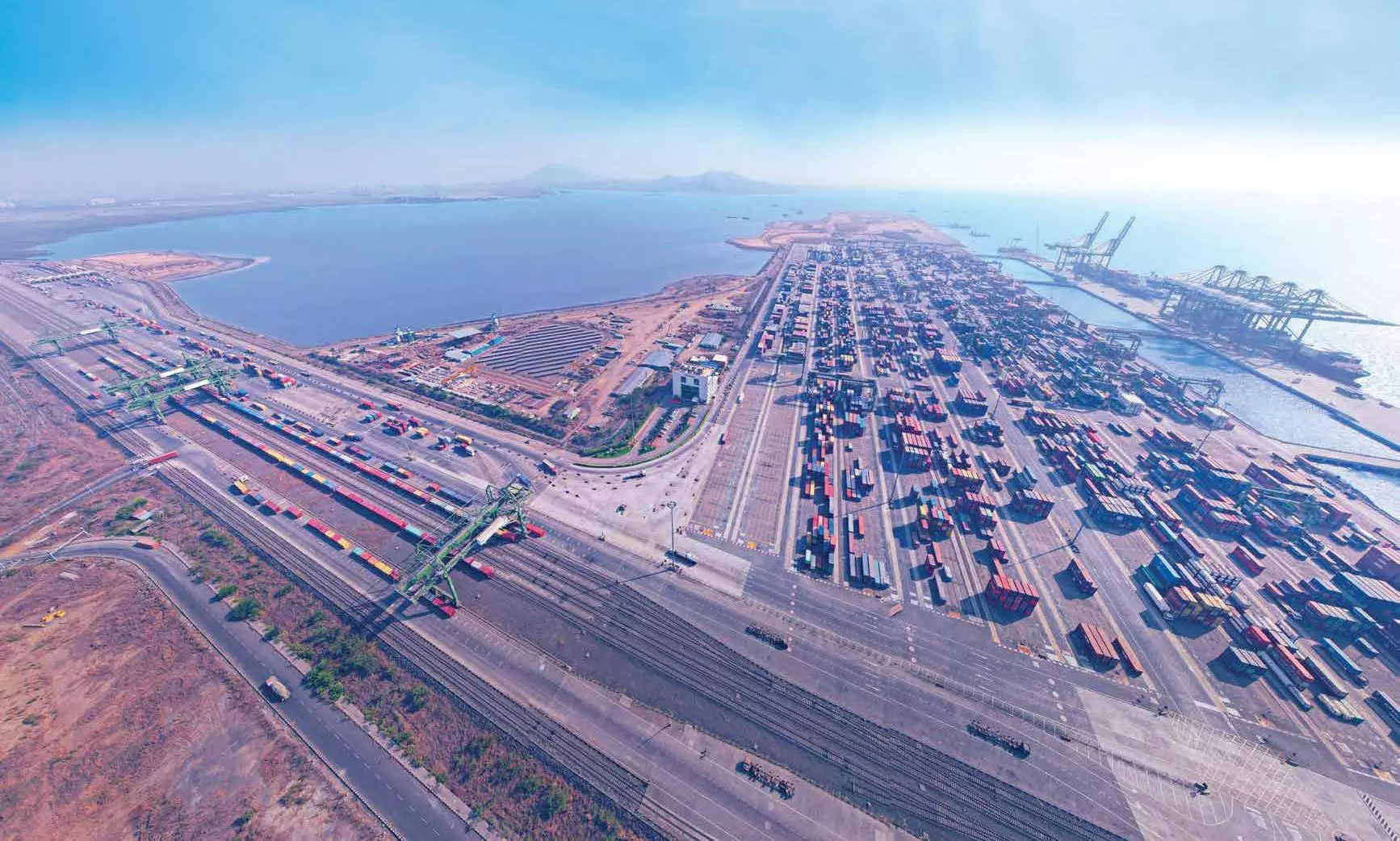


Jawaharlal Nehru Port Authority (JNPA) informed on Sunday (May 24, 2026) that container congestion triggered by an acute shortage of trailer drivers is gradually easing at the port, with the number of Container Freight Station (CFS)-bound containers stranded for over 15 days dropping from around 2,500 to 450 after a series of emergency measures, including additional rail evacuation, direct port delivery conversion and deployment of extra trailers.
“The figure is expected to come down to a negligible level within the next week,” reads the JNPA release.
The situation was caused by the acute shortage of drivers within the port logistics ecosystem. The shortage is seasonal, according to JNPA, as drivers typically return to their native places during this period for agricultural activities, vacations, and social commitments.
However, this year the situation has been further impacted due to elections in West Bengal and Eastern Uttar Pradesh — regions from where a significant percentage of drivers are engaged — along with disruptions in food and highway support services.
Driver shortage
Vikash Khatri, Founder of Aviral Consulting, said the LPG supply disruption linked to the West Asia conflict was one of the factors contributing to the current situation, although labour shortages have been seen across, with the impact varying depending on the intensity of labour requirements in operations.
“As LPG cylinders became either unavailable or significantly more expensive, many workers who had returned to their hometowns during the summer have not yet fully returned,” he said.
JN Port took several steps, including arranging a special train to bring drivers from West Bengal, Uttar Pradesh, Madhya Pradesh, etc. The train was run on the Malda (West Bengal) – Uttar Pradesh (Eastern) - Madhya Pradesh – Panvel (Maharashtra) route. An advertisement was published in a daily newspaper (Maharashtra State) and a TV News channel (all India basis), inviting more drivers.
A transporter operating reefer trailers described the driver shortage as “huge”, saying his fleet was currently operating at only around 60% capacity, with nearly 55 to 60 reefer trailers standing idle.
According to him, the disruption is not solely linked to driver availability, but also to rising operational stress across the trucking sector, including fuel price hikes, delayed vessel schedules, cash flow pressures and long credit cycles. He said truckers were struggling with higher costs and operational restrictions on highways, including limited diesel availability for heavy vehicles in some locations. “Drivers are running over capacity,” he said, adding that increasing financial pressure on transporters and falling freight rates were worsening the strain on the sector.
Industry interactions
Several trade associations had flagged the issue with the government earlier this month as congestion became severe, warning that severe congestion at JNPA and surrounding CFS facilities was leading to delays in cargo clearance and mounting logistics costs for importers. Industry representatives said the shortage of manpower and transport resources in the Nhava Sheva region had disrupted container evacuation, handling and destuffing operations, resulting in higher ground rent and container detention charges while also affecting industrial supply chains dependent on imported raw materials.
Meanwhile, Union Minister of Commerce & Industry Piyush Goyal and Union Minister of Ports, Shipping & Waterways Sarbananda Sonowal held a meeting with All India Liquid Bulk Importers and Exporters Association to review the evolving situation and discuss immediate and long-term measures to ease operational bottlenecks affecting cargo movement.
The meeting focused on container congestion arising from the CFS trailer driver shortage, which led to delays in the evacuation of 25000 containers of import cargo.
“We are taking coordinated and proactive measures across ports and logistics systems to sustain Ease of Doing Business, strengthen supply chain resilience and build a globally competitive maritime ecosystem in line with the vision of Aatmanirbhar Bharat and Viksit Bharat,” said Sarbananda Sonowal, Union Minister of Ports, Shipping & Waterways (MoPSW).
To provide relief to trade stakeholders, Intern-Terminal Railway Handling Operation (ITRHO) charges and Change of Mode of Transport charges were waived. Port terminals also extended waivers and discounts on ground rent charges on a case-by-case basis.
In a separate trade notice released on Sunday (May 24, 2026), JNPA has advised importers who had originally opted for CFS delivery to shift to Direct Port Delivery (DPD) wherever possible, allowing containers to be lifted directly from port terminals instead of routing them through CFSs. Customs authorities have agreed to expedite approvals for such conversions, while terminals and shipping lines have been asked to facilitate faster container release.
JNPA currently operates five container terminals — NSFT, NSICT, NSIGT, BMCT and APMT. The port also operates facilities for general cargo, liquid cargo and coastal container traffic. In addition, JNPA manages a multi-product Special Economic Zone spread across 277 hectares and is developing the Vadhvan Port project in Maharashtra, which is planned as an all-weather, deep-draft greenfield port.
JNPA initiatives
The average JNPA import discharge per day stands at 12,237 TEUs, while the Import – CFS Pendency in TEUs currently stands at 40,809 TEUs. Gate movement recorded a total of 17,425 TEUs, comprising 7,950 TEUs inbound movement and 9,475 TEUs outbound movement, according to the JNPA release on Sunday, May 24, 2026.
JNPA initiated the green channel movement for Ameya CFS from NSICT and NSIGT. Nhava Sheva Area Small Container Operators Welfare Association (NASCOWA) deployed 70–80 Trailer Trucks (TTs) to facilitate the movement.
Kerry Indev CFS evacuated more than 400 TEUs through GTI, one of the container terminals at JNPA, within a six-hour window from midnight to the early morning hours.
7,541 TEUs were evacuated in the last 9 days for Polaris Logistics Park CFS. “Their pendency from NSIGT Port is completed, and today they will focus on the evacuation from NSICT and NSFT port,” reads the release.
In April 2026, JN Port recorded an average gate movement of 18,000 TEUs. The daily gate movement over the last 24 hours stood at 18,196 TEUs. The overall daily average gate movement for the current year stands at 17,684 TEUs.
To ease the situation, JNPA facilitated additional movement of trains from the port to nearby CFS for shifting containers to CFS. Approx 3 to 4 trains in a day are operated in this manner.
“JN Port takes regular meetings with concerned stakeholders on a daily basis, and a monitoring cell is working throughout the day to assess the situation and take action then and there,” the release reads.
A green channel gate facility was made for the entry of CFS TTs at nearly 100 numbers, and faster evacuation of containers was ensured. “This has facilitated more trips for the trailer operation. Earlier, the trailers were able to do only 2 trips; now they are able to do 3 to 4 trips in a day. This has facilitated stopping the increase in yard pendency, which was otherwise increasing too much.”
The trailers coming with export containers from faraway places are facilitated to take import containers back on their return journey. Necessary coordination with the concerned organisations is done by JNPA.
Customs also have come up with several measures to help trade in this situation. The scanning process has been made easy to carry two containers together in one trailer. “Quick permission was granted by Customs for changing the mode of transport from Road to rail to facilitate the CFS evacuation.”
JNPA also engaged with the container terminal operators to waive certain charges like, change of movement mode charges, shifting charges confined to only one shifting even when there is multiple shifting necessitated and rationalisation of rail charges between road movement charges.
“As of today, there is considerable improvement in the daily container movement, about 18000 TEUs daily gate operation, and the situation may be normalised by the first week of June 2026.”