
IWDC 3.0 unveils ₹1,500 crore roadmap to boost river cargo
The summit indicates a move towards a synchronised transport grid, replacing isolated waterways with fixed-day sailing schedules and private freight operator incentives.
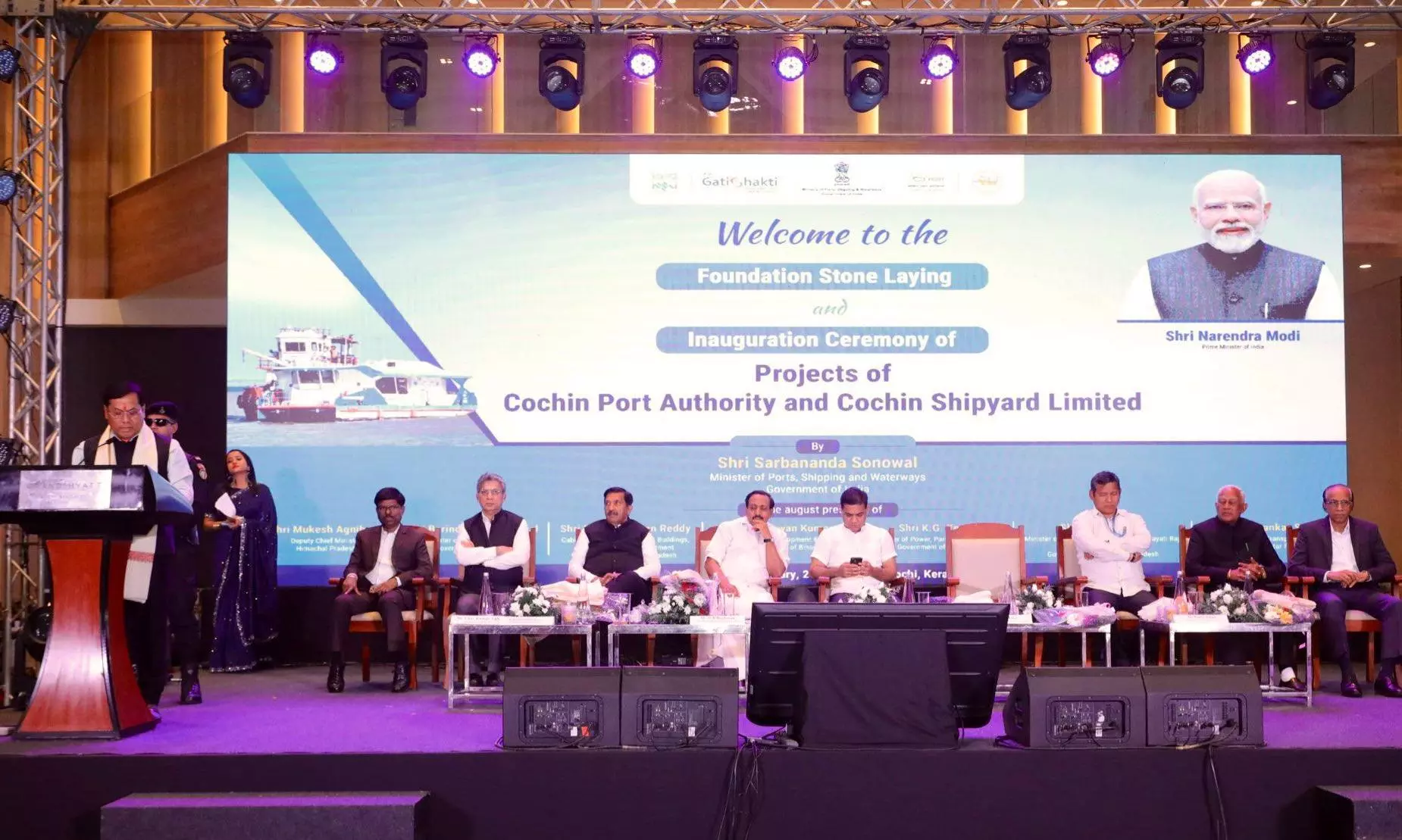


The Inland Waterways Development Council (IWDC 3.0) concluded its third edition in Kochi, Kerala, laying out a roadmap to integrate India’s river network into the national logistics backbone. With a focus on multimodal connectivity and lowering freight costs, the council identified projects exceeding ₹1,500 crore aimed at enhancing navigability and establishing a robust cargo transport ecosystem.
The summit highlights a shift from developing isolated waterways to creating a synchronised transport grid, fixed day scheduled sailing services and incentives for private freight operators.
To address the longstanding challenge of last-mile connectivity bottlenecks in inland water transport, the council approved infrastructure projects totaling over ₹900 crore. These key logistic developments include the development of Ro-Ro (Roll-on/Roll-off) and cargo terminals at Muktyala and Harishchandrapuram on the Krishna River in Andhra Pradesh (NW-4) to facilitate bulk cargo movement.
In Assam (NW-2), a ₹144-crore project is underway to construct approach road connectivity to the Bogibeel River Port in Dibrugarh, ensuring seamless integration between river and road transport.
Maharashtra will see the implementation of the national river traffic and navigation system (NRTNS) to digitise traffic management and enhance safety for commercial vessels. Furthermore, network expansion includes the construction of 110 new jetties, with 25 in Odisha and 85 in the Northeast, to substantially increase overall cargo handling capacity.
In a move designed to attract major shipping companies and freight forwarders, the council explored expanding the Jal Vahak cargo promotion scheme to additional National Waterways, including in Kerala.
The scheme offers a reimbursement of up to 35% of total operating expenditure for cargo movement. By opening this subsidy to cargo owners hiring third-party vessels (outside IWAI or ICSL), the government aims to lower the barrier to entry for private logistics players and improve the commercial viability of water-based supply chains.
To ensure reliability, a critical factor for logistics planning, asset procurement worth ₹465 crore was announced. This investment focuses on maintaining navigability and operational efficiency through the acquisition of amphibian and cutter suction dredgers, alongside tug-barge units for consistent channel depth (Dredging & Towing).
Furthermore, floating pontoons with quick-opening mechanisms are being deployed in Uttar Pradesh, Bihar, and West Bengal to enhance Terminal Efficiency and reduce turnaround times.
Union Minister Sarbananda Sonowal, “By integrating clean energy vessels, smart navigation systems, and world-class passenger infrastructure, we are unlocking the full potential of waterways to reduce logistics costs, cut emissions, and create new livelihoods.”
While the focus remained heavily on cargo, the council also laid foundation stones for projects exceeding ₹150 crore to support river cruise tourism in Kerala, Gujarat, Karnataka, Odisha, and Telangana.
Furthermore, the successful Kochi water metro model is set to be replicated in logistics hubs like Guwahati, Varanasi, Patna, and Dibrugarh to enhance urban mobility.