
India launches seafarer-first response after Hormuz vessel attacks
India has launched a seafarer-first response after attacks on two merchant ships in the Strait of Hormuz, with vessel monitoring and 24x7 coordination.
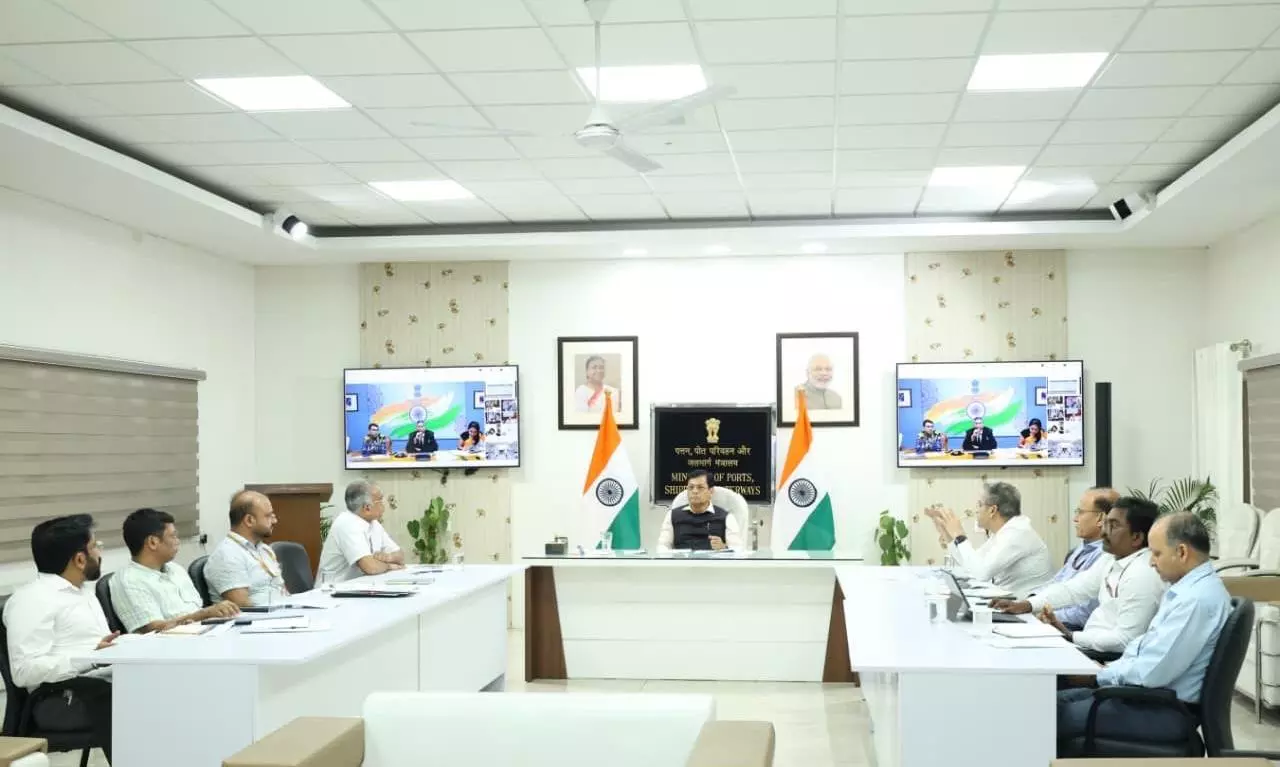


Union Minister for Ports, Shipping and Waterways Sarbananda Sonowal has directed a comprehensive ‘Seafarer-First’ response to safeguard Indian seafarers operating in the conflict-affected waters of West Asia following attacks on two merchant vessels in the Strait of Hormuz.
Chairing a high-level inter-ministerial review meeting, Sonowal ordered real-time vessel-by-vessel monitoring, the appointment of dedicated liaison officers for every affected Indian seafarer and round-the-clock coordination by the Ministry of Ports, Shipping and Waterways (MoPSW) with the Ministry of External Affairs (MEA), Ministry of Petroleum and Natural Gas (MoPNG), Ministry of Chemicals and Fertilisers, the Indian Navy, the Directorate General of Shipping (DGS) and Indian Missions in Iran and Oman.
The review followed attacks on MT Al Bahiyah and MT Mombasa in the Strait of Hormuz. The two vessels had a combined crew of 46, including 30 Indian seafarers. One Indian seafarer was killed and another was injured aboard MT Al Bahiyah. On MT Mombasa, nine Indian nationals were injured, including two who remain seriously injured.
The meeting was attended by Union Minister of State for Ports, Shipping and Waterways Shantanu Thakur, senior officials from MoPSW, MEA, the Indian Navy, the Directorate General of Shipping, the Indian Embassies in Iran and Oman, and other maritime agencies. They reviewed the evolving security situation across the Persian Gulf, Strait of Hormuz and Gulf of Oman, assessed the risks facing Indian seafarers and examined India's contingency and emergency response measures.
Expressing grief over the incident, Sonowal said India had strongly objected to the attacks on civilian merchant vessels, which resulted in the death and injuries of Indian seafarers. He conveyed his condolences to the family of the deceased seafarer and wished the injured a speedy recovery. He also assured Indian seafarers and their families that the Government would provide all possible assistance and support.
As part of the enhanced response, Sonowal directed the Directorate General of Shipping to create a vessel-by-vessel operational dashboard to track every Indian seafarer on every vessel, irrespective of the vessel's flag, operating in the Persian Gulf, Strait of Hormuz and Gulf of Oman.
The dashboard will provide real-time information on vessel position, ownership, cargo, crew strength, crew welfare, threat assessment, intended voyage, next port of call and available facilities.
The Minister directed that every Indian seafarer in the affected region must be individually accounted for, regardless of the vessel's flag, and said there could be no compromise on the safety and security of Indian seafarers.
He also instructed officials to appoint a dedicated liaison officer for every affected Indian seafarer. Each officer will act as the single point of contact for families and will coordinate medical updates, travel documentation, family assistance, repatriation, Seafarers Welfare Fund support, outstanding wages, contractual entitlements and other compensation.
Sonowal directed officials to work closely with Indian Missions in Iran, Oman, the United Arab Emirates and other affected countries, along with the Ministry of External Affairs, to obtain verified and real-time information on navigational safety, coastal advisories, route status, port-of-refuge arrangements, hospitals, medical evacuation, repatriation procedures, management of mortal remains and ongoing investigations.
He said the Government of India had communicated with the International Maritime Organization (IMO) and the concerned flag administrations regarding the incidents, which he said violated international conventions and the safety and security of seafarers and merchant vessels. He added that the Government would continue its efforts to resolve the issues and support all stakeholders.
The Minister also directed that every vessel movement through the affected region should take place only after a fresh threat assessment, the professional judgement of the ship's Master and close coordination with competent maritime authorities.
He further instructed shipowners, vessel managers and Recruitment and Placement Service Licence (RPSL) agencies employing Indian seafarers in the region to submit compliance reports immediately and confirm that no Indian seafarer is being made to sail without adequate information, protection and support.
A 24x7 grievance support system has also been activated to assist affected seafarers and their families.
Concluding the meeting, Sonowal said the Government would continue its seafarer-first approach through coordinated efforts across ministries and maritime agencies to protect Indian seafarers, uphold international maritime law and ensure the uninterrupted movement of global trade through the region.