
Hapag-Lloyd and DSV expand Ship Green partnership
Two-year framework will generate verified Scope 3 cuts using sustainable marine fuels from 2026.
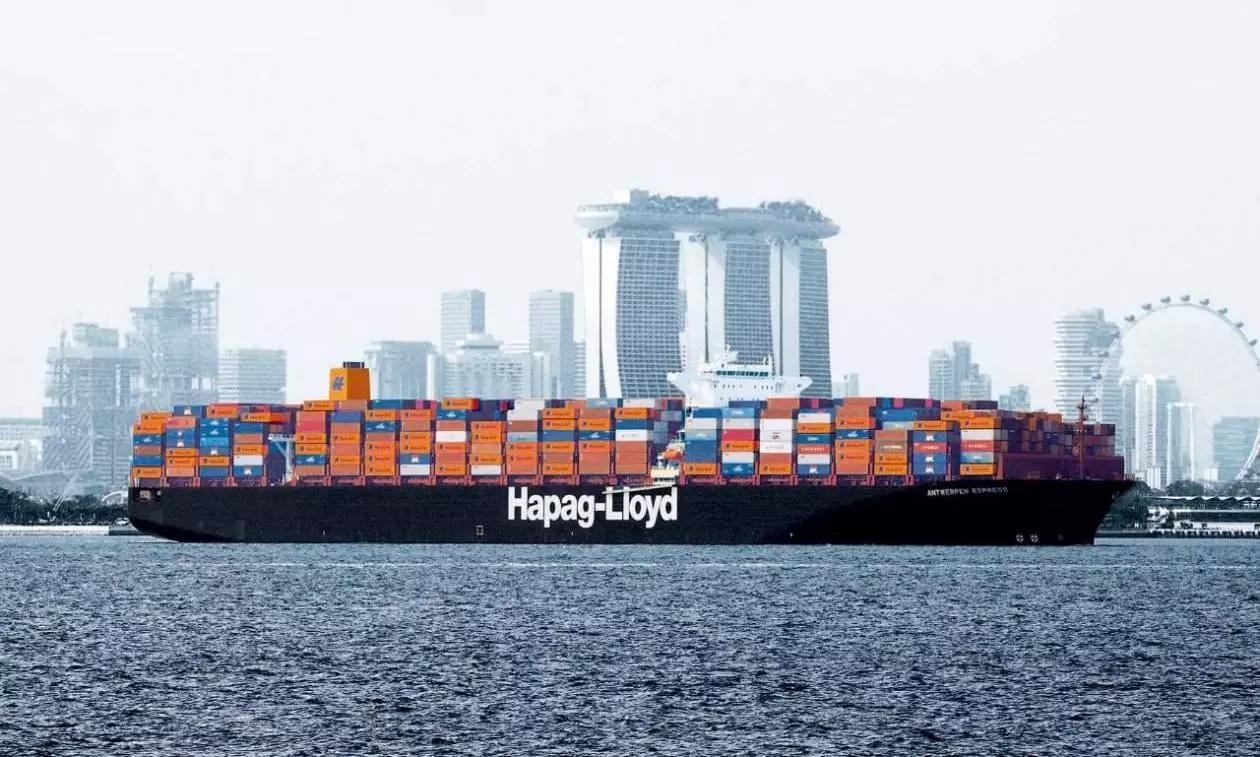
Photos Credit: Hapag-Lloyd


Hapag-Lloyd and DSV have entered into a two-year Ship Green framework agreement for 18,000 tonnes of CO₂e emission reductions, further strengthening their decarbonisation partnership. The emission cuts will be achieved through the use of sustainable marine fuels in Hapag-Lloyd’s fleet, contributing to lower Scope 3 greenhouse gas emissions.
The new agreement builds on the companies’ cooperation on sustainable marine biofuels, which began in 2022. Under the contract, DSV has secured 18,000 tonnes of CO₂e emission reductions on a well-to-wake basis. The contracted period begins in 2026, with reductions generated using second-generation biofuels produced from waste- and residue-based feedstocks.
The agreement also allows for the inclusion of other sustainable fuel sources in addition to second-generation biofuels, making it the first agreement of its kind. The companies said the partnership reinforces their shared commitment to scalable decarbonisation solutions for ocean freight.
Danny Smolders, Managing Director Global Sales at Hapag-Lloyd, said the agreement strengthens collaboration between carriers and forwarders to drive lower-emission shipping solutions. Michael Hollstein, Head of Ocean Product at DSV, said sustainable marine fuels offer a tangible and scalable way to reduce CO₂ emissions and help customers decarbonise their supply chains.
The agreement is based on a book-and-claim chain-of-custody mechanism, which allows customers to claim verified emission reductions regardless of the physical allocation of fuel to specific vessels or routes. Only emissions avoidance from biofuel already used in Hapag-Lloyd’s owned and operated fleet will be allocated to DSV.
Hapag-Lloyd aims to achieve net-zero fleet operations by 2045, while DSV has committed to reaching net-zero emissions across its own operations and value chain by 2050. Both companies said offering sustainable logistics solutions is key to meeting these targets.
Hapag-Lloyd has used second-generation biofuels for several years and expanded its sustainable fuels portfolio to include biomethane in 2024. Through its Ship Green programme, the carrier enables customers to claim verified emission reductions by using sustainable marine fuels instead of conventional fossil marine fuel oil.
The companies said biofuels currently represent the most available and scalable option in sea freight and that their collaboration supports the shipping industry’s transition towards a more sustainable future.