
SCM for next generation businesses
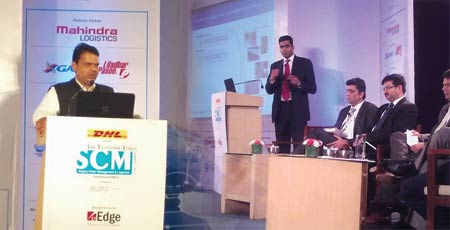


The second edition of ET Edge’s Supply Chain Management & Logistics conference was about transforming India’s supply chain management system for next generation businesses.
In the international trade and commerce, supply chain management had always been less glamorous and attracted very little attention. But that is changing and the change is rapid given that the modern supply chain is essentially driven by key factors like ‘time to market’ and ‘speed to market’.
It is against this background that the second edition of the ET Edge Supply Chain Management & Logistics Summit 2015 opened on June 18 in Mumbai tackling the current trends and issues relevant to developing the prospects of supply chain in India. Industry estimates place India as the fifth largest supply chain network in the world. Today, India is predominantly a consumerist society which demands products and services at par with international standards. This requires a highly developed supply chain management, one that can cater to the growing demands of new age Indians.
With government’s agenda of turning India into a manufacturing hub of the world, this sector becomes even more crucial for our country’s progress. Companies need to redefine their customers’ expectations of service and their ability to bring innovation to the market, turning their excellence in supply-chain execution into a powerful source of competitive advantage.
Held at the Grand Hyatt, the conference was an ideal platform that brought distinguished thought leaders. There was consensus in acknowledging the tremendous potential which India has in store, which is aligned with the government’s agenda of turning the country into a manufacturing hub of the world.
“Make in India is a commitment, not a slogan. The campaign is to boost the spirit of entrepreneurship. Skill development has to be given a boost for this across the nation. We have the potential to be the best even in a global marketplace,” said Kalraj Mishra, minister of Micro, Small and Medium Enterprises (MSME), government of India, while inaugurating the conference.
“In the last decade or so we have seen severe constraints in airport infrastructure on the cargo side. For us, every delay is criminal. The big liberalisation in ports has not made as much of a difference on the cargo side either. We need facilities that allow for efficiency. Our customers are at the cutting edge of doing e-commerce, but the enablers actually doing the last mile and who need to drive the industry are still working on manual mode,” said R S Subramanian, SVP & Country Manager, DHL Express India.
The first half of the one-day conference deliberated on discussing how to transform Indian supply chain management systems and create solutions for the next generation businesses and distinguishing future trends of supply chain. The second half was meant for three parallel industry specific discussions around supply chain management model for heavy engineering and project logistics; developing omni-channel experience for pharmaceutical products and fast moving consumer goods and digital revolution in supply chain e-commerce. “The key to success for the ‘Make in India’ plan is a developed logistics and supply chain management system that will support the growth of the economy,” said Devendra Fadnavis, chief minister, Maharashtra, who was the chief guest at the event’s evening felicitation ceremony.