
Sagarmala heralds port-led development in India
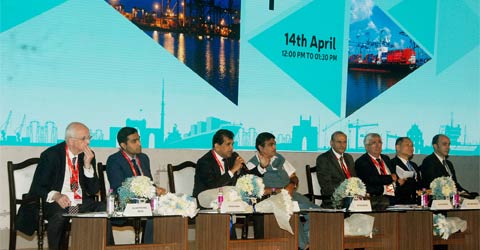


The National Perspective Plan detailing the contours of Sagarmala, the government’s flagship programme to promote port-led development in the country was released by the Prime Minister Narendra Modi at the Maritime India Summit in Mumbai on Thursday (April 14). Talking about the ambitious project by the central government Union Minister for Shipping, Nitin Gadkari said the plan has been crafted after detailed consultations with key stakeholders in the central and state governments, public sector companies as well as private players from shipping, ports, ship-building, power, cement and steel sectors. It takes forward Sagarmala’s vision of substantially reducing export-import and domestic trade costs with a minimal investment. The report estimates that the Sagarmala programme could lead to annual logistics cost savings of close to Rs 35,000 crore and boost India’s merchandise exports to $110 billion by 2025. About one crore new jobs are estimated to be created, of which 40 lakhs will be direct employment. This plan is based on four strategic levers: optimizing multi-modal transport to reduce the cost of domestic cargo; minimizing the time and cost of export-import cargo logistics; lowering costs for bulk industries by locating them closer to the coast; and improving export competitiveness by locating discrete manufacturing clusters near ports. India is richly endowed with natural maritime advantages. With a coastline of about 7,500kms covering 13 states and union territories, it also enjoys a strategic location on key international trade routes. Nations like the US, Japan, Korea and more recently, China, have leveraged their coastline and waterways to drive industrial development. The Sagarmala programme of the Ministry of Shipping, aims to replicate these successes in India. The potential for port-led development had for long been constrained by high logistics cost, long lead-times and poor linkages between industrial and logistics infrastructure. Growth was hindered by inadequate and poor port capacity and the fact that solutions were often not tailored for coastal communities. Transportation by waterways has historically remained under utilized in India although waterways are significantly cheaper compared to road and railways. The Sagarmala National Perspective Plan identifies specific opportunities for transportation of commodities such as thermal coal, fertilizers, foodgrains, cement and steel by coastal shipping and inland waterways. Sagarmala aims to deliver impact through over 150 projects and initiatives in four broad areas: Modernisation of existing ports and set up 5-6 new ports to augment capacity; Focus on port connectivity through heavy haul rail corridor, freight friendly expressways and development of strategic inland waterways; Tap into the potential of port-led industrialisation through coastal SEZs housing a number of industrial clusters; and harness the potential of coastal communities through skill development and increased economic opportunities.