
DTDC partners with HRTC to boost logistics in Himachal Pradesh
The initial rollout phase activates critical routes: Shimla to Rampur, Rampur to Reckong Peo, Shimla to Chidgaon, and Shimla to Karsog.
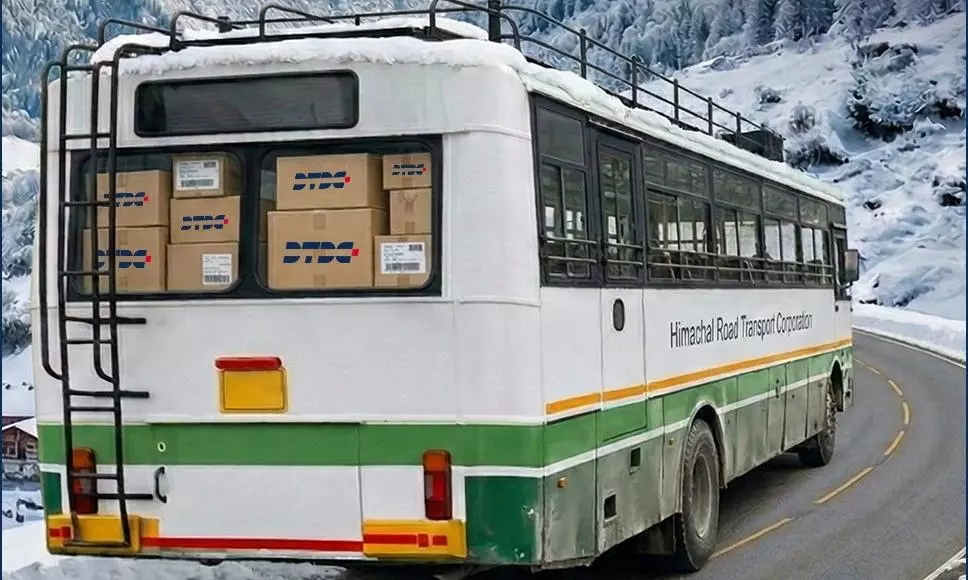


DTDC Express has announced partnership with the Himachal Road Transport Corporation (HRTC). The partnership aims to solve the long-standing challenge of last-mile connectivity in India’s most rugged and remote mountainous regions.
According to the press release, by leveraging HRTC’s extensive passenger bus network the backbone of the state's transport DTDC will now be able to move courier consignments across difficult terrain with unprecedented frequency and speed.
The partnership focuses on an integrated distribution model where sealed DTDC consignments are transported via approved HRTC bus routes. This piggybacking on established public infrastructure allows for a more resilient supply chain that remains operational even when traditional freight services struggle.
The first phase of the rollout activates several critical routes, specifically including Shimla to Rampur, Rampur to Reckong Peo, Shimla to Chidgaon, and Shimla to Karsog.
Abhishek Chakraborty, CEO of DTDC Express said, "By integrating HRTC’s transport connectivity with DTDC’s robust express network, we are bringing integrated logistics services closer to communities in even the most remote regions of the state".
On the public sector side, Nipun Jindal (I.A.S), Managing Director of HRTC, highlighted the economic benefits for the state. He noted that the agreement, signed on February 24, 2026, would generate vital non-fare revenue for the corporation by utilizing available luggage space on buses.
The agreement outlines three key pillars like safety first, which dictates that HRTC will ensure the secure transport of sealed bags while DTDC manages packaging and regulatory compliance; tracking & accountability, establishing structured handover protocols at destination points for operational continuity and package safety; and asset optimisation, which leverages existing state assets to provide organized express services to traditionally underserved rural areas, avoiding the construction of new, redundant infrastructure.