
Indian Railways unveils eight reforms to modernise freight
Union Minister Ashwini Vaishnaw has announced eight new structural reforms under the 'Reform Express' initiative to modernise India's freight operations.
Ashwini Vaishnaw, Union Minister for Railways, India


In a major push to modernise India's logistics landscape, Union Minister for Railways Ashwini Vaishnaw announced eight groundbreaking structural reforms under the 'Reform Express' initiative. Speaking at a press conference in Rail Bhawan, New Delhi, the Minister revealed that these new measures bring the total number of implemented reforms to 17, advancing steadily toward the Ministry of Railways' ambitious target of delivering 52 reforms in 52 weeks. The newly unveiled policies are strategically designed to lower logistics costs, streamline supply chains, encourage robust private investment, and champion cleaner freight transportation.
Addressing the media, Vaishnaw emphasised the government's long-term vision, stating: "Indian Railways is undertaking a series of reforms to build a future-ready railway system." This phase of reforms touches key areas, including bulk commodity transport, containerisation, construction practices, worker skilling, and design innovation, ultimately shifting a larger share of cargo from roads to the environment-friendly rail network.
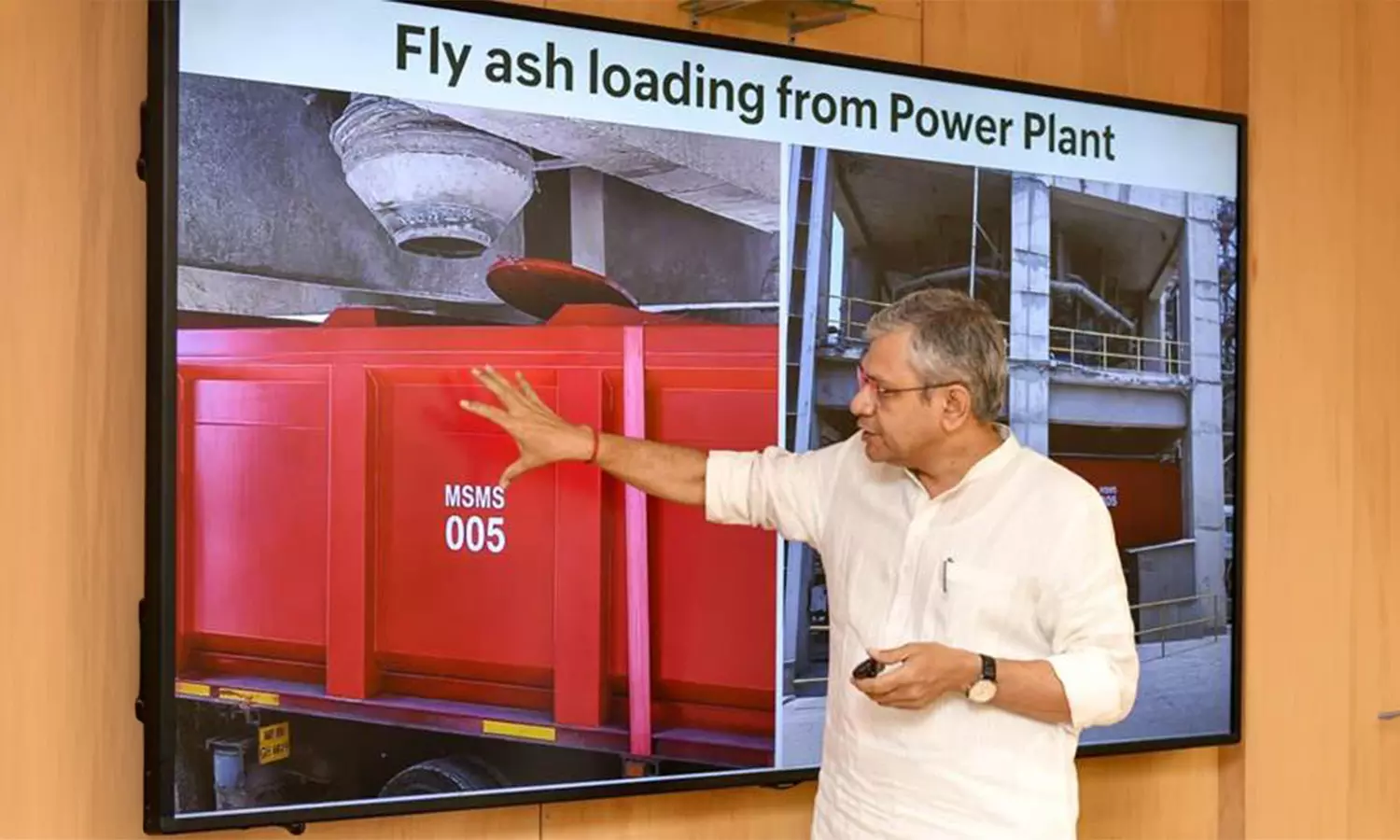
One of the most environmentally significant reforms targets fly ash transportation. India generates approximately 340 million tonnes of fly ash annually, with the cement industry utilising nearly 96 million tonnes. However, during the 2025–26 fiscal year, Indian Railways carried only 13 million tonnes, roughly 4% of the country's total generation. Traditionally transported in open wagons, fly ash has been a major source of dust pollution during loading, transportation, and unloading.
To resolve this, the Ministry of Railways is transitioning to a closed-container system using specially designed ISO-standard containers. These units can be top-loaded directly at power plants and unloaded using side-discharge or pneumatic systems without releasing dust. Vaishnaw noted that this closed-container system: "will enable pollution-free transportation, facilitate safe storage within cement plants until the material is required, and significantly improve logistics efficiency."
Similarly, fertiliser transportation is receiving a major overhaul. Historically, the railways relied on a complex freight charging system with nearly fifty distinct tariff slabs. Under Reform 12, this complexity is replaced by a simplified per-tonne-per-kilometre tariff structure with just three variations. Furthermore, the reform introduces containerised transport for fertilisers, allowing individual containers to be unloaded and stored at rake points based on local demand rather than detaining an entire rake. This ensures phased, flexible distribution and shields agricultural inputs from weather-related damage.
To accelerate containerisation across non-bulk cargo, Indian Railways has overhauled the Container Train Operator (CTO) licensing framework. The previous system categorised licences into four separate categories, imposing restrictive route regulations and steep registration fees, up to ₹50 crore for Category-1 and ₹10 crore for each of the other categories.
The Ministry has replaced this convoluted setup with a single, unified Pan-India Container Train Operator licence. Under this reform, operators can run container trains across the entire national network with a uniform, non-refundable registration fee of ₹25 crore. The licences remain valid for twenty years and can be extended without any renewal or extension fees. This is expected to stimulate private participation, reduce logistics friction, and attract diverse cargo types to rail.
In another significant departure from state-dominated logistics, Reform 16 addresses petroleum products transportation. Previously, Indian Railways owned all specialised tank wagons, limiting the flexibility of oil companies to introduce modern, customised designs. The new reform removes these barriers, enabling oil companies to procure or lease specialised tank wagons directly and induct them onto the network, reducing transport risks, adulteration, and product losses.
To ensure timely project execution and weed out non-serious bidders, Indian Railways has introduced aggressive construction reforms. Ashwini Vaishnaw said the reforms are: "aimed at encouraging serious and capable contractors, improving quality of construction, reducing disputes and ensuring timely completion of railway infrastructure projects."
Moving forward, a 10% Performance Security must be submitted at the start of a contract rather than being deducted incrementally from running bills. Additionally, to curb litigation-heavy practices, contractors with pending litigation exceeding 50% of their net worth are barred from bidding. The reforms also introduce mandatory Contractor's All Risk Insurance and Professional Indemnity Insurance.
For smoother project kick-offs, a sequential land handover mechanism has been established alongside "Rail Bhoomi," a state-of-the-art, web-based platform developed by CRIS. This portal integrates major railway applications like IRPSM, IPAS, and HRMS, facilitating seamless data exchange and real-time dashboard monitoring of land acquisition.
On the design front, the Ministry has broken RDSO’s traditional monopoly on freight wagon design. Under a new, liberalised policy, private manufacturers, designers, and industries can develop and propose custom wagon designs tailored to specific commodities like steel, milk, chemicals, or plastics. Once RDSO gives in-principle approval, the design will undergo prototype manufacturing, static and dynamic testing, and field trials before safety certification by the Chief Commissioner of Railway Safety and final induction by the Railway Board.
Acknowledging that complex infrastructure works require extreme precision, the Ministry of Railways has implemented a comprehensive policy for skilling artisans. This framework covers critical trades such as welding, fitting, and masonry. Workers will undergo practical and oral evaluations, with successful candidates receiving QR-code-enabled skill certificates linked to a live verification database. The programme will roll out initially across complex bridge and tunnel projects before expanding nationwide.
By replacing obsolete practices with modern, digital, and market-friendly frameworks, the 'Reform Express' aims to lower logistics costs while delivering massive environmental dividends. As Vaishnaw concluded, shifting freight to rail is crucial, given that "rail transport generates nearly 90% lower carbon emissions than road transport."