
DFC moves 19.7 billion gross tonne km as interchange hits record
DFCCIL reports record interchange with Indian Railways after 13,833 trains ran on the corridors in September 2026.
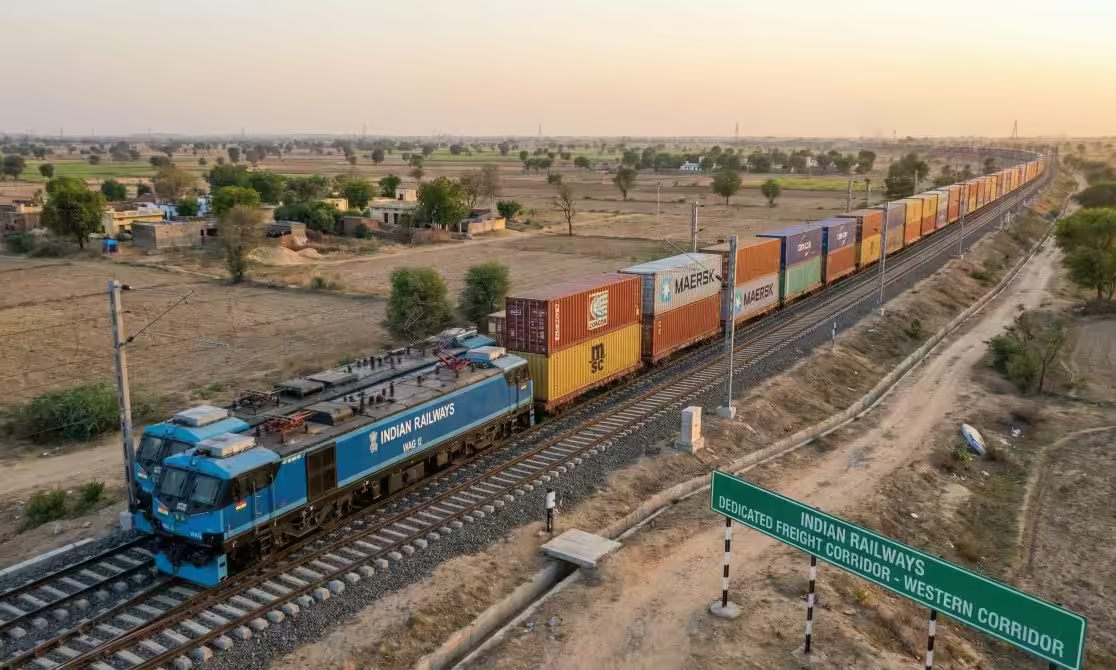


The Dedicated Freight Corridor (DFC) network interchanged a record 946 trains with Indian Railways in a single day on 6 October 2026, surpassing the previous high of 929 trains recorded just four days earlier, according to the Dedicated Freight Corridor Corporation of India Limited (DFCCIL). The corporation also reported that more than 13,800 trains ran on the Eastern and Western corridors in September, moving freight worth 19.7 billion gross tonne kilometres, weeks after the last sections of the Western corridor were dedicated to the nation and the full 2,843 km network became operational.
September's operating figures show the scale of traffic. DFCCIL ran 13,833 trains during the month, 7,033 on the Eastern corridor and 6,800 on the Western corridor. A gross tonne kilometre measures one tonne of train weight, wagons and cargo together, moved over one kilometre, so the 19.7 billion recorded for the month reflects both the volume and the distances covered. The trains work out at roughly 461 a day, a figure calculated from DFCCIL's monthly total, compared with the average of about 443 a day the Railways cited in August.
A dedicated freight corridor is a railway line built only for freight trains, with no passenger services sharing the tracks. On Indian Railways' regular network, freight has long had to give way to passenger trains, which get scheduling priority, so goods trains spend much of their journey held at sidings and run slowly. Separate tracks remove that conflict and allow longer, heavier trains, including double-stack container services, to run to a more predictable schedule.
India planned two such corridors. The Eastern DFC runs 1,337 km from Ludhiana in Punjab to Sonnagar in Bihar and carries mainly coal and other bulk cargo. The Western DFC runs 1,506 km from Dadri in Uttar Pradesh to Jawaharlal Nehru Port near Mumbai, linking the northern industrial belt with the country's busiest container gateway. On 8 September, Prime Minister Narendra Modi dedicated the final three sections of the Western corridor, from New Sanand North to New Makarpura, New Umbergaon to New Saphale, and New Saphale to New JNPT. The 326 km stretch cost more than ₹207 billion and gives the corridor a direct rail link into the port.
The wider freight picture has been improving. Indian Railways' freight loading rose from 1,098 million tonnes in 2014-15 to 1,670 million tonnes in 2025-26, which the Railways says makes it the second-largest freight-carrying railway system in the world. The Union Budget 2026 also announced a new corridor linking Dankuni in West Bengal with Surat in Gujarat, which would join the Eastern and Western networks into one continuous freight route, and work on its detailed project report has begun.