
Pharma air cargo needs tighter control at every handover
Cold rooms alone cannot protect sensitive medicines. Industry leaders highlight handover risks and the need for greater accountability across pharma logistics.
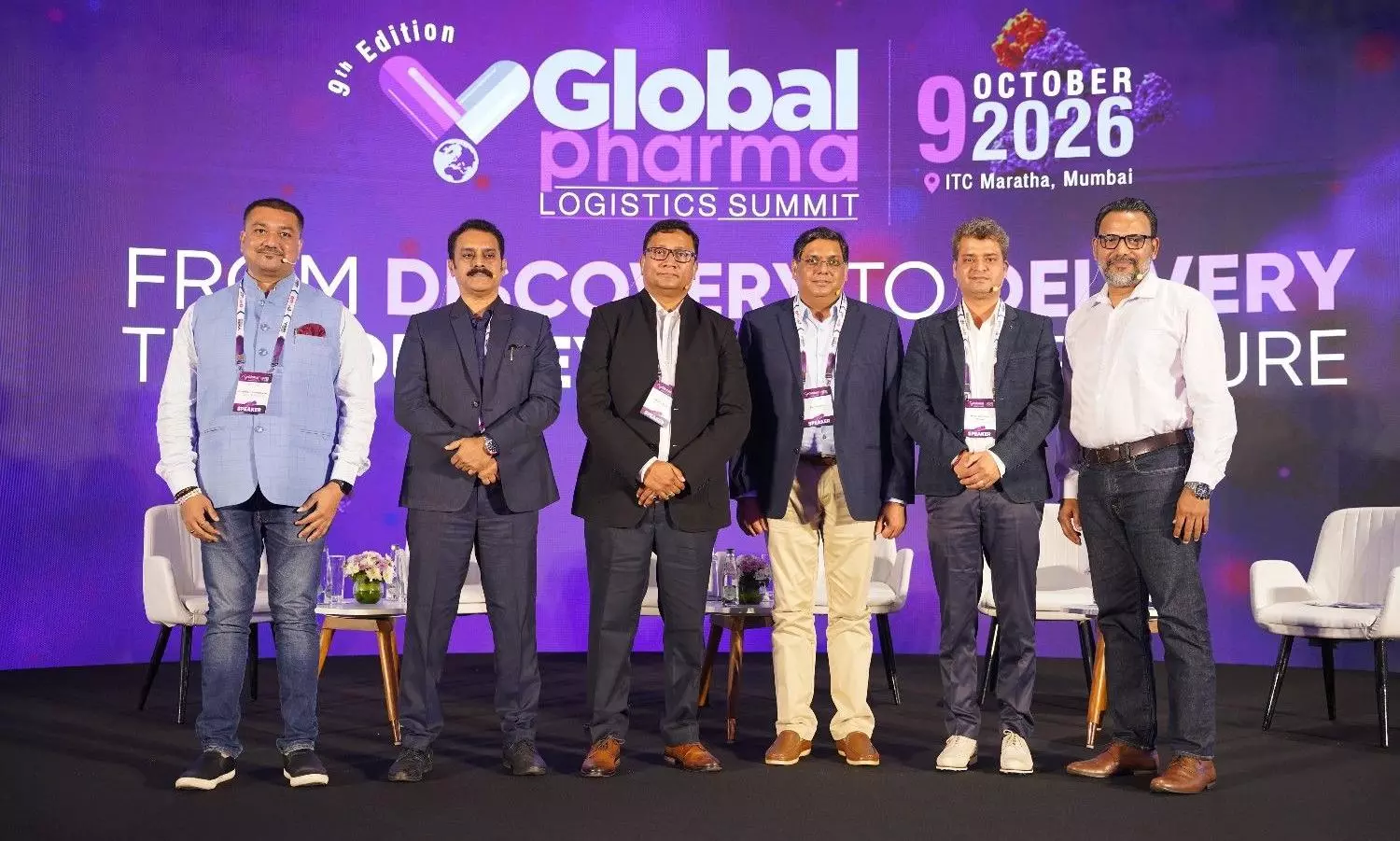
L to R: Chandan Shirbhayye, Aragen Life Sciences; Kaifeel Shaikh, Indoco Remedies; Manoj Singh, MSN Air Service; Shirish Arya, ImmunoACT; Mukesh Kumar Regar, Immuneel Therapeutics and Reji John, Editor at STAT Publishing Group.


Pharma air cargo has spent years building better cold rooms. Airports in India have added temperature-controlled facilities, trained staff and certifications over the past 10 to 15 years, according to Manoj Singh,Group Chief Executive Officer of MSN Air Service. Yet Singh argues that the biggest risk to a biologic or cell therapy shipment is no longer the cold room. It is the moment the shipment passes from one party's control to the next.
The discussion took place during Business Session 1, titled “What it takes to go beyond generics and build supply chains for biopharma”, at the Global Pharma Logistics Summit (GPLS) 2026, organised by STAT MarCom at ITC Maratha, Mumbai, on October 9. The panel featured Shirish Arya, Co-founder and Director of Corporate Strategy and Business Development at ImmunoACT; Mukesh Kumar Regar, Specialist SCM and Logistics at Immuneel Therapeutics; Chandan Shirbhayye, Vice President and Head of Supply Chain and Operational Excellence at Aragen Life Sciences; Kaifeel Shaikh, Vice President of EXIM, Global Logistics and Domestic Distribution at Indoco Remedies; and Manoj Singh, Group Chief Executive Officer of MSN Air Service. The session was moderated by Reji John of STAT Publishing Group.
That argument matters more as India moves beyond generics. Biologics, biosimilars and cell and gene therapies are high-value products with short lives and narrow temperature ranges. For the most personalised treatments, there is no spare batch to send if a shipment fails. Manufacturers on the same panel described the same weak spot from the other side of the airport fence.
A relay with too many runners
A pharma shipment is a relay. The manufacturer packs it. A forwarder or courier collects it. A ground handler accepts it, stages it, builds it onto a unit and moves it to the aircraft. The airline flies it. Another handler receives it at the other end, customs clears it and a vehicle takes it on to a hospital, a distributor or a pharmacy. Each of those steps ends with someone handing the box to someone else.
Shaikh said the numbers add up quickly. "Till the time it reaches the end consumer, it goes through a channel of more than 10 to 12 handling processes." Shaikh, who said he was speaking in a personal capacity, drew on a career that includes vaccines as well as generics. He said anyone who handles these products has to understand what they are carrying. A vaccine with a shelf life of a year or two is of no use if it has left its temperature range. The date on the label assumes the cold chain was never broken.
Singh described how far airport handling has come. Years ago, a shipment with a single data logger could pass through a general facility. Pharma shippers pushed airports to accept that medicines need a controlled environment, and certifications such as GDP and CEIV followed. Singh said that process is still moving and has to continue. But he argued that the mindset still treats an airport as a transit point. For biologics and cell and gene therapies, he said, it has to be treated as a critical point.
Five points where control can slip at the airport
Singh broke the airport stage into five points where a shipment is exposed. At each one, a different person or system takes over the cargo.
The first is acceptance. The handler has to check that the shipment has arrived in the right condition and that the packaging has been inspected. Delays and temperature excursions on the way in are possible risks. Singh said many of these small checks are not monitored closely enough.
The second is offloading and staging. Cargo moves from the vehicle to a holding area, and it can be exposed during the move. Singh said the industry often does not check whether staged cargo is sitting in the correct temperature zone.
The third is build-up, when the cargo is made into a unit for loading. Temperature excursions need to be recorded, and the customer should be able to see them. Singh said that visibility is not always given.
The fourth is the move from the controlled area towards the aircraft. The cargo leaves a protected space, and the question is how well that transition is managed just before departure.
The fifth is the airside. Flight delays, ramp problems and offloading decisions can all leave cargo exposed.
The root cause is rarely the building, Singh said. Everyone does their own job, but nobody takes accountability for the whole journey. He said the weak point is where responsibility changes hands between two controlled environments. "I would say the handover is the most important risk for our industry."
What manufacturers see when the box leaves their control
Arya sees the gap from the manufacturer's side. Inside ImmunoACT's facility, everything is documented and audited by regulators such as the CDSCO. Once a shipment leaves, he said, it enters an environment the company cannot see. The product travels for 24 to 48 hours, and the team relies on a data logger. If the logger shows no excursion, the shipment is judged to be fine.
Arya said that does not explain how the box was agitated, how X-ray machines treated it, or whether customs and airport staff understood how potent and time-sensitive these molecules are. "I don't know what is happening at the airport." He described this as blind trust, and said the industry as a whole lacks the answers.
Shirbhayye, who heads supply chain and operational excellence at Aragen Life Sciences, gave an example of what that blind spot can cost. A supplier of cell culture material was sending a shipment to India through a transit point in Europe. A strike at the airport meant the cold integrity material in the shipper could not be refilled. The data logger showed an excursion. The company tested the material and found it had not degraded as much as feared. If it had, Shirbhayye said, the whole value chain would have failed, because alternatives are hard to find. The logger recorded the problem. It could not have prevented it.
Regar, who works in supply chain and logistics at Immuneel Therapeutics, said his company tries to build control into the handover itself. Immuneel places a tilt indicator on its cryoshippers that turns from green to red if the box is mishandled. It does not prevent damage, but it shows that mishandling happened and helps trace who was responsible. Regar also worries about X-ray screening, which he said can destroy the product. Immuneel works with airlines and airport authorities on documentation so that its shipments are not treated like ordinary cargo. Each check-in and handover follows a written procedure, and the company has trained hospital staff and logistics partners to follow it. "In the chain of custody, only an authorised person can do the handover."
Paperwork creates handovers of its own. Shaikh said a CDSCO notification about two years ago requires an export NOC for shipments to South Africa and other developing markets. Many exporters were unaware of it, he said. A temperature-sensitive shipment can then sit at the airport for a day or even a week while documents are fixed. No cold room solves that.
Putting one name against every shipment
Singh's remedy is ownership. He wants time, temperature and visibility data held in a single account, so that nobody can argue about where a problem began. That, he said, removes ambiguity. He also wants every unit in the chain, from manufacturer to airport to ground handler to airline to regulator, to take responsibility for its part. Investment will keep coming from every stakeholder, he said, but the focus has to move from visibility to predictability.
Shirbhayye wants the same shift from the manufacturer's side. Today, he said, shippers receive a shipment and then analyse what happened. He wants enough data to act before a problem develops. "It would be better end-to-end visibility, and beyond metros."
Regar wants real-time alerts for any delay, deviation or excursion. At present his team often finds out only after the shipment reaches its facility, and then begins a root cause analysis. He asked logistics providers to stop treating these products as ordinary cargo and to invest in last-mile infrastructure for tier two and tier three cities.
Arya wants logistics providers to publish validated studies on what their handling does to product quality, the way the healthcare industry publishes shelf-life studies. He said such studies would build trust among both domestic and international players, which matters as ImmunoACT plans trials in Mexico and South Africa.
Shaikh wants pre-clearance across the CDSCO, customs and DGFT to run through a single digital window so that lead times fall. He also wants logistics providers to move from vendor to partner, with more ownership and training that reaches every hand in the chain.
John, who moderated the session, closed it with a question for the whole room. "Are we taking the full ownership of the process that we follow?"
None of these asks needs a new cold room. Each needs a name against every handover: who holds the product, at what temperature and for how long. As pharma moves from volume to value, Singh said, that is where the focus must stay. Ownership and accountability have to sit with every unit in the chain.