
Why sea-air and air-sea cargo movement remains rare in India
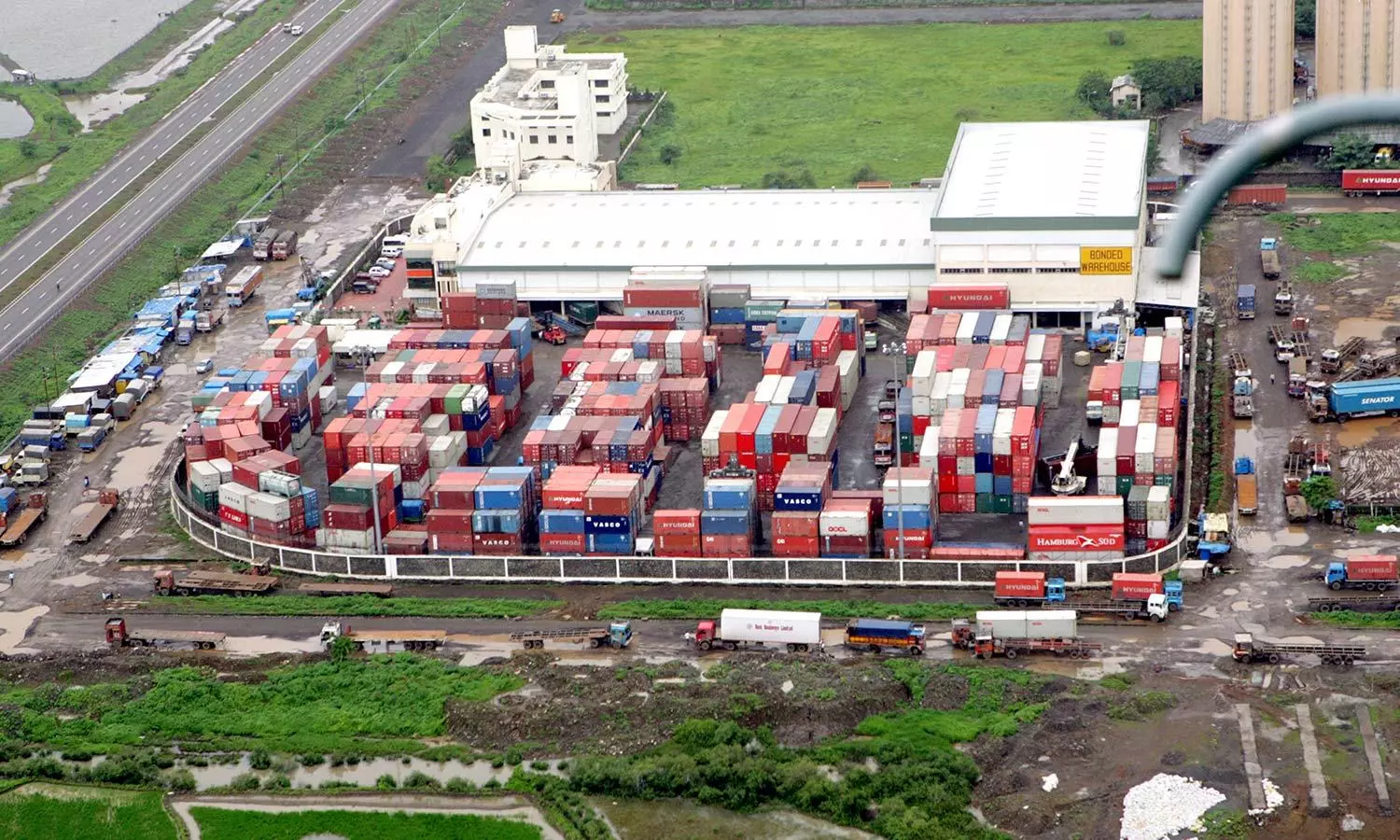


Despite its strategic geographic advantages, India continues to miss out on lucrative sea-air cargo transhipment opportunities due to a crippling combination of physical infrastructure gaps, disconnected customs systems, and complex bureaucracy.
When disruptions in the Middle East forced global supply chains to reroute cargo earlier this year, they also exposed a missed opportunity closer to home. India, despite its strategic location between Asia, Europe and Africa, was unable to attract significant volumes of cargo that could have been switched between sea and air. Samir Shah, President of the Air Cargo Agents Association of India (ACAAI), highlighted this in June 2026 during the India International Cargo Show (IICS) 2026 in Delhi. Shah pointed out that India lost a major chance to emerge as a global air cargo transhipment hub amid the disruptions caused by the US-Iran conflict.
Despite having the geographical advantage, growing cargo volumes, and the necessary entrepreneurial spirit to capture cargo flows that traditionally benefit Middle Eastern hubs, India was held back by severe procedural complexities. “Legally, I can do sea to air and air to sea, but the systems are not in place. I have to go through two commissionerates, sometimes three, to work it out,” Shah remarked, urging the government to establish a single-window clearance system.
"You have separate customs jurisdictions for Nhava Sheva, Mumbai Airport, and Navi Mumbai Airport, which fragments the entire process and treats a single movement as entirely disconnected transactions"
Chaitaly Mehta, EKF Global Logistics
The physical divide
The movement of cargo from sea to air, where an incoming ocean shipment is quickly de-stuffed and airlifted to its final destination to save time, remains an anomaly in the Indian logistics landscape.
The movement of cargo from a seaport to an airport, for instance, involves multiple stages, including transfer to a bonded facility, customs examination, documentation, inland transport by road or rail, and presentation at the airport cargo terminal. The movement is significantly delayed, points out Amit Kapoor, Vice President, SLL Integrated Logistics. “It usually builds up during container de-stuffing, customs examination, movement permissions, terminal cut-offs, security screening, and airline acceptance. If any document or clearance is delayed, the shipment may miss the planned flight and lose the time advantage that sea-air is supposed to create.”
SLL Integrated Logistics is the international freight forwarding arm of Parekh Global, specialising in air freight, ocean freight, project cargo, and end-to-end cross-border logistics solutions.
To understand why this product is virtually non-existent, one must first look at the geographical blueprint of Indian ports and airports. Haresh Calcuttawala, Co-Founder and Chief Executive Officer of Trezix, points out that global hubs are designed with native integration in mind. "If you see the ports in Dubai or Singapore, they have integrated infrastructure," he explains. “In these hubs, the seaport and airport are tightly linked, virtually eliminating transit delays between modes.”
In stark contrast, Indian infrastructure has evolved organically over decades, resulting in significant physical separation. Taking Mumbai as an example, Calcuttawala notes the sheer logistical nightmare of moving a container from Jawaharlal Nehru Port (JNP) to the Mumbai International Airport. "Although the distance between the two is barely 60 kilometres, daytime container movement is strictly restricted," he says. "Covering that short stretch by road takes at least 24 hours. When you factor in removing the cargo from JNP, navigating the road transit, and securing entry into the airport, the entire process takes an average of three to four days".
Kapoor of SLL Integrated Logistics also notes that the main issue is that sea and air cargo are governed through different operational systems. “Shipping lines, customs, port terminals, custodians, airport cargo operators, security agencies, and airlines often require separate documentation and separate handovers. A shipment that has already been cleared at the port may still need fresh validation before it can enter the air cargo chain. That creates duplication, uncertainty, and extra handling costs,” he adds.
"Because the cargo passes through common public infrastructure, the system treats the transaction as if you are fully importing the goods into India and then immediately re-exporting them."
Haresh Calcuttawala, Trezix
The invisible walls
The Indian customs landscape also operates in strict silos. Chaitaly Mehta, Director of EKF Global Logistics, emphasises that India lacks specified laws and defined procedures for sea-to-air transhipment. "Without clearly defined regulations, the workarounds currently in practice are exceptionally complicated," she states. The lack of a single customs jurisdiction exacerbates the problem. "You have separate customs jurisdictions for Nhava Sheva, Mumbai Airport, and Navi Mumbai Airport, which fragments the entire process and treats a single movement as entirely disconnected transactions," Mehta explains.
This fragmented administrative structure is directly reflected in the digital systems used for cargo clearance. Vikash Khatri, Founder of Aviral Consulting, reveals that the foundational software used by Indian Customs, ICEGATE, treats ocean and air movements as entirely isolated transactions. "Any shipment moving from air module to ocean module or ocean to air requires approval at a Deputy Commissioner (DC) level at every consignment level," Khatri explains.
He highlights that because the ocean and air modules do not communicate seamlessly, operators are forced into manual interventions and escalations. "If I am having three different consignments for the exports, all three at a consignment level, I will have to get that approved. Means DC will have to approve three different documents," he adds, classifying it largely as an operational software issue that has historically not been on the priority list for customs authorities.
Because the systems do not talk to each other, moving cargo from a seaport to an airport in India essentially mimics a full import and subsequent export cycle. "Under Indian law, removing any cargo from a port mandates full port clearance documentation," Calcuttawala details. The ecosystem requires separate port and airport agents, and freight forwarders need an e-way bill just to move the goods on the road, even if it is a zero-value transit stock transfer. "Because the cargo passes through common public infrastructure, the system treats the transaction as if you are fully importing the goods into India and then immediately re-exporting them," he notes.
Mehta concurs, adding that shippers are subjected to furnishing extensive bonds and bank guarantees. "If that is only going to take three or four days, the very purpose of making it an urgent shipment and changing your mode is being defeated because everybody knows that if you have to do a bond and bank guarantee, you can't do it in two days' time," she asserts. Furthermore, Mehta highlights the absence of a unified transit document.
“Shipping lines, customs, port terminals, custodians, airport cargo operators, security agencies, and airlines often require separate documentation and separate handovers. That creates duplication, uncertainty, and extra handling cost.”
Amit Kapoor, SLL Integrated Logistics
The operational bottleneck
Beyond documentation, the physical handling of the cargo presents its own set of steep challenges, primarily concerning security scanning and warehousing infrastructure. In hubs like Dubai, mid-transit inspections are often waived or streamlined. In India, double scanning is the norm, bringing massive logistical bottlenecks. "If you are going to get this from sea to air, the question is going to be for security. That means they will want to re-X-ray the cargo at the airport," Mehta explains.
Currently, Indian air cargo complexes lack RFID door scanners and possess X-ray machines incapable of accommodating full sea containers. "That means you have to offload the container and then you have to put the cargo in," she says. "A single 40-foot container can hold up to 28 tonnes. If ten of these arrive at the cargo complex simultaneously, the existing infrastructure simply cannot handle that kind of volume".
Calcuttawala expands on this infrastructural void by describing the specialised warehousing required for load deconsolidating and route optimisation. "This requires dedicated facilities equipped to unload, store, and break down the cargo according to available flight routes, before completely reconstructing the shipment for air transit," he explains. This requires vast spaces equipped with automated, barcoded sorting conveyors rather than manual labour. "The entire process demands comprehensive logistics infrastructure, particularly advanced warehousing capabilities backed by robust systems," Calcuttawala remarks, pointing out that such high-tech, robotic ecosystems seamlessly integrated with flight schedules are exactly what makes global hubs so successful.
Khatri agrees that building this capability requires monumental shifts. "It ultimately comes down to continuous stuffing and de-stuffing. Sea containers must be completely unloaded before the cargo can be re-packed into aviation-standard Unit Load Devices (ULDs)," he says. He notes that achieving this level of cross-modal interoperability will require "massive infrastructure and policy corrections".
Vaibhav Vohra, Managing Director, Continental Carriers, says these delays are not caused by a single bottleneck but by multiple handovers throughout the journey. Cargo moving from a seaport to an airport passes through transport operators, terminal operators, customs authorities and several documentation processes. According to him, repeated paperwork, cumbersome customs procedures, fragmented cargo handling and the absence of dedicated sea-air facilities collectively erode the speed advantage that multimodal transport is supposed to offer. He contrasts this with Dubai, where streamlined customs procedures allow cargo to move from port to airport in around 90 minutes, whereas the process in India remains considerably slower, increasing both costs and uncertainty.
“The lead time which gets reduced by air shipment is sometimes more beneficial than the cost of shipment. So in that case, if a product is stocked out and airlifted, it is much better rather than getting it stocked out and even losing the sales."
Vipul Jain, Intas Pharmaceuticals
The dilemma
Despite these formidable hurdles, the fundamental question remains: is the sea-to-air product genuinely necessary for India? Vipul Jain, Associate Vice President of Supply Chain Strategy and Analytics at Intas Pharmaceuticals, brings a crucial supply chain perspective to this debate. He argues that the choice between air and sea is ultimately a calculated trade-off between cost and lead time. "Sea to air is cost-effective because sea shipments are always cost-effective compared to air shipments because I think it is four to five times more costly to ship by air," Jain observes.
However, he acknowledges that in critical situations, the expense is justified. "The lead time which gets reduced by air shipment is sometimes more beneficial than the cost of shipment. So in that case, many times, if a product is stocked out and airlifted, it is much better rather than getting it stocked out and even losing the sales," he states.
Yet, Jain cautions shippers against using expensive air freight as a superficial fix if downstream bottlenecks will delay the product anyway. "It is like you are using a very big highway, but at the end of the highway, you are getting stuck in the bottleneck of the small streets of the town," he warns. If the goods are merely going to sit in a destination warehouse waiting for import duty clearance, the premium paid for the air leg is wasted. "Are you really benefiting by air transport, and are you really taking the benefit of the extra cost you are paying? If you are not sure about it, better to use the sea shipment," Jain advises, stressing that true demand-supply realities, not just origin or destination geography, should dictate the mode of transport.
Khatri firmly supports this view, summarising the shipper's dilemma concisely: "It's a purely time versus cost trade-off business. Nothing else".
"Any shipment moving from air module to ocean module or ocean module to air module requires approval at a Deputy Commissioner level at every consignment level"
Vikash Khatri, Aviral Consulting
The way ahead
If India is to unlock this transhipment capability and cater to urgent demand-supply gaps effectively, a massive, coordinated overhaul is necessary. Calcuttawala suggests several strategic pivots. First, there must be a unified administrative approach.
Calcuttawala suggests that the disparate ministries governing ports, aviation, and roads must come under one umbrella. "This has to get somewhere having like a super boss on top of them, who function with one responsibility," he argues.
Second, implementing a single multimodal document is critical to bypass repetitive filing. "If we can get a multimodal document issued, then that same multimodal document should be accepted for the sea part also, as well as for the air part," Mehta proposes. She also calls for the government to publish clearly defined Standard Operating Procedures (SOPs) with strict, mandated turnaround times of 48 to 72 hours for cross-modal clearance.
Furthermore, the strategic use of Air Freight Stations (AFS) could bypass airport congestion entirely. "If AFSs work and they are in a position to give that team the freedom that the trade requires for handling it, then they should have the AFSs do it," Mehta suggests. Cargo could be moved from the seaport directly to an AFS for destuffing, palletisation, and customs clearance, allowing it to enter the airport fully gated and ready to fly, eliminating double handling.
Continental Carriers, which operates India's only AFS in Delhi, says the concept has already demonstrated how cargo processing can be shifted away from congested airport terminals. "Continental's AFS has transformed the export cargo process by shifting key activities such as cargo acceptance, Customs clearance, security screening, documentation and cargo build-up from the congested airport environment to a fully secured off-airport facility," says Vohra. "The customs-cleared and security-screened cargo, including built-up Unit Load Devices (ULDs), is transported to the airport for direct handover, ensuring cargo integrity, security and an unbroken chain of custody." According to him, this allows airport cargo terminals to focus primarily on the expeditious transfer of ready-to-fly cargo to airlines, in line with globally accepted air cargo practices.
Vohra urges strengthening operational coordination among shipping lines, airlines, terminal operators and logistics providers while encouraging insurers to adopt uniform liability clauses across both transport modes. He says common liability provisions would remove uncertainty in claim settlement and give shippers greater confidence to adopt sea-air solutions.
“Continental's AFS has transformed the export cargo process by shifting key activities such as cargo acceptance, Customs clearance, security screening, documentation and cargo build-up from the congested airport environment to a fully secured off-airport facility.”
Vaibhav Vohra, Continental Carriers
Kapoor of SLL Integrated Logistics bats for dedicated bonded sea-air corridors, a single digital shipment record and guaranteed predictable transfer windows. “If these three elements become reliable, freight forwarders can quote sea-air as a planned service rather than an exception,” he said. Kapoor also points out the most suitable lanes for multimodal operations are India-Europe, India-North America, and selected Middle East and Africa routes where full air freight is expensive but full ocean transit is too slow. He also adds, “Cargo such as electronics, auto components, fashion, pharmaceuticals under controlled conditions, engineering spares, and urgent retail replenishment can benefit.”
The geopolitical shifts currently rocking global supply chains make resolving these issues more urgent than ever. With the Red Sea crisis and threats of blockades forcing vessels around the Cape of Good Hope, transit times have bloated by up to 20 days. "People are looking for safe harbour now," Calcuttawala points out, noting that West Asia and East Asia are both grappling with instability. "The safest way in Asia Pacific is now South Asia," he adds, highlighting the immense opportunity waiting for India.
To capitalise on this, India cannot afford to remain fragmented. It must bridge the physical distances with dedicated logistics corridors, merge its digital customs modules to eliminate manual approvals, and foster an environment of trust-based facilitation. Only by shedding its siloed past can India transform its ports and airports into a synchronised, world-class sea-air transhipment hub.
This article was originally published in the Indian Transport & Logistics News' July-August 2026 issue.