
Venus Safety & Health targets US market following tariff relief
Venus Safety & Health Managing Director Mahesh Kudav noted increased interest from US customers after the tariff reversal.
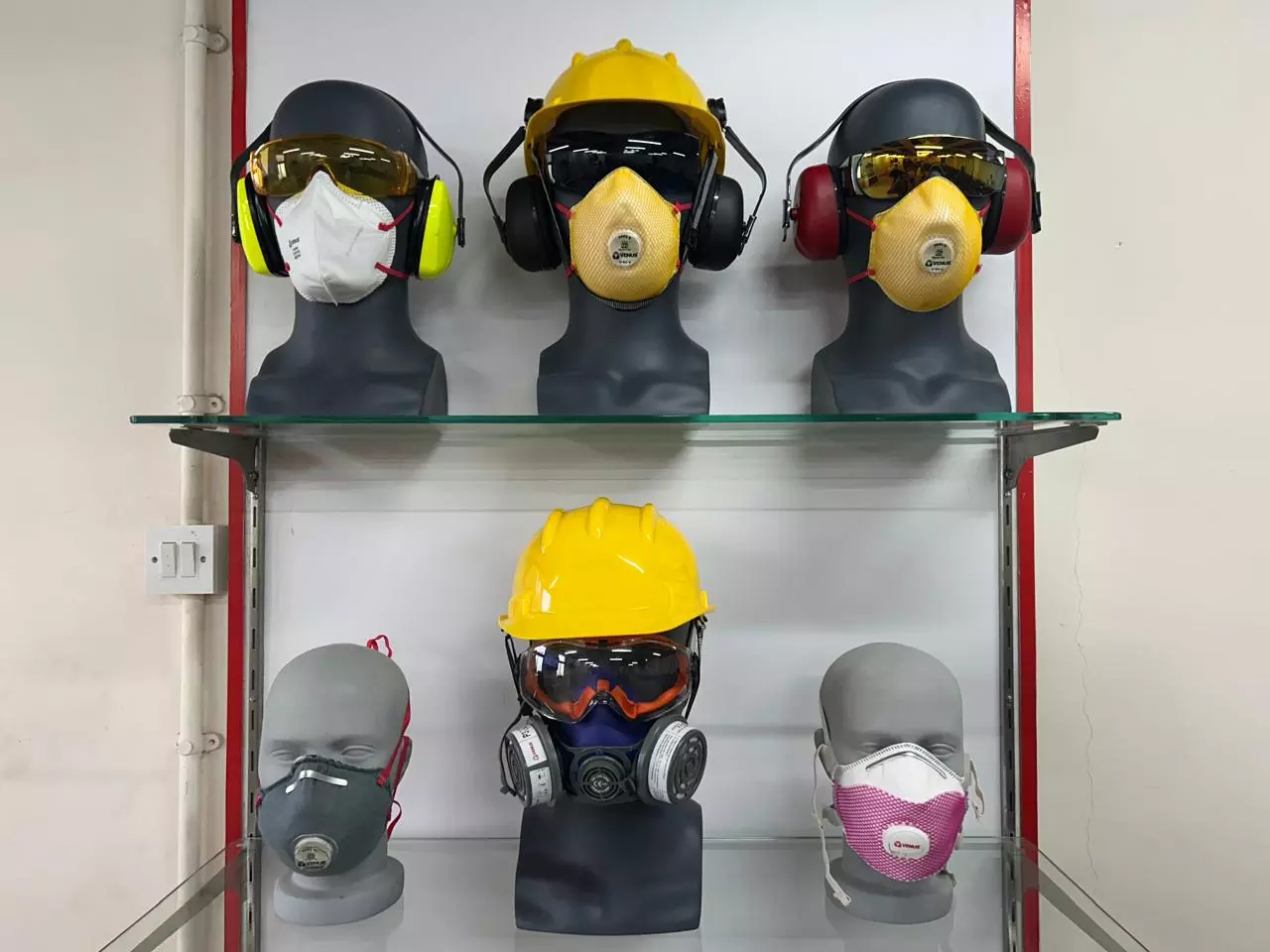


Venus Safety & Health, a global manufacturer of personal protective equipment (PPE) for industrial solutions, exporting to over 32 countries, targeting regions like the UK, South Africa, Canada, and the GCC, is preparing to enter the United States market in 2026.
Following a new trade agreement between India and the U.S. covering industrial air filtration, head/hearing safety, firefighting, and respiratory protection, Venus Safety & Health is now targeting the American market. The recent tariff reversal, Venus Safety & Health is seeing renewed interest from US customers, according to Mahesh Kudav, the company's Managing Director.
Kudav shared this information with Indian Transport & Logistics News during the launch of several of the company's new products at its manufacturing facility in Taloja, Maharashtra.
While the US has been a long-term target, Venus' attempts were hindered first by a block due to the COVID-19 pandemic, and later by the imposition of a tariff. With the tariff now reversed, the company is restarting its entry process.
The planned US entry follows an interim trade agreement reached between India and the US in February 2025. This deal, announced after a year of negotiations, will reduce duties on a range of textiles, leather, gems and jewellery, agriculture, machinery, home décor, pharmaceuticals, and technology-driven industries
A trade agreement, reached through telephonic conversation between Prime Minister Narendra Modi and US President Donald Trump, reduces tariffs on 60% of Indian exports to the United States, giving India a competitive edge over South Asian nations like Indonesia, Thailand and Vietnam.
Currently, global PPE exports are dominated by Bangladesh and China. Kudav acknowledged this market reality, stating that Venus plans to compete with Bangladesh, a primarily price-sensitive, labour-oriented market, by focusing on advancing product technology rather than solely on minimising cost. To compete with technologically advanced China, Venus will focus on reliability and unique product features as its key differentiators.
Bangladesh and China maintained their dominant positions in the global textile and apparel export market in 2025. Notably, Bangladesh saw robust growth, with its exports to the EU increasing by 14.9%.
For Venus, exports account for 50% of its total revenue, with transportation relying on both air and sea freight.
The new product line-up features a range of reusable respiratory masks, new earmuff models for enhanced hearing protection, and the introduction of the new H-1500 safety helmet.
Additionally, the launch includes India's first IS 10245 (Part 2) approved self-contained apparatus (SCA) system, which meets stringent firefighting standards, along with advanced air filtration solutions designed for various industrial applications.
These launches are intended for the domestic market and are considered concept-building products. Marketing targets are set after a year to allow for fine-tuning based on market suitability before establishing business targets, the Managing Director said.
Mahesh Kudav
Quality assurance and technology adoption
Venus's manufacturing infrastructure comprises seven facilities in Maharashtra, collectively covering more than 600,000 sq. ft., with a daily production capacity of 1.5 million units. These sites utilise advanced smart factory technologies and are characterised by backward-integrated production processes, along with thermally insulated, dust-free manufacturing environments.
The product line is extensive, featuring safety helmets, safety glasses, and a full spectrum of protective respiratory gear, including disposable and reusable respirator masks.
The company is leveraging AI for real-time supply chain management, route optimisation, and demand forecasting, ensuring efficient and timely delivery. Shipments primarily originate from major Indian ports, such as Jawaharlal Nehru Port Authority (JNPA).
The company ensures quality through batch-wise testing and maintains a digital database for full product traceability. The facility provides critical and specialised evaluations, meeting international standards such as National Institute for Occupational Safety and Health (NIOSH) and Conformité Européenne (CE). These are the primary, often interchangeable, global standards for certifying PPE, particularly respirators.
Testing capabilities include chemical gas capacity testing for various respirators, including carbon monoxide, precision lens refraction testing, and dedicated SCA Class 2 testing equipment.
Kudav said, "Demand for safety and health solutions is increasingly being driven by stricter regulations, higher compliance expectations, and greater awareness across industries." He noted the company's focus on building manufacturing depth and technology to deliver reliable, compliant products, supporting growth in both domestic and international markets.
The company integrates technology into its operations, utilising AI-driven platforms to offer real-time visibility across raw materials, production schedules, and outbound shipments.
Furthermore, it employs predictive analytics and automated alerts to proactively identify and mitigate potential bottlenecks, whether at ports, in transit, or during production, thereby ensuring the maintenance of delivery commitments.
Regarding automation, Kudav noted that the organisation extensively uses Artificial Intelligence, which has increased output while reducing physical labor involvement. He added that automation's impact on infrastructure and manufacturing has been high, alongside a large workforce in the industry.