
India’s logistics cities: Powering the next wave of trade and growth
From metros to Tier-2 cities, India’s logistics hubs are evolving with policy support, investment, and modern supply chain design.
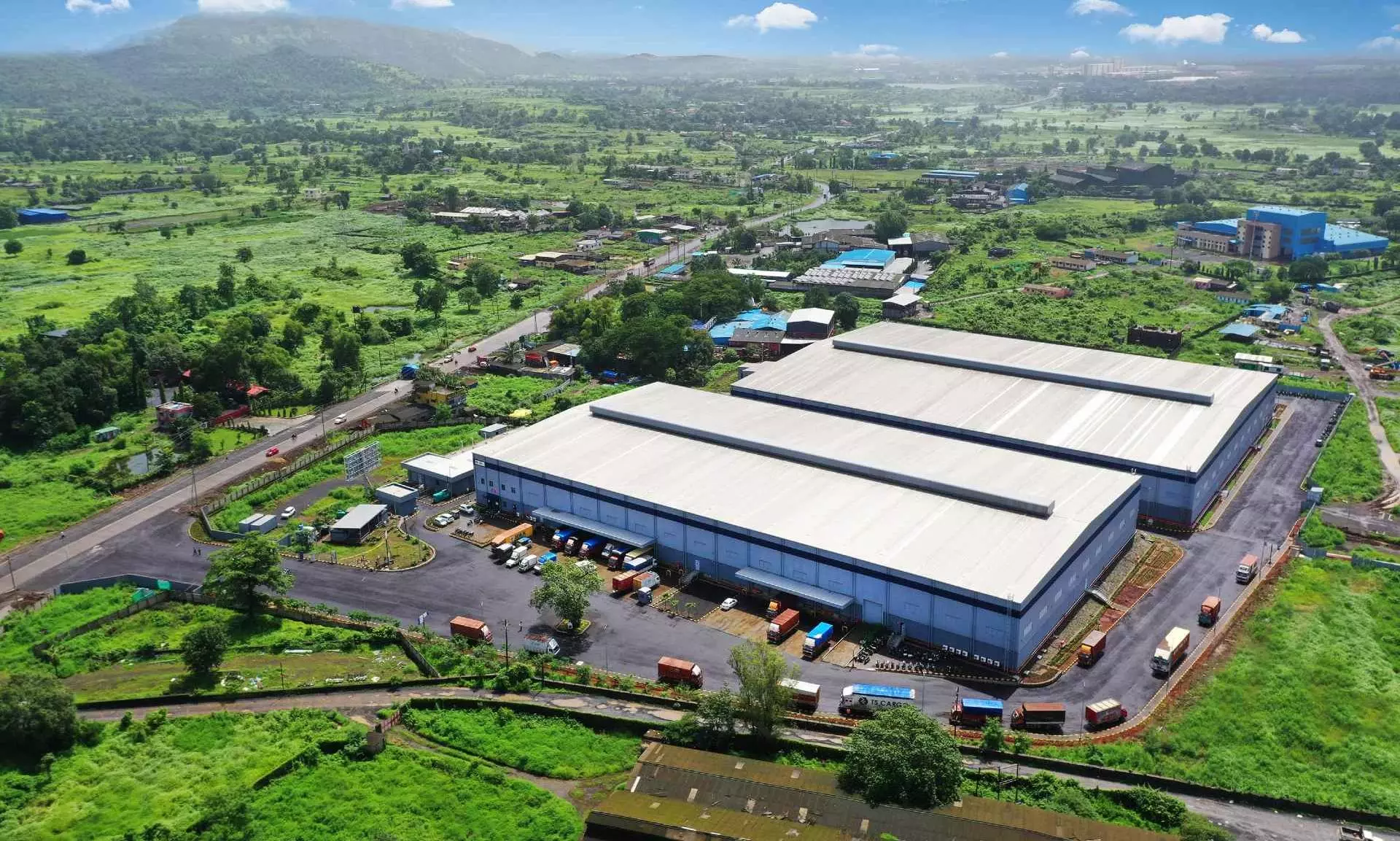


India’s logistics landscape is undergoing a quiet but structural transformation. What were once scattered warehouses on the edges of cities are now evolving into large, integrated logistics ecosystems that combine storage, processing, distribution and value-added services. These developments are increasingly being described as logistics cities, multi-functional hubs designed to support trade, manufacturing and consumption at scale.
According to OneUnion Solutions, India’s logistics and warehousing sector has moved decisively away from fragmented, unorganised facilities towards large-format, planned parks driven by formal demand and institutional investment. This shift is being shaped by changes in how goods are produced, moved and consumed, and by the growing need for efficiency across supply chains.
At the centre of this transition is a clear rethink of what logistics infrastructure is meant to achieve. Instead of serving as passive storage points, modern logistics parks are being designed as long-term platforms that enable faster movement of goods, lower costs and better reliability that are the key requirements for a trade-driven economy like India.
Institutional capital and the rise of integrated ecosystems
Industry leaders argue that institutional capital has been a decisive force behind this evolution. Anshul Singhal, Managing Director of Welspun One, says the sector is seeing a “clear shift from land-led warehousing to integrated logistics ecosystems,” driven by investors looking for scale, compliance and long-term asset quality.
“Today’s logistics parks are being designed as long-term platforms, combining Grade-A warehousing, light manufacturing, and value-added services within compliant, well-governed environments that ensure asset quality and operational reliability at scale,” Singhal notes.
This perspective aligns closely with broader industry observations. OneUnion Solutions, a logistics and supply chain advisory firm that tracks trends in India’s warehousing and freight ecosystem highlights that the entry of domestic and global investors has raised standards across the sector, accelerating the adoption of Grade-A warehousing, professional park management and technology-led operations. These investments are no longer focused only on land appreciation but on creating ecosystems that can support complex supply chains over decades.
The emphasis on governance and compliance has also made these logistics cities more attractive to large occupiers, particularly those with global operations and strict quality requirements.
Demand drivers: Manufacturing, retail and e-commerce
The demand side of this transformation is being driven by a mix of manufacturing, organised retail and e-commerce. According to Anshul Singhal, occupiers across these segments are consolidating operations into organised facilities that offer proximity to consumption centres and flexibility to support automation-led supply chains.
This trend is reflected in multiple industry analyses. OneUnion Solutions notes that manufacturing-led demand has increased steadily as companies look to optimise inventory and align production more closely with distribution. At the same time, organised retail and e-commerce players are prioritising large, centralised hubs that can serve multiple markets efficiently.
Astravise Services, a logistics analytics and advisory firm focused on freight movement and supply chain optimisation in India, points out that freight movement patterns in India are changing as companies adopt hub-and-spoke models to reduce transit times and logistics costs. In this model, logistics cities act as primary nodes that connect regional markets to national freight corridors.
For e-commerce players in particular, scale and speed have become non-negotiable. Large logistics parks allow them to integrate warehousing, sorting and distribution functions within a single location, improving turnaround times and reducing operational complexity.
Location strategy: Proximity and connectivity
One of the defining features of emerging logistics cities is their strategic location. Rather than being driven solely by low land costs, developers and occupiers are increasingly prioritising proximity to consumption centres and access to transport infrastructure.
Astravise Services highlights that India’s major logistics hubs are clustered around key freight corridors, ports and urban centres, enabling smoother freight flows and better optimisation of road and rail networks. This connectivity allows logistics cities to function as trade engines, linking production clusters with domestic and international markets.
Singhal echoes this view, noting that well-planned logistics-led developments connect production clusters to ports, freight corridors and urban markets, helping reduce transit times and improve supply chain resilience.
Established regions such as Mumbai Metropolitan Region(MMR), Delhi-NCR, Chennai and Bengaluru continue to dominate logistics activity due to their market size and infrastructure depth. However, the way logistics is organised within these regions is changing, with a move towards larger, master-planned parks rather than dispersed facilities.
Metro corridors as logistics anchors
Metro regions remain the backbone of India’s logistics network, but their role is evolving. According to Astravise Services, cities such as Delhi, Mumbai and Bengaluru act as convergence points for freight flows, handling goods destined for both domestic consumption and onward distribution .
These metros are increasingly supported by peripheral logistics cities located along highways, expressways and rail corridors. The aim is to balance proximity to urban demand with the space and infrastructure needed for large-scale operations.
OneUnion Solutions observes that rising land costs and congestion within city limits have pushed logistics development towards well-connected peripheral zones, where large-format parks can be developed with better planning and regulatory compliance . These peripheral logistics cities serve as extensions of urban economies, absorbing freight activity that cities can no longer accommodate efficiently.
The role of planning and governance
A recurring theme across industry analyses is the importance of planning and governance in enabling logistics cities to function effectively. Singhal points to proactive land aggregation, single-window clearances and alignment with national initiatives such as Gati Shakti as key accelerators.
Government policy has begun to reflect this thinking. A press note issued by the Press Information Bureau (PIB) outlines the government’s efforts to improve logistics efficiency through coordinated planning, infrastructure integration and reduced compliance burden. These measures are intended to support the development of organised logistics hubs that can lower overall logistics costs.
The combination of policy support and private capital has created conditions where logistics cities are no longer isolated real estate projects but part of a broader economic strategy.
The rise of Tier-2 and Tier-3 logistics cities
While metro corridors continue to anchor India’s logistics network, a significant part of the next growth phase is unfolding in Tier-2 and Tier-3 cities. Rising land costs, congestion and regulatory constraints in metros have pushed both developers and occupiers to look beyond traditional hubs.
According to Varuna’s analysis on emerging warehousing trends, Tier-2 and Tier-3 cities are increasingly attracting organised logistics development due to lower costs, improving infrastructure and growing consumption demand. These locations are no longer viewed only as secondary markets but as strategic nodes that extend the reach of national supply chains.
Varuna, an Indian logistics company providing transportation and warehousing services, with a strong presence in regional markets, notes that improvements in highways, expressways and regional connectivity have made it viable for companies to serve multiple markets from smaller cities. As a result, logistics parks in these locations are being designed with scalability in mind, allowing occupiers to expand operations as demand grows.
This shift is also closely tied to manufacturing expansion. As production units move into industrial clusters outside major metros, logistics cities are emerging alongside them to support inbound raw materials and outbound finished goods.
Extending reach while controlling costs
Cost optimisation remains a major driver behind the expansion into smaller cities. Varuna highlights that occupiers are increasingly balancing proximity to end consumers with operating efficiency, using Tier-2 and Tier-3 hubs as regional distribution centres that complement metro-based facilities.
These hubs allow companies to shorten delivery timelines without bearing the full cost burden of operating exclusively in high-priced urban markets. In effect, logistics cities in smaller locations are becoming critical links between national freight corridors and local consumption zones.
This distributed network approach is particularly important for retail and fast-moving consumer goods companies, which require both scale and speed across diverse geographies.
Urban distribution centres and last-mile pressure
As logistics cities expand on the peripheries, pressure within urban areas is also reshaping how logistics is organised closer to consumers. JUSDA Global’s analysis of urban distribution centres in India points to growing demand for smaller, strategically located facilities within or near cities to support last-mile delivery.
According to JUSDA Global, a global supply chain solutions provider specialising in urban distribution and technology-led logistics, rapid growth in e-commerce and same-day or next-day delivery expectations has increased the need for urban distribution centres that can handle high-frequency, low-volume movements. These centres are often linked operationally to larger logistics cities located outside city limits.
This two-tier structure like the large logistics cities for bulk handling and urban centres for final distribution is becoming a defining feature of modern supply chains. It allows companies to optimise inventory placement while responding quickly to consumer demand.
However, JUSDA Global also notes that land availability, zoning regulations and traffic constraints remain challenges for urban logistics infrastructure. As a result, careful planning and integration with city logistics policies are essential.
Bhiwandi: A logistics city in practice
Few locations illustrate the concept of a logistics city better than Bhiwandi, near Mumbai. FM Logistic, a multinational third-party logistics provider offering warehousing and distribution services across India, describes Bhiwandi as the backbone of India’s supply chain network, owing to its strategic location and concentration of warehousing and distribution facilities.
Situated close to Mumbai’s consumption markets and connected to major highways, Bhiwandi has evolved from an informal warehousing cluster into a large, organised logistics hub. FM Logistic notes that the area handles significant volumes of goods destined for western and central India.
What makes Bhiwandi particularly relevant is the way it demonstrates both the opportunities and challenges of logistics-led development. On one hand, it shows how proximity to markets and infrastructure can drive scale. On the other hand, it highlights issues related to congestion, land-use planning and the need for better governance.
The transition of Bhiwandi towards more organised, Grade-A logistics parks reflects the broader national trend identified by OneUnion Solutions, where older clusters are being upgraded to meet modern supply chain requirements.
Policy push and government alignment
Government policy has played an increasingly important role in shaping the logistics ecosystem. A Press Information Bureau (PIB) release outlines initiatives aimed at reducing logistics costs through coordinated infrastructure planning, simplified regulations and improved inter-ministerial alignment.
These efforts are intended to support the creation of integrated logistics hubs that can function efficiently across modes and regions. The focus on planning and coordination aligns with industry calls for logistics cities that are developed as part of a broader economic framework rather than as isolated projects.
Anshul Singhal emphasises the role of state governments in this process, particularly in land aggregation and single-window clearances. According to him, alignment with national initiatives such as Gati Shakti can significantly accelerate logistics-led development.
Today’s logistics parks are being designed as long-term platforms, combining Grade-A warehousing, light manufacturing, and value-added services within compliant, well-governed environments that ensure asset quality and operational reliability at scale
Anshul Singhal, Welspun One
Policy support has also encouraged private investment by reducing uncertainty and improving the viability of large-scale projects. As a result, logistics cities are increasingly seen as long-term infrastructure assets rather than short-term real estate plays.
Linking logistics cities to trade competitiveness
Beyond domestic efficiency, logistics cities have important implications for India’s global trade ambitions. Singhal points out that well-planned logistics-led developments connect production clusters to ports, freight corridors and urban markets, helping improve export competitiveness.
Astravise Services notes that optimised freight flows and reduced transit times are critical for improving reliability in supply chains, a key factor for exporters operating in global markets. Logistics cities play a central role in this by consolidating cargo, improving handling efficiency and reducing delays.
As manufacturing output grows and supply chains become more integrated, the ability to move goods quickly and predictably will be a decisive advantage. Logistics cities, by design, are meant to deliver this reliability at scale.
The road ahead
Looking ahead, the contours of India’s logistics map are becoming clearer. Established corridors such as MMR, Delhi-NCR, Chennai and Bengaluru are expected to deepen their roles as logistics anchors, while emerging nodes like Pune’s Talegaon are well positioned to evolve into logistics-driven trade hubs, according to Singhal.
Industry analyses suggest that success will depend not just on scale, but on planning, governance and integration. As OneUnion Solutions notes, the next phase of growth will favour players who can deliver compliant, technology-enabled and well-managed logistics environments.
In this context, logistics cities are no longer optional infrastructure. They are becoming central to how India produces, trades and consumes goods. If executed well, they have the potential to reduce costs, improve resilience and strengthen India’s position in global supply chains.
For a country seeking to expand manufacturing and boost exports, the emergence of logistics cities may well prove to be one of the most important enablers of growth in the years ahead.