
India steps up its Ro-Ro services with new operational milestones
India’s Ro-Ro services are expanding across ports and rail, improving speed, safety, and efficiency in freight movement.
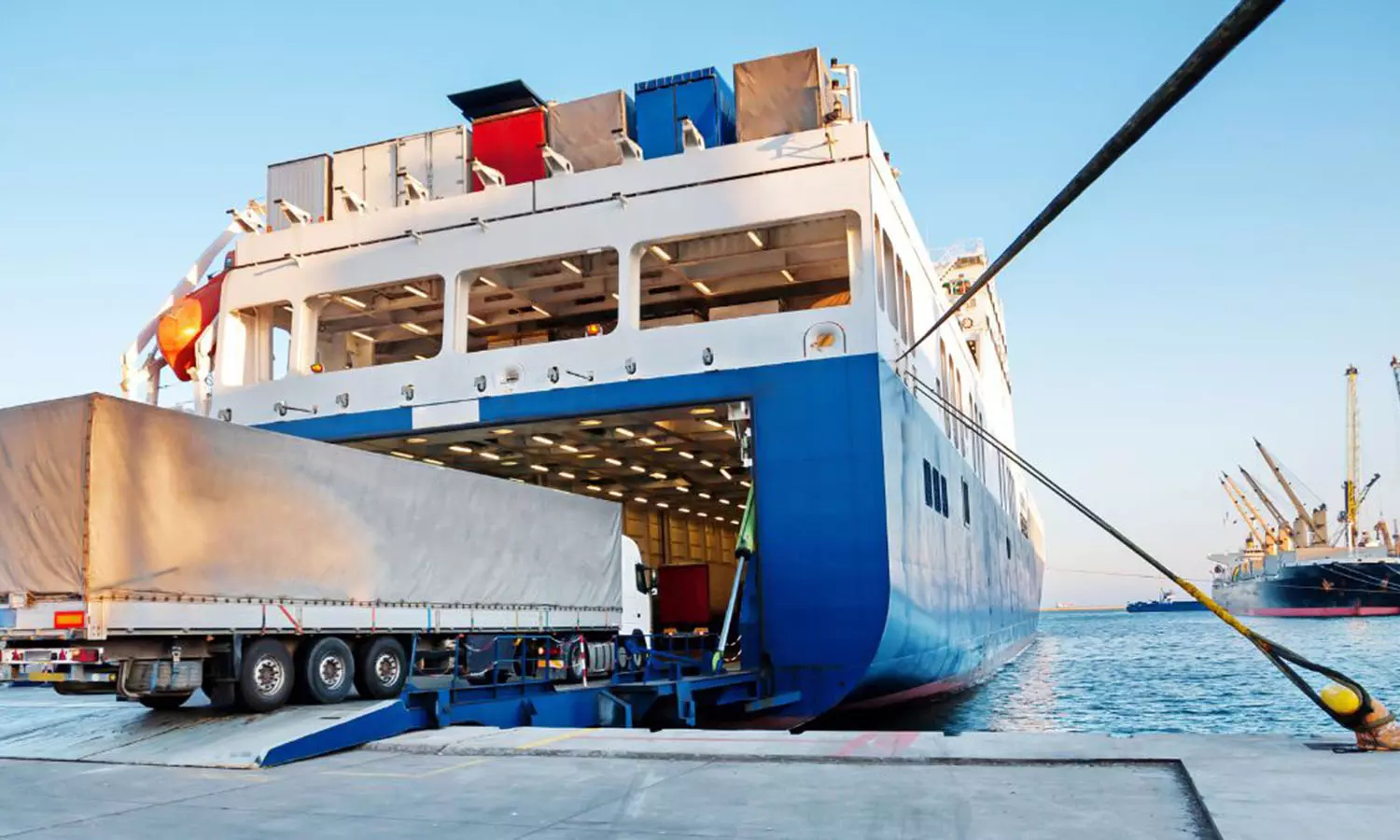


India’s coastal logistics sector is undergoing a quiet but decisive transformation, and at the heart of this shift is the resurgence of Roll-on/Roll-off (Ro-Ro) services. Long considered a supplementary mode, Ro-Ro is now emerging as a strategic pillar in India’s multimodal ecosystem, enabling faster vehicle movement, reducing handling requirements and lowering emissions compared to traditional road-heavy distribution models. The steady expansion of Ro-Ro routes, infrastructural upgrades at key ports, and new benchmarks in operational efficiency are collectively signalling a renewed national focus on coastal logistics.
A strong indication of this momentum came recently from Mundra Port, where Adani Ports & SEZ announced a significant milestone. In September this year, the port’s Ro-Ro team successfully loaded 5,612 cars onto a single vessel in under 40 hours, setting a new benchmark for operational excellence. This achievement surpassed Mundra’s previous record of 5,405 cars set in June 2022. For India’s automotive logistics landscape, which relies heavily on predictable export cycles and rapid vessel turnaround, this kind of performance sends a strong message: Indian ports are scaling up their Ro-Ro capability with increasing precision.
Milestones like Mundra’s are timely and consequential. India is the world’s third-largest automotive market, and coastal logistics, especially Ro-Ro, is becoming a preferred mode for both domestic repositioning and exports. As vehicle exports rise from clusters in Gujarat, Maharashtra, Tamil Nadu, and Andhra Pradesh, Ro-Ro capacity at ports is evolving from a “good-to-have” to an operational necessity. Faster loading reduces berth occupancy, optimises vessel scheduling, and allows exporters to respond to global demand with agility. Mundra’s record reflects the broader reality: Indian ports are preparing for a future where auto exports are larger, more geographically diverse, and more time-sensitive.
India’s expanding network of Ro-Ro solutions
Further down the western coast, the Konkan Railway’s pioneering Ro-Ro service continues to serve as a model for multimodal innovation. By transporting trucks on rail wagons across terrain that is difficult and time-consuming to navigate by road, the service has reduced accidents, improved transit consistency, and cut emissions. As Indian Railways evaluates new freight-heavy corridors under the PM Gati Shakti programme, Ro-Ro by rail is expected to see renewed interest, especially for over-dimensional cargo and fast-moving consumables.
As the Ro-Ro ecosystem strengthens, manufacturers are also exploring coastal and short-sea routes for domestic repositioning of vehicles and components. With India rapidly expanding EV production, Ro-Ro offers safer, lower-handling movement of sensitive components such as battery packs and high-value drivetrain systems. The reduced risk of damage and the elimination of repeated loading cycles make Ro-Ro particularly attractive for next-generation automotive logistics.
Despite the progress, challenges persist. Many smaller ports still lack dedicated Ro-Ro berths, marshalling areas, and modern ramps that can support large-volume operations. Vessel availability remains inconsistent, influenced by both seasonality and commercial demand. Turnaround times at some ports vary significantly due to local congestion, documentation delays, or limited automation. Operators frequently highlight the need for guaranteed cargo volumes to maintain service viability, something that requires closer alignment between ports, shipping lines and state authorities.
India’s Ro-Ro sector is still evolving, but its direction is unmistakably forward. From Mundra’s record-breaking automotive operations to the growth of coastal Ro-Pax routes and the revival of rail-based Ro-Ro, the country is constructing a logistics future that is cleaner, smarter and more efficient. The coming years will determine how deeply Ro-Ro embeds itself into India’s freight architecture, but one thing is clear: the momentum is real, and the potential is immense.
The next phase of India’s Ro-Ro evolution will depend on how quickly ports, carriers, and manufacturers align to build predictable, year-round cargo flows, and with ports like Mundra demonstrating what high-performance Ro-Ro operations can achieve, the sector is entering a phase of measurable maturity. As demand for cleaner, faster, and more cost-efficient movement grows, especially from the automotive and EV industries, Ro-Ro is poised to play a far bigger role in India’s logistics landscape. What was once a supplementary option is now becoming a cornerstone of the country’s coastal mobility future.