
India launches LPMS to modernise land port operations
The new VINIMAY platform will cut paperwork by 90%, reduce processing times and integrate multiple border agencies to improve trade and security.
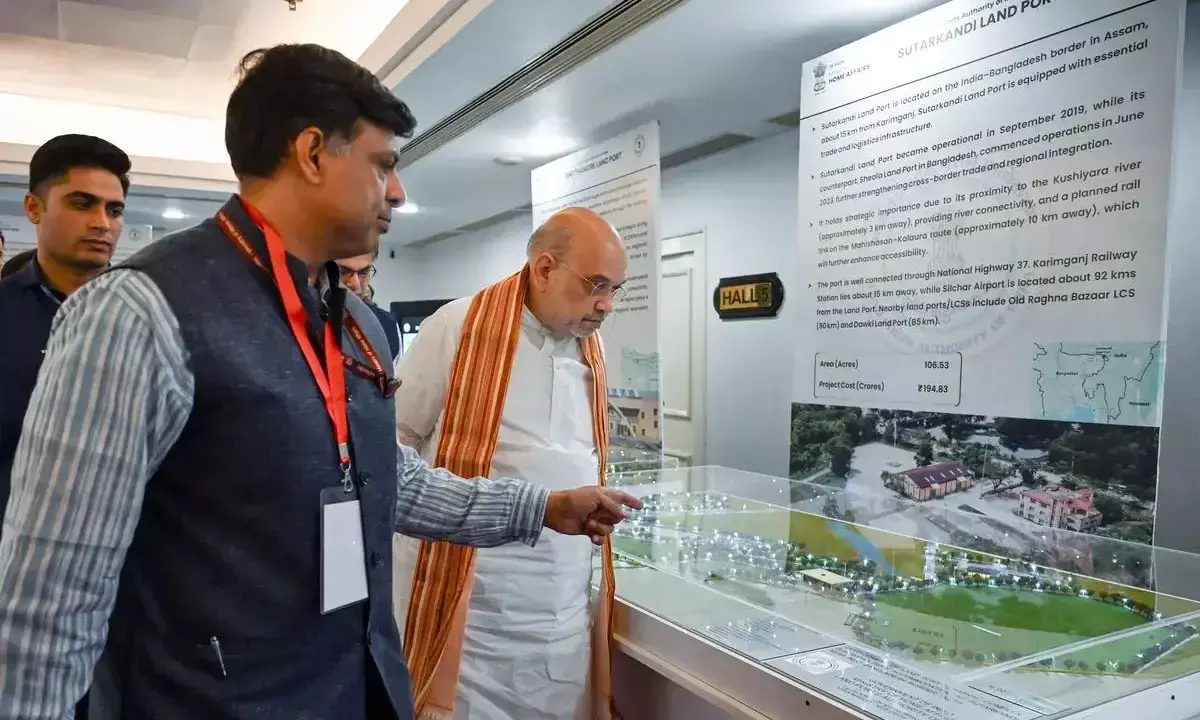


Union Home Minister and Minister of Cooperation Amit Shah on June 9 launched the Land Port Management System (LPMS), named ‘VINIMAY’, in New Delhi. The new digital platform is designed to integrate cargo, passenger and vehicle management at land ports, eliminate nearly 90 per cent of paperwork, introduce a Single Electronic Window and reduce truck waiting times by 40–60 per cent.
Speaking at the launch, Shah said the LPMS has been developed as a modern, digital, integrated and real-time management system that brings all stakeholders onto a single platform. He said the system has been designed with a strong focus on security and will support the government's Smart Borders initiative by creating a more secure and modern border management framework.
The LPMS will provide an integrated digital platform for the management of cargo, passengers and vehicles while improving coordination among agencies and making information exchange seamless. Shah said the Single Electronic Window and Automatic Number Plate Recognition (ANPR)-based gate operation system will significantly reduce processing times. Truck waiting times are expected to fall by around 40–60 per cent, while gate processing times will be reduced by 22–35 per cent.
He said real-time data sharing among ICEGATE, the Motor Vehicle System, CBIC, BSF, DGFT, UIDAI and ULIP on a common platform will strengthen coordination among agencies operating at the borders. According to Shah, the platform will improve efficiency, security and effectiveness in border management.
Shah said the Ministry of Home Affairs is working on a four-pronged strategy to secure India's borders under the Smart Borders concept, with the Land Ports Authority playing a key role. He said LPMS and Smart Borders together will help create a robust and secure border management system while curbing illegal activities.
The Home Minister said that under the leadership of Prime Minister Narendra Modi, land ports have evolved beyond being security installations to become centres for trade facilitation, people-to-people connectivity and border area development. He noted that land ports have helped promote legitimate trade, improve connectivity and address migration-related challenges in border regions.
According to Shah, trade through land ports has increased from ₹5,000 crore in 2014 to ₹83,000 crore today, representing a 16-fold rise over the past 12 years. He added that 15 land ports are currently operational across the country and 11 more are expected to become operational over the next two to three years.
Shah said the LPMS initiative will eventually become an integral part of the country's Smart Security Grid, strengthening both economic and physical security. He expressed confidence that the vision for land ports envisaged by Prime Minister Modi would be achieved within the stipulated timeframe.
The launch event was attended by the Union Home Secretary, the Director of the Intelligence Bureau, the Secretary (Border Management) and the Chairman of the Land Ports Authority of India.
During his address, Shah also said June 9, 2026, marks the completion of 12 years of continuous governance under Prime Minister Narendra Modi. He said Modi had treated his tenure as a period of service to the nation and had guided India on a path of development across multiple sectors.
Shah said Modi completes 4,398 days in office as an elected Prime Minister and will surpass the record of former Prime Minister Jawaharlal Nehru on June 10 to become the longest-serving continuously elected Prime Minister of India.
Highlighting government initiatives over the past 12 years, Shah said nearly 4 crore pucca houses have been provided, while another 2 crore are under construction. He added that millions of people have received benefits including LPG connections, toilets, tap water connections, healthcare coverage under Ayushman Bharat and food grain support.
He also said that more than 250 million people have moved above the poverty line during this period, while India has emerged as the world's fastest-growing major economy. According to Shah, India now ranks first globally in digital transactions, second in mobile manufacturing and third in the startup ecosystem.