
India eyes logistics gains through speed and integration
India’s logistics costs have declined to 8–9% of GDP, but industry leaders say further gains will depend on faster freight movement and stronger multimodal integration.
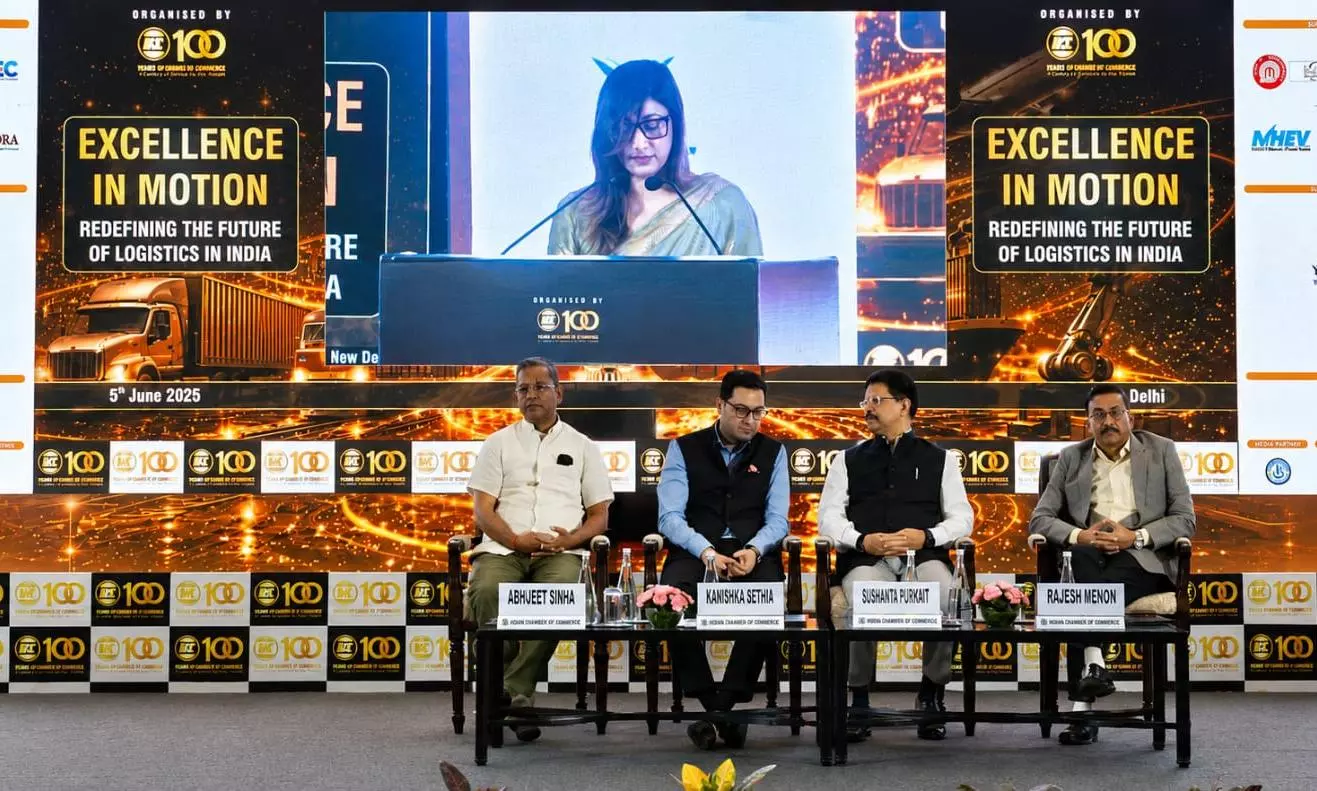


India has reduced its logistics costs to around 8–9 per cent of GDP, but achieving further efficiency gains will require faster freight movement and better integration of multimodal transport systems, according to Rajesh Menon, Associate Director, Logistics Division, Department for Promotion of Industry and Internal Trade under the Ministry of Commerce & Industry.
Speaking at the Indian Chamber of Commerce forum Excellence in Motion: Redefining the Future of Logistics in India in New Delhi, Menon said average truck speeds on major freight corridors currently range between 50 and 60 kmph, well below global benchmarks of 70 to 80 kmph.
He also noted that although multimodal transportation has the potential to significantly reduce logistics costs, many of its expected benefits have yet to be fully realised due to ongoing operational and implementation challenges. According to Menon, addressing these bottlenecks will be critical to improving supply chain efficiency and strengthening India's logistics competitiveness.
Rajesh Menon, Associate Director, DPIIT Logistics Division, Ministry of Commerce & Industry, said, “The next set of gains will come from addressing the gaps that continue to exist across the logistics ecosystem. Industry, policymakers and implementing agencies need to work together to solve practical challenges on the ground and ensure that logistics reforms translate into tangible benefits for businesses."
The event brought together key stakeholders from government and industry to explore strategies for strengthening India's logistics ecosystem amid shifting trade patterns and supply chain risks.
Offering an industry perspective, Kanishka Sethia, Chairman of the ICC National Logistics & Supply Chain Committee and Director & CEO of Western Carriers (India), said that India’s logistics market is projected to surpass $380 billion, driven by expanding manufacturing activity, continued infrastructure investments and stronger integration into global supply chains.
He credited initiatives such as the Dedicated Freight Corridor Corporation of India network, PM Gati Shakti and the National Logistics Policy with improving freight mobility and logistics efficiency across the country.
Sethia also highlighted the completion of the Dedicated Freight Corridor connection to Jawaharlal Nehru Port earlier this year, which has strengthened connectivity between northern India and key maritime gateways. He added that rail freight is increasingly emerging as a viable and competitive alternative to road transport on several routes, offering improved efficiency and cost advantages.
Highlighting key developments in the maritime sector, Sushanta Purohit, Chairman of the V.O. Chidambaranar Port Authority, detailed a series of major investments aimed at strengthening the port’s future growth and sustainability.
Among the initiatives are the proposed 150,000 million rupees Outer Harbour Project, the development of offshore renewable energy infrastructure, and plans to establish a shipbuilding and maritime cluster in Tuticorin. Purohit also highlighted the port’s status as both a Green Hydrogen Hub and an Offshore Renewable Energy Hub, supported by investments in renewable energy, green hydrogen production and digital transformation.
As part of its modernisation strategy, the port has deployed a Digital Twin platform and is advancing projects focused on green methanol and other clean energy solutions, reinforcing its commitment to sustainable growth and innovation.