
How India's supply chains survive the Diwali e-commerce rush
India’s Diwali e-commerce surge puts warehousing, transport and last-mile delivery networks to the test, as logistics firms work to manage rising volumes, costs and returns.


Diwali fell on 8th of November this year. For India's e-commerce supply chain, the rush was well under way by then.
Dussehra came on 21 October and Karwa Chauth on 29 October. Three big buying occasions landed in under three weeks, so orders did not bunch up in the final days before the festival. They arrived in waves. ClickPost, a logistics software company, analysed more than 80 million orders from nearly 400 direct-to-consumer (D2C) brands over a 47-day window that began on 20 September. More than ten separate days in late October each matched or beat the busiest single shipping day of 2025. The average brand shipped 27% more orders a day than a year earlier.
Unicommerce, whose software processes orders for sellers and marketplaces, saw the same pattern more broadly. Its analysis of more than 138 million order items showed overall e-commerce order volumes up 21% between 6 October and 4 November. Quick commerce orders rose 75%. D2C brand websites grew 30%.
A one-week spike can be survived with overtime and goodwill. A six-week plateau tests whether a network was built for the load.
Planning starts with the selling window
Most festive inventory plans begin with a question of volume: how much stock should be built? Venkat Reddy, CEO of Chowgule Warehousing and Logistics Services, says the decisions that carry more weight are the assortment, where it is placed and how long it takes to replenish. A national forecast gives direction. Warehouse teams need a local picture. They need to know which markets will buy first, which products will move fastest and how long each location can wait for stock before sales are lost.
The answers differ by sector. FMCG businesses need frequent replenishment while managing shelf life and batch rotation. In consumer durables, model preferences and bulky products make misplaced inventory costly to correct. E-commerce operations carry a wide assortment and handle single orders, so one promotion can pull demand towards a small group of products. This is why commercial teams must brief warehouse planners early. A promotion changes storage needs, picking volumes, packaging and dispatch schedules, and not just the sales number.
The order mix adds its own strain. Unicommerce found that 85% of festive orders were valued below ₹1,000. A network handling that many low-value orders is moving a very large number of small parcels. The pressure falls on picking and packing as much as on storage.
At peak, Reddy says, orders in e-commerce, quick commerce, fast-moving consumer durables and FMCG rose to close to three times the usual volume. They flow in through the day, so there is no cut-off at which processing can pause. Buffers still matter, but each one should have a purpose. Spreading excess stock across every location ties up working capital and leaves less room to move goods.
Visibility has to back the promise as well. In a warehouse, stock that exists and stock that can be promised to a customer are two different things. Goods may have arrived and are still waiting for inspection. Some units may be allocated to another order, and others damaged in ways the system has not recorded. Warehouse management systems, barcode scanning and links between inventory, order and transport systems help. They still depend on people recording receipts and dispatches correctly. A skipped scan in a rush saves a few seconds and leaves everyone further down the chain guessing.
Warehouses hit a ceiling before the peak does
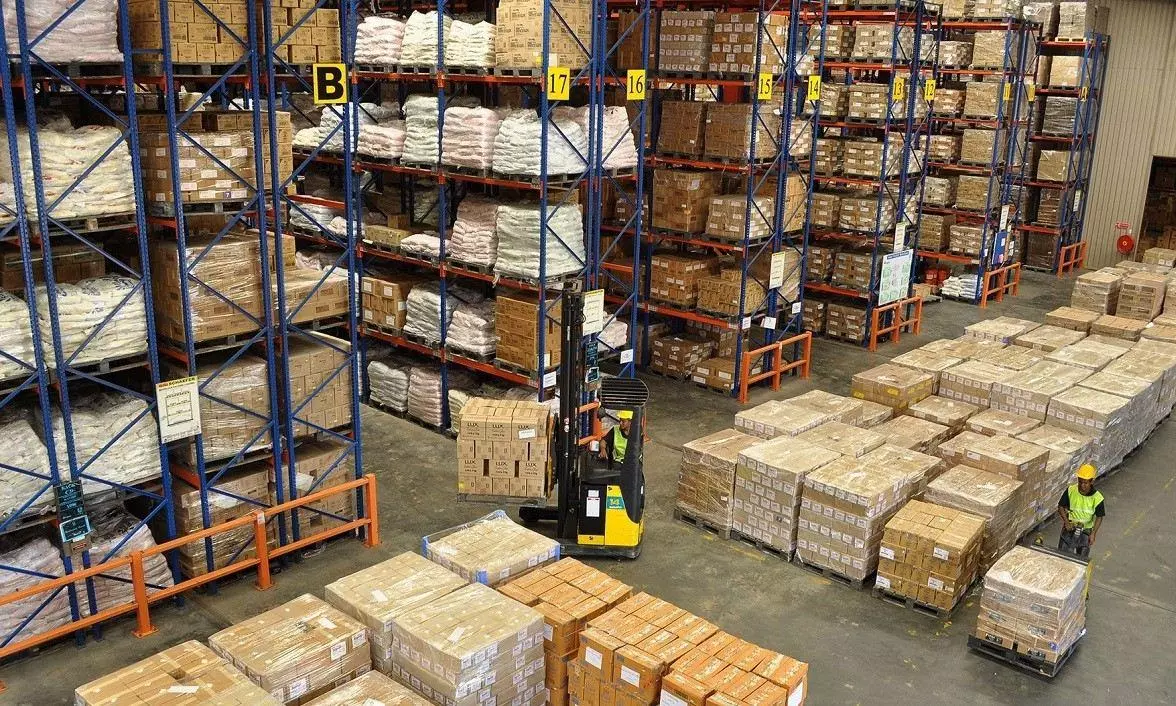
Warehouses run by logistics service providers (LSPs) are generally designed to absorb a 20% rise in orders, Reddy says. Peak demand can be far beyond that. The gap is closed by using vertical space, adding temporary space or opening extra warehouses close to the point of consumption. Each option needs lead time. The additional warehouse should be finalised at least three months before the peak so that inventory can be built up, he says, and a site near the existing one is usually preferred because it keeps operations under control.
Extra space helps only when it works as part of the network. It needs trained people, suitable equipment, dependable inventory records and transport links. Without them, overflow storage adds handling cost and makes stock harder to find.
The demand for that space is already visible. Anshuman Singh, MD and CEO of IndoSpace and Co-Chair of the FICCI Committee on Logistics, says leasing across India's eight major warehousing markets crossed 19 million sq ft in the third quarter of calendar 2026. Grade A facilities, the modern purpose-built kind, made up 66% of that activity. The buyers are consumer companies, e-commerce firms, organised retailers and third-party logistics providers, and they leased ahead of the festive season once again. "Large peripheral logistics parks are becoming strategic anchors of the consumption driven supply-chain network," Singh says. Such parks let businesses aggregate inventory, build stock before peak periods and run high-volume distribution. IndoSpace designs its mega-parks around connectivity to national highways, manufacturing clusters and consumption centres, with infrastructure for multiple occupiers and round-the-clock operations.
Looking ahead, quick commerce, omnichannel retail and the expansion of digital consumption into Tier-II and Tier-III cities will further influence how warehousing networks are planned and developed to support this demand.
Anshuman Singh, IndoSpace
Allcargo Logistics manages more than 12 million sq ft across over 80 logistics parks. For the peak, it combined existing capacity with additional shifts, a 20% increase in its blue-collar workforce and productivity improvements. Its control tower, warehouse and transport management systems and AI-enabled analytics are used to monitor shipment flows, anticipate demand patterns, optimise capacity deployment and plan routes.
Labour remains the harder variable. Reddy says workers often take long leave during the festivals, which stretches the team that remains. Late hours bring fatigue, and fatigue brings dispatch errors. The levers are more shifts, longer shifts, extra labour, incentives linked to productivity and firmer leave management. Each adds cost. Temporary workers also need time to learn scanning routines, handling practices and safety procedures. Training them in the middle of a surge pulls experienced staff away from execution when they are needed most.
More hands do not fix a poorly organised flow. Extra people in a crowded aisle can slow picking down. Faster picking can overwhelm the packing teams. Packed orders then sit on valuable floor space waiting for vehicles. This is how individual productivity figures can look healthy while customers still receive their orders late. Reddy argues that the better measure is orders dispatched complete, accurate and on time, because errors use up capacity twice, first in the original fulfilment and again when the correction or return is processed.
Transport and the last mile held, with limits
Transporters generally run fixed routes with a set bandwidth. When shipments multiply, every request for extra vehicles and manpower stresses the network, Reddy says. His answer is to avoid resting on one vendor. Start by mapping how many vendors are in use and which lanes each one serves. Explore different vendors for different geographies, and test the arrangement before the peak, not during it. Each vendor's volumes, geographic reach, pincode strength and technology need to be understood, or service to the end consumer cannot stay seamless.
The ClickPost data suggests the networks held up. Average delivery time across its D2C cohort fell from nearly three days to about 2.7 days, even with 27% more orders a day moving through the system. Failed delivery attempts edged down from 22% to 21%. Brands also moved faster at the edge. Hyperlocal delivery on brand-owned websites and apps rose from 2.6% of orders to about 5%, as express delivery became a standard checkout option rather than a trial.
These figures come from D2C brands on one platform. They do not describe marketplaces, and they should not be read as a verdict on the whole market. They do show that extra volume need not mean worse service when the network is prepared.
Does volume pay?
Not automatically. The cost side is clear. Overtime, extra shifts, temporary labour and added transport all rise with volume. "While higher demand puts pressure on frontline manpower costs, better shift planning and process optimisation help manage the impact," says Ketan Kulkarni, Managing Director and CEO of Allcargo Logistics. Reddy warns that unless these running costs are managed well, they can seriously affect the P&L.
The revenue side is mixed. ClickPost estimates that D2C gross merchandise value (GMV) grew about 45% against 27% growth in daily orders, which means baskets got bigger. Unicommerce's data points the other way for quick commerce, where order volumes rose 75% but GMV rose 38%. Orders are smaller there. Freight and handling are charged per parcel and not per rupee of value, so a smaller basket carries a heavier logistics cost for every rupee of sales.
The learnings from each peak season reinforce the importance of flexible capacity, technology-led planning and better network utilisation to maintain service quality, manage costs and protect margins.
Ketan Kulkarni, Allcargo Logistics
Last year's festive quarter shows what is possible when a network is run well. A brokerage note on Delhivery's results for October to December 2025 recorded express parcel volume growth of 43% and an EBITDA margin of 7.4%, up 310 basis points year on year. The note credited record festive demand, a GST rate cut, the integration of Ecom Express and network efficiency. Volume lifted margins there because the network absorbed it. Results for this year's festive quarter are not yet out.
Smaller cities set the pace
Tier-3 cities placed the largest share of festive orders in Unicommerce's analysis, at 41%, and their volumes grew 26%. Unicommerce's separate D2C report for FY2026 found that Tier 2 and Tier 3 cities drove 66% of incremental D2C order volumes. It also warned that brands entering these markets with a metro playbook post some of the worst return rates.
In fashion, ClickPost recorded volume growth of about 33% in Tier 3 cities and 29% in Tier 2, against 29% in the metros. Delivery performance followed. Tier 2 and Tier 3 cities received 83% of festive orders on time, against 78% in the metros. Tier 3 made the sharpest jump, from 74% a year earlier. Orders reached Chandigarh in about 52 hours and Agra in about 54, faster than Hyderabad at about 57.
For warehousing, this changes where stock sits. Kulkarni says the growing contribution of Tier-II and Tier-III markets calls for more distributed inventory and faster replenishment. Singh expects the spread of digital consumption into smaller cities, along with quick commerce and omnichannel retail, to shape how warehouse networks are planned. He sees them becoming more inventory-led and less dependent on marketplaces alone, which puts more weight on location, specification, technology and scalability.
The returns hangover
A return-to-origin (RTO) shipment is a parcel that fails delivery and travels back to the seller. Most start as a failed first attempt. Reddy says D2C shipments grow during the festive season and customer returns reach a new high, which adds to the pressure on both the warehouse and transport.
The pressure peaks after the sales do. Returns, failed deliveries and unsold seasonal products can occupy space just as regular replenishment resumes. Delayed inspection keeps saleable goods unavailable, and unresolved damage ties up working capital.
Unicommerce's FY2026 D2C data puts numbers on the problem. During the festive quarter, cash-on-delivery orders came back at 58%, against under 15% for prepaid orders. The blended RTO rate hit 39.2% at the November 2025 peak. Brands that combined a prepaid incentive at checkout, courier routing by pincode and address verification before dispatch brought it down to 21% by March.
ClickPost's figures look far kinder. Its RTO rate was 10% this season against 11% last year, and prepaid orders reached 52% of D2C shipments, up from 50.3%. The two sets of numbers measure different cohorts and periods, so they are not a contradiction. ClickPost measured returns on orders shipped up to 14 days before Diwali, so that failed deliveries had time to play out. The late rush sits outside that number. The harder figure is a reminder that the festive tail and the cash-on-delivery order are where returns bite.
Reddy says planning for these flows before the season starts helps recover inventory value and return to normal operations sooner. The review afterwards should ask where demand exceeded expectations, where orders stalled and whether the extra capacity earned its cost. A successful season, he argues, delivers profitable sales and dependable service, and warehousing has a direct bearing on both. "Festive readiness comes down to turning available stock into fulfilled demand while the selling window is still open," Reddy says. This year that window ran for six weeks, and the networks that planned early had the best chance of staying inside it.