
DHL Trend Radar 8.0 highlights AI-driven logistics shift
AI is evolving from a support tool into an active force across logistics, enabling autonomous decision-making while creating new demands for workforce skills, security and sustainable operations.
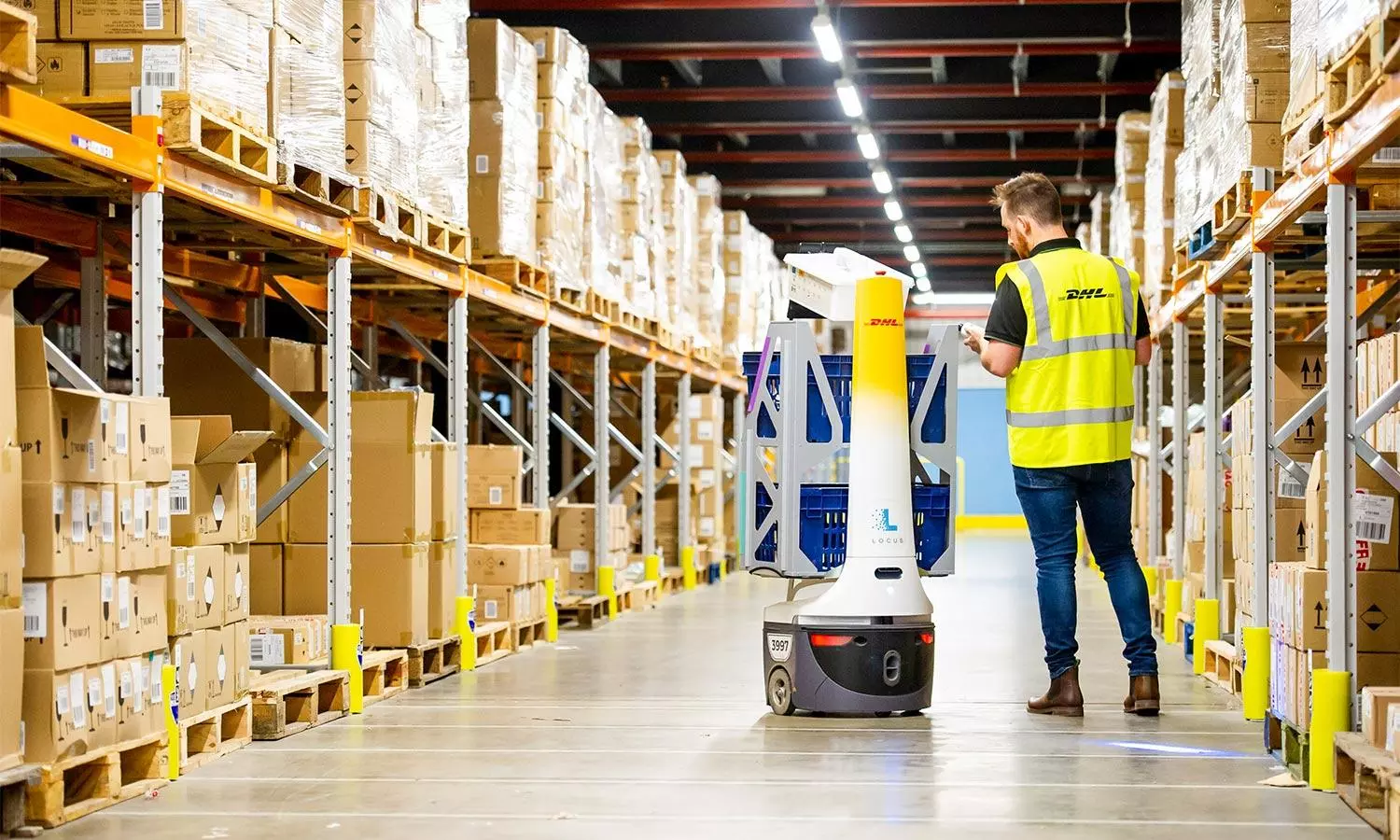


Artificial intelligence (AI) is moving beyond its role as a digital assistant and increasingly taking on autonomous tasks across supply chains, according to DHL’s Logistics Trend Radar 8.0.
The report highlights how developments in AI, robotics and automation are reshaping logistics operations while also changing the nature of work across the industry. As intelligent systems become more capable of planning, making decisions and executing tasks independently, companies will need to reassess workforce skills, safety measures, governance frameworks and employee experience.
DHL said organisations will also need to consider how these technologies can contribute to building more resilient and sustainable supply chains as their adoption accelerates.
Katja Busch, Chief Commercial Officer at DHL and Head of DHL Customer Solutions Innovation, said, “Supply chains are changing faster than ever as AI and workforce trends increasingly influence one another. The organisations that succeed will be those that understand these shifts early and are able to turn them into practical advantages for their business and their people. The Trend Radar helps them focus on the developments that will matter most.”
AI becomes an operating layer across logistics
AI is increasingly shifting from an assistive technology to an autonomous tool in logistics. DHL’s Logistics Trend Radar 8.0 identifies Agentic AI as one of the most significant emerging trends, highlighting its ability to plan, make decisions and execute actions autonomously based on defined objectives. Unlike earlier AI systems that primarily respond to prompts or analyse information, Agentic AI is designed to work more closely with human expertise while independently carrying out tasks.
The report also highlights AI Analytics, which can help organisations identify patterns, predict disruptions, forecast outcomes and recommend actions at greater speed and scale. Together, these technologies are contributing to more adaptive and increasingly autonomous supply chains, with applications ranging from predicting inventory shortages and rerouting shipments during disruptions to adjusting transport capacity in real time.
The Logistics Trend Radar 8.0 also highlights emerging trends that show how AI is expanding beyond traditional logistics operations. AI Commerce is changing how consumers and businesses discover and purchase products, while the Compute Economy underlines the growing strategic importance of computing infrastructure and data centre logistics. Humanoid robots are identified as a longer-term trend with the potential to reshape AI-enabled automation in physical environments.
Together, these developments point to further changes across digital and physical supply chains, ranging from AI-supported purchasing processes to automated warehouse operations powered by intelligent systems.
Klaus Dohrmann, Vice President of Innovation and Trend Research at DHL Customer Solutions & Innovation, said AI is moving beyond helping people complete tasks more efficiently towards systems that can take action independently. He noted that the industry is entering an era of autonomous and physical AI, in which intelligent systems can perceive their surroundings, operate in complex environments and make decisions with limited human intervention.
The future of logistics remains a people business
The Logistics Trend Radar 8.0 highlights the changing nature of work as AI, automation and robotics become increasingly integrated into logistics operations. Technologies including wearable sensors, remote operations, collaborative robots and AI-powered workplace assistants are helping create safer and more productive work environments. By taking over repetitive tasks and supporting everyday decision-making, these tools can enable employees to focus on higher-value responsibilities such as problem-solving, customer service and operational oversight.
The report identifies Employee Belonging and the Augmented Workplace as key trends, as workers increasingly collaborate with AI assistants, robots and digital tools. These technologies are expected to influence a wide range of roles across frontline operations, technical functions and knowledge-based jobs, increasing demand for new skills and working practices.
For business leaders, the focus is therefore shifting beyond technology adoption towards ensuring employees have the skills, confidence and support needed to work effectively alongside increasingly intelligent systems.
Thomas Ogilvie, Chief Human Resources Officer and Labor Director at DHL Group, said, “Technology is transforming the way we work, but people remain the driving force behind every successful supply chain. We are already seeing AI assistants, wearable devices, and collaborative robots helping employees work more safely, reduce repetitive work, and focus on higher-value tasks. The future of logistics will not be defined by human versus AI, but by how effectively organisations combine human expertise with increasingly capable technologies.”
Responsible AI becomes a business imperative
As AI systems assume greater levels of autonomy, organisations will need to ensure they are deployed responsibly, securely and transparently. DHL’s report highlights trends such as AI Ethics and Cybersecurity 2.0, which focus on balancing technological innovation with governance, resilience and security.
With intelligent systems becoming increasingly involved in critical logistics functions, including demand forecasting, inventory planning and transport decisions, the report emphasises the importance of strong safeguards and human oversight alongside technological advancement.
Sustainability remains a long-term business priority
Sustainability remains a key driver of innovation in the logistics sector, according to the report. Trends including decarbonisation, sustainable fuels, circularity and the electrification of heavy and light vehicles highlight efforts by organisations to reduce emissions and improve resource efficiency.
These developments include the adoption of electric delivery fleets, increased use of alternative fuels and the redesign of supply chains to support reuse and more efficient resource management, as companies work towards lower-carbon logistics operations.
The article was originally published on the STAT Trade Times.