
Aegis sees strong LPG demand and stable supply recovery despite West Asia conflict
Strong LPG demand, higher distribution margins and expanding infrastructure helped Aegis deliver record FY26 earnings despite supply disruptions caused by the West Asia conflict.
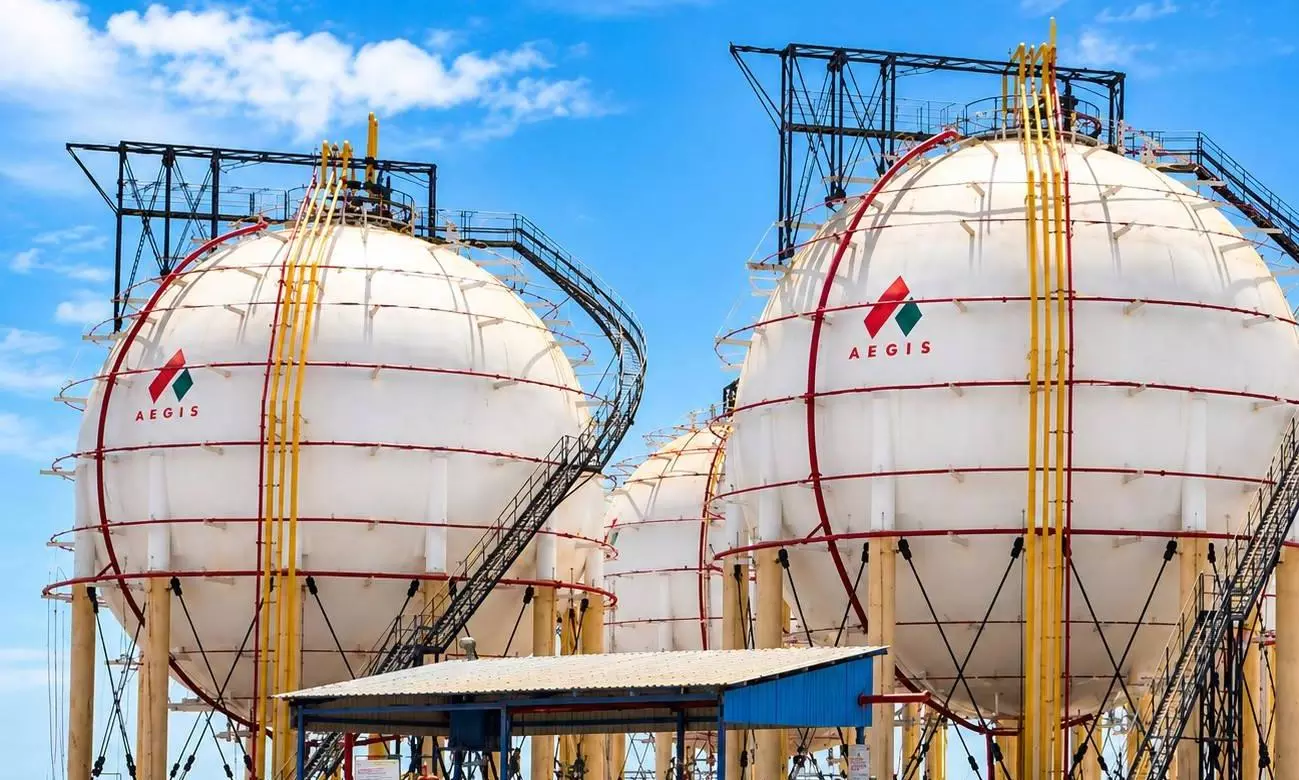


Aegis Logistics reported its strongest-ever financial performance in FY26, driven by growth in its LPG business, expanding infrastructure network and rising distribution volumes, even as the company navigated supply disruptions caused by the conflict in West Asia. Aegis Logistics is an Indian energy logistics company that operates LPG terminals, liquid storage facilities and gas distribution networks, serving the country's energy, industrial and infrastructure sectors.
Speaking during the company's Q4 and FY26 earnings call, Chairman and Managing Director Raj Chandaria described FY26 as a "breakout year" for the company. Revenue grew 23% year-on-year to ₹83.33 billion, while normalised EBITDA increased 36% to ₹15.99 billion. Profit after tax rose 41% to ₹11.07 billion, crossing the ₹10 billion milestone for the first time.
The fourth quarter was particularly strong, with revenue increasing 52%, EBITDA rising 54% and profit after tax growing 43% year-on-year.
The LPG segment remained the biggest contributor to growth. Revenue from the gas business reached ₹76.89 billion, up 26% from the previous year, while EBITDA increased 68% to ₹11.31 billion. LPG terminal throughput volumes rose 14% to 5.15 million tonnes and distribution volumes jumped 45% to 754,000 tonnes.
Alongside LPG, Aegis is expanding its presence in ammonia logistics. During the call, Chief Financial Officer Murad Moledina said the company is developing India's first independent ammonia terminal at Pipavav with 36,000 tonnes of static storage capacity. The project is backed by a 15-year take-or-pay agreement with Hindustan Zinc and is expected to be commissioned during the first half of FY27.
Moledina said Aegis is also preparing to enter ammonia distribution and remains bullish on long-term demand. Citing estimates from the Aegis Vopak DRHP and CRISIL, he said India could face an ammonia supply-demand gap of around 3 million tonnes by 2029. The company is evaluating additional ammonia infrastructure opportunities, supported by its partnership with Itochu, which has acquired a stake in the Pipavav project.
The company said its distribution business benefited from both higher volumes and stronger margins. According to Moledina, average margins increased to around ₹7,000 per tonne from about ₹4,000 per tonne in the previous year.
A significant part of the discussion during the earnings call focused on the impact of the conflict in West Asia and the resulting disruption to LPG supply chains.
While Aegis maintained stable throughput volumes during the quarter, Moledina acknowledged that the situation affected LPG imports and created supply challenges across the market. He said the shortfall had improved from around 50% in April to about 30% in May and expected conditions to continue improving in the coming months.
Moledina said supply conditions are expected to normalise during the second quarter of FY27.
The company stressed that the Middle East is not the only source of LPG supply and said the current disruption has highlighted the importance of diversifying sourcing strategies. Moledina noted that LPG cargoes are increasingly being sourced from alternative markets including Canada, the United States, Argentina and Nigeria. According to him, the crisis has demonstrated the need for multiple supply sources and reduced dependence on any single region.
Moledina said prices of LPG and other energy products moved sharply during the period, rising from around ₹54,000-60,000 per tonne to as high as ₹150,000 per tonne before easing back to around ₹80,000-90,000 per tonne.
Aegis said higher energy prices and market uncertainty supported stronger distribution margins during the year. Moledina indicated that margins of around ₹7,000 per tonne remain sustainable under current market conditions.
Raj Chandaria also highlighted the role of the company's international partnerships in navigating the disruption. He said relationships with strategic partners such as Itochu and Vopak helped Aegis secure alternative sources of LPG during the period. Itochu, a Japanese trading and investment company, and Vopak, a Dutch independent tank storage operator, are Aegis Logistics' strategic partners supporting its LPG sourcing, storage and ammonia infrastructure expansion.
Operationally, Aegis continued expanding its infrastructure network across multiple ports.
At Mumbai, the company is developing an additional 64,000 kilolitres of liquid storage capacity. At JNPT, it is adding more than 318,000 cubic metres of liquid storage along with new LPG infrastructure. The company also strengthened its presence on the East Coast through the acquisition of a 75% stake in Hindustan Aegis LPG Limited at Haldia.
At Kandla, Aegis completed handling of a VLGC vessel and expects connectivity to the Kandla-Gorakhpur LPG pipeline during the first half of FY27. Pipavav remained one of the company's most active locations, with a newly commissioned cryogenic LPG terminal and additional LPG and ammonia infrastructure under development.
The company also commissioned a large cryogenic LPG terminal at Mangalore and continues to evaluate further capacity additions at Kochi and other locations.
Supported by cash and investments of nearly ₹60 billion, Aegis said it remains well positioned to fund future growth. The company has outlined a significant long-term investment pipeline focused on both conventional energy logistics and emerging energy transition opportunities.
Despite the challenges created by the West Asia conflict, Chandaria said supply conditions are improving and expressed confidence that alternative sourcing routes will continue to develop, supporting growth momentum through FY27.