
2025 in India’s logistics: Tested, resilient and ready for the future
Amid global uncertainty, India’s logistics adapted with air cargo, technology and infrastructure to stay resilient in 2025.
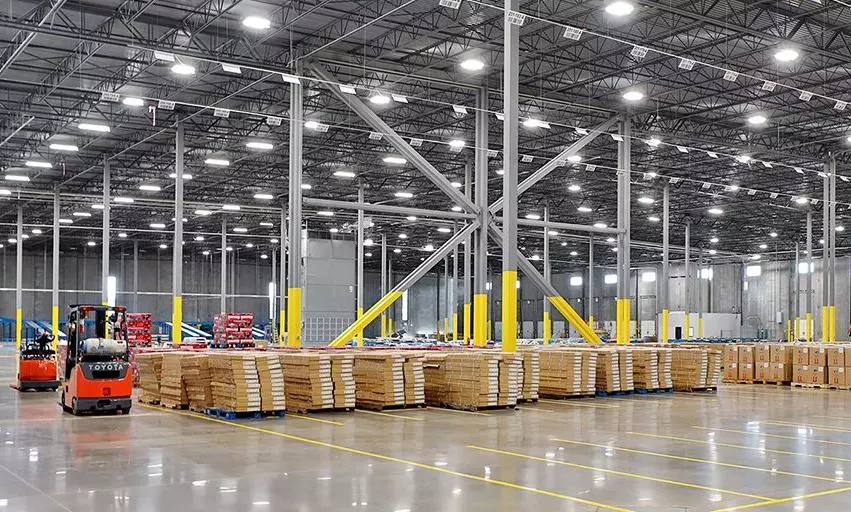
Image: Indospace


If there was one word that defined global trade in 2025, it was uncertainty. Geopolitical tensions disrupted key trade routes, tariff conversations returned, and supply chains were forced to adjust faster than traditional planning cycles allowed. Global businesses faced rising costs, unexpected delays and new regulatory requirements, all while customers continued to demand speed and certainty.
Yet amid this volatility, India’s logistics ecosystem did something remarkable: it kept moving. Not occasionally, but every day, across air cargo terminals, highways, ports, dark stores and last-mile delivery networks.
From global integrators such as FedEx and DHL Express to Indian forwarders including Jeena & Company, and from major air cargo hubs to quick-commerce warehouses, 2025 revealed a clear trend. Logistics in India was no longer just expanding; it was maturing under pressure, evolving into a system capable of responding to uncertainty with speed, agility and resilience.
From policy to practice: Infrastructure begins to matter
One of the most critical foundations of this resilience was infrastructure. After years of planning, initiatives such as the PM GatiShakti Master Plan began translating into tangible execution, improving coordination across road, rail, air and ports. This integration reduced bottlenecks, enabled smoother cargo flows and gave businesses greater predictability.
‘India’s logistics ecosystem is undergoing a structural shift, supported by integrated infrastructure planning and faster execution across multimodal networks,’ said Kami Viswanthan, President, Middle East, Indian Subcontinent and Africa (MEISA), FedEx. He added that GatiShakti was strengthening supply chain resilience even amid global uncertainty.
From an industry perspective, this shift proved essential. As Anish Jha, Managing Director, Kuehne+Nagel India, Sri Lanka and Maldives, explained, ‘The year underlined that resilience is built through shared intent and strong partnerships, not forecasts.’ In practical terms, the predictability created by coordinated infrastructure allowed companies to focus on agility and customer service rather than managing constant disruptions.
Improved infrastructure also laid the groundwork for air cargo growth and the seamless integration of e-commerce networks, creating a virtuous cycle in which investment in one segment reinforced performance across others.
Air cargo moves from backup to backbone
One of the clearest stories of 2025 was the growing strategic importance of air cargo. While overall freight volumes varied across transport modes, air freight consistently outperformed. Pharmaceuticals, electronics, engineering goods, perishables and express cargo drove demand as shippers increasingly prioritised speed, reliability and certainty.
‘Sustained growth in air cargo reflects continued confidence in India’s role as a manufacturing and export hub,’ Viswanthan said, reaffirming FedEx’s commitment to strengthening its air network in India.
Indian forwarder Jeena & Company witnessed this shift first-hand. Air freight emerged as its strongest-performing segment during FY2025, largely as customers turned to faster transport options amid global disruptions such as Red Sea route diversions.
‘Air cargo, in particular, played a critical role in supporting customers during periods of heightened uncertainty,’ said Prediman Koul, Chief Executive Officer, Jeena & Company.
For many businesses, air freight in 2025 was no longer viewed as an emergency option. Instead, it became a strategic choice, enabling exporters and manufacturers to protect delivery timelines, maintain supply chain continuity and remain competitive in global markets despite ongoing turbulence.
Agility becomes the real competitive edge
Beyond infrastructure and air cargo, 2025 underscored a more fundamental truth: agility has become the defining competitive advantage in logistics. ‘2025 has been one of the most dynamic years for global trade,’ said Nitin Navneet Tatiwala, Vice President, Marketing, Customer Experience And Air Network, MEISA, FedEx. ‘In this environment, agility has become critical.’
For FedEx, this meant deploying data-led and AI-enabled systems to improve planning, routing, automated handling and shipment visibility. These tools strengthened reliability and gave customers greater control over their supply chains at a time when predictability was increasingly difficult to achieve.
Kuehne+Nagel highlighted a complementary insight: technology alone was not enough. Jha noted that customer focus and collaboration remained the strongest drivers of progress. He observed that agility in 2025 often involved rebalancing transport modes, revising sourcing strategies and adapting production and inventory plans in response to rapidly changing market conditions.
In a volatile global environment, logistics leaders increasingly agreed that flexibility, collaboration and trust had become the new currencies of success.
Sustainability moves into daily operations
Another trend that gained tangible momentum in 2025 was operational sustainability. DHL Express placed sustainability at the centre of its Strategy 2030 roadmap, adding ‘Green Logistics of Choice’ as a fourth bottom line. Investments in greener facilities and cleaner solutions such as GoGreen Plus ensured that environmental responsibility became a measurable part of business growth.
India remained a key focus. DHL reiterated its €1 billion investment commitment while continuing to work closely with industry bodies such as the Directorate General of Foreign Trade (DGFT) and the Gems & Jewellery Export Promotion Council (GJEPC) to strengthen export ecosystems and simplify cross-border trade.
At Kuehne+Nagel, digitalisation and sustainability advanced in parallel. Jha explained that AI-led planning, automation and emissions visibility continued to improve reliability and decision-making. Greater supplier collaboration and improved emissions tracking helped create long-term value for customers while supporting responsible logistics practices.
E-commerce and quick commerce test the system daily
If global integrators tested scale, e-commerce and quick commerce tested speed. India’s urban consumers increasingly demanded 10-minute deliveries, forcing logistics networks to operate with extreme precision. This pressure became visible when quick-commerce firm Zepto filed confidentially for a ₹11,000 crore ($1.22 billion) initial public offering, signalling that the sector had matured from experimentation to a capital-market-ready logistics model.
Founded in 2021, Zepto now offers more than 45,000 products and competes directly with Blinkit and Swiggy Instamart. Its IPO plans, combined with strong on-ground execution, demonstrated that Indian logistics networks are capable of sustaining ultra-fast, high-volume delivery at scale.
This operational resilience was also visible in real time. In a post on X, Deepinder Goyal, Founder of Zomato and Blinkit, said that both platforms recorded some of their highest-ever delivery volumes and fastest fulfilment speeds on 31st December, 2025, even as there were expectations that operations would be disrupted. His comment underscored the strength of India’s last-mile delivery infrastructure, showing that quick-commerce and food delivery networks were able to absorb demand spikes and continue operating at scale without service breakdowns.
India’s advantage: Digital readiness and collaboration
What helped India stand out in 2025 was widespread digital adoption across the logistics ecosystem. Automation, AI-powered shipment visibility, integrated customs workflows and scenario planning enabled logistics providers to anticipate disruptions rather than merely respond to them. Government initiatives such as GatiShakti, coupled with a more open approach to customs processes, further contributed to smoother cargo flows.
Jha noted that decarbonisation, automation and nearshoring gained momentum as companies reassessed their operating models, and that the convergence of digitalisation and sustainability was helping drive efficiency and cost optimisation.
Forwarders such as Jeena & Company relied on route diversification, close coordination with carriers and real-time visibility to maintain continuity across modes, even as operating costs and route lengths increased.
Looking ahead to 2026
As the industry looks towards 2026, uncertainty is unlikely to fade. However, the lessons of 2025 are clear. Resilience is built through infrastructure, air cargo capacity, digital intelligence, sustainability and human effort. Agility and collaboration remain central to long-term success.
‘Progress in logistics happens through people, partnerships and shared purpose,’ Jha said, summing up the year.
India entered 2025 as a market with promise. It ends the year more confident, more capable and increasingly indispensable to global trade—a logistics ecosystem that has proven it can deliver, every single day.