
Maruti Suzuki Gujarat plant sets global record in rail logistics
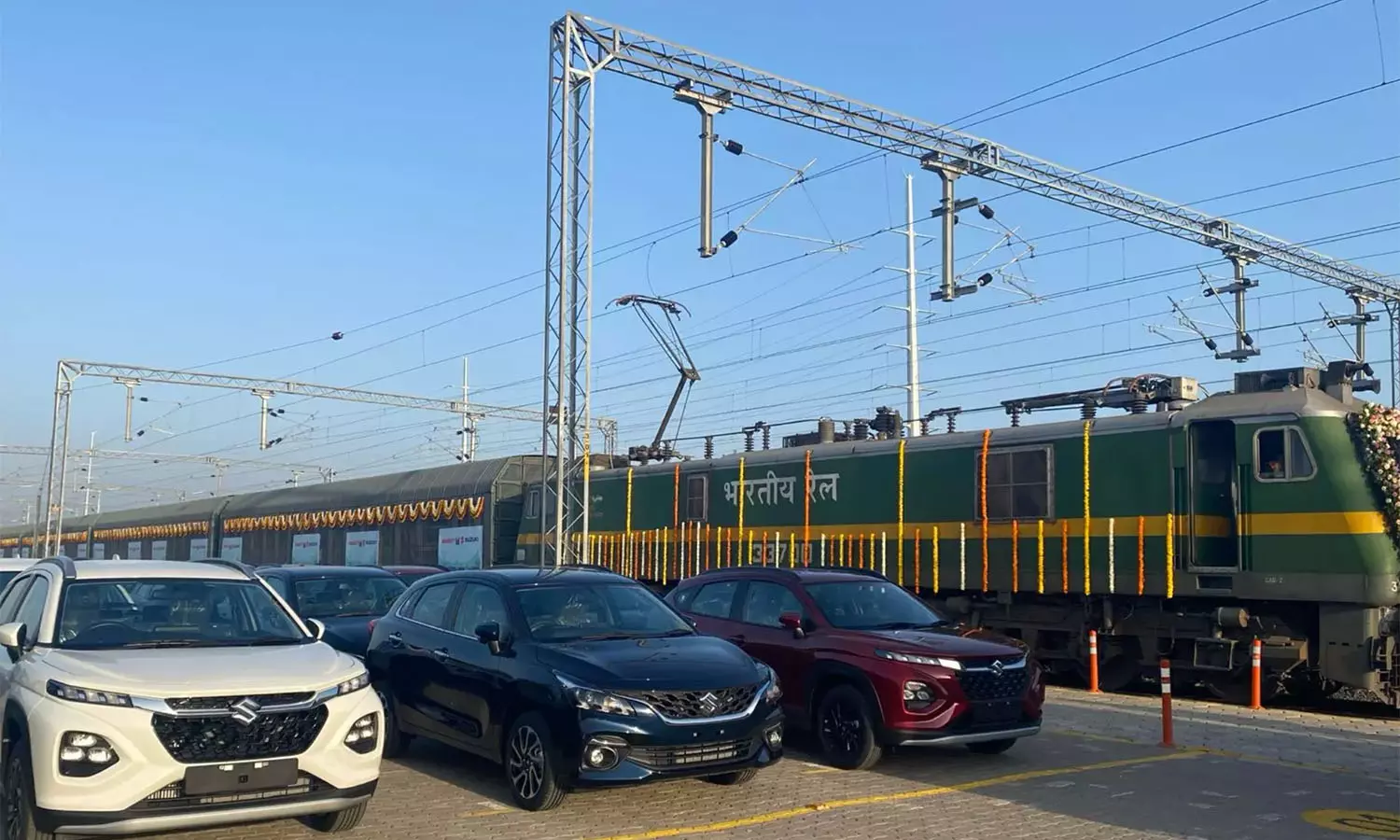


In a landmark achievement for the global automotive and logistics sectors, Maruti Suzuki India Limited has announced that its Gujarat-based in-plant railway siding has been officially registered as the World’s First Modal Shift Transportation Project under the Verified Carbon Standard (VCS) program of Verra. This milestone, announced in February 2026, positions the company at the forefront of sustainable logistics by successfully monetizing environmental responsibility through the world’s largest voluntary carbon credit registry.
The project centers on a strategic "modal shift," transitioning the dispatch of finished vehicles from traditional road-based car carriers to the more efficient and sustainable medium of rail transport. By integrating a railway siding directly within the plant's operational footprint, Maruti Suzuki has created a seamless link between production and distribution that significantly minimizes the carbon footprint of its supply chain. This initiative is projected to reduce approximately 1.7 Lakh tonnes of CO2 emissions over a ten-year crediting period, spanning from FY 2023-24 to FY 2032-33.
The quantification of these emission reductions follows the rigorous AM0090 methodology, which is prescribed under the Clean Development Mechanism (CDM) of the United Nations Framework Convention on Climate Change (UNFCCC). Following independent verification of these carbon savings, Verra will issue 1.7 Lakh carbon credits to Maruti Suzuki. This process ensures that the environmental impact is not just theoretical but is verified and tradable on the global market, providing a clear incentive for green infrastructure.
Speaking on the sustainability milestone, Mr. Hisashi Takeuchi, Managing Director & CEO, Maruti Suzuki India Limited, said, “This is a proud moment for Maruti Suzuki as our Gujarat in-plant railway siding is recognized as the world’s first Verra-registered Modal Shift in Transportation project. By transitioning vehicle movement from road to rail, the project demonstrates how scale, operational efficiency, and environmental responsibility can seamlessly go hand in hand. Leveraging the inherent efficiency of rail transport, the Gujarat in-plant railway siding has significantly reduced the carbon footprint of our logistics operations, while also easing road congestion and lowering overall fossil fuel consumption. We are honoured by the recognition from Verra. This milestone marks a significant step forward in our sustainability journey and reinforces our commitment to setting industry benchmarks that align with India’s strong steps towards net zero emissions.”
Beyond carbon mitigation, the project contributes directly to several United Nations Sustainable Development Goals, specifically focusing on Good Health and Well-being (SDG 3), Decent Work and Economic Growth (SDG 8), and Climate Action (SDG 13). By setting this global benchmark, Maruti Suzuki is not only optimizing its internal logistics but is also providing a scalable roadmap for the global transportation industry to follow. The integration of rail siding within manufacturing hubs represents a shift toward more resilient and responsible industrial practices worldwide.