
Unfulfilled MOOWR promise: Why Indian manufacturing stalls at warehouse
India’s bid to replicate the friction-free efficiency of global trade hubs is stumbling at the warehouse door, as the ambitious MOOWR scheme struggles to overcome a deep-seated trust deficit between manufacturers and customs authorities.


As India aggressively positions itself as the next global manufacturing powerhouse, the government has rolled out high-profile initiatives, such as the Production-Linked Incentive (PLI) scheme, to attract capital-intensive industries. Yet, in the shadow of these headline-grabbing policies sits the Manufacturing and Other Operations in Warehouse (MOOWR) scheme, a policy tool designed to be a linchpin for export competitiveness but which remains surprisingly underutilised. While the scheme was envisioned to mirror the frictionless success of global free trade hubs like Dubai’s Jebel Ali Free Zone (Jafza) or Singapore’s Free Trade Zones, it has struggled to gain traction, caught in a web of regulatory anxiety and digital friction.
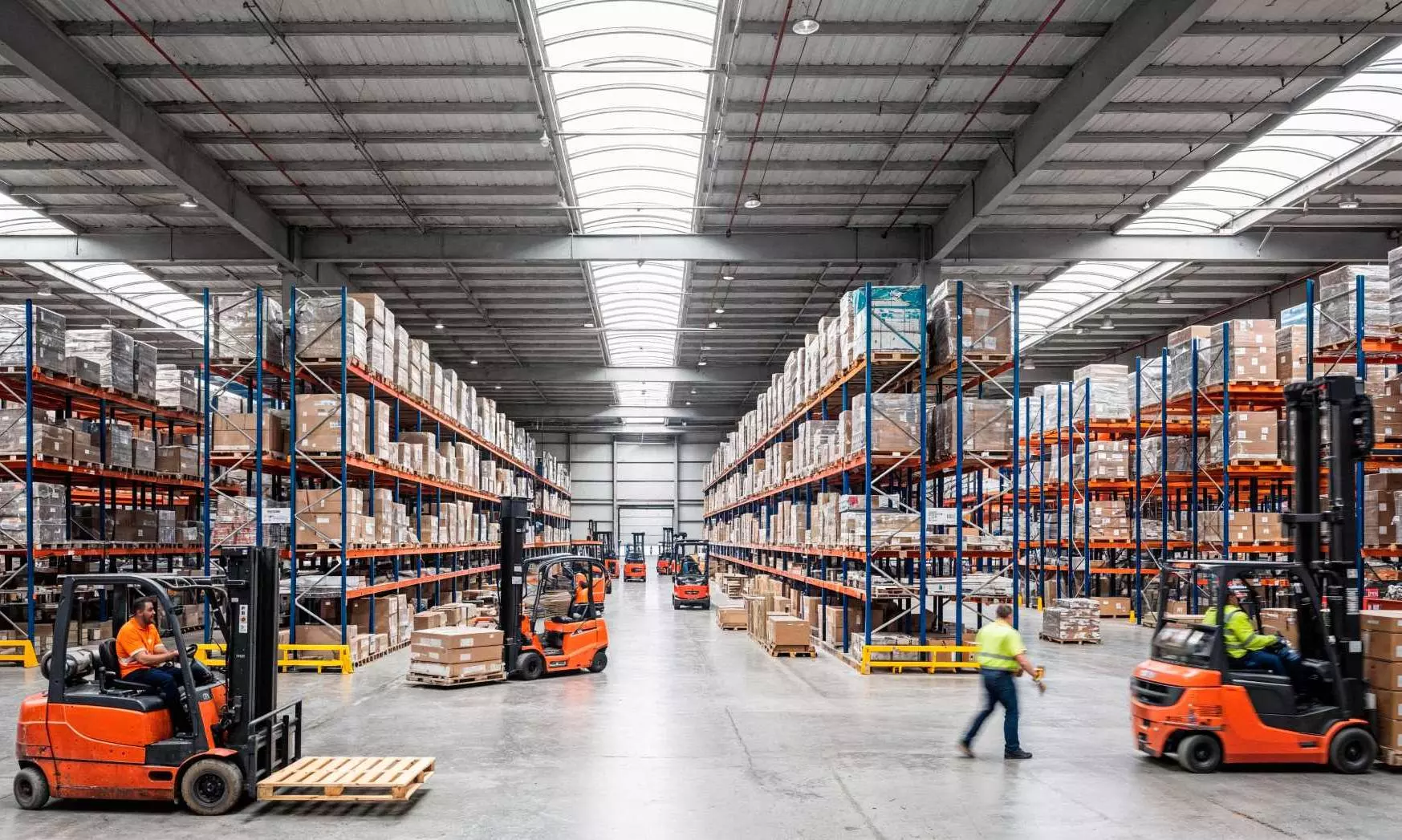
The MOOWR scheme is a trade facilitation initiative administered by the Central Board of Indirect Taxes and Customs (CBIC). Revamped in October 2019 to align with the "Make in India" vision, it allows businesses to operate within customs-bonded warehouses across India. The scheme functions by permitting the import of raw materials and capital goods without upfront payment of customs duties. These duties are deferred until the finished goods are cleared for the domestic market or fully remitted if the goods are exported. Its primary objective is to free up working capital for manufacturers and remove the friction of export obligations, thereby creating a tax-neutral environment for global trade.
The theoretical framework of MOOWR is sound. It is a model that has been widely used abroad. "The objective of the scheme is the same across the globe," says Haresh Calcuttawala, Co-Founder and CEO of Trezix. "But the execution is where the challenge is."
"If you see the mechanism, the purpose, it is the same [as Dubai or Singapore]. The biggest element which is different in India is the trust factor."
Haresh Calcuttawala, Trezix
According to industry experts, the primary deterrent is a deep-seated fear of inviting government oversight into daily operations. For many businesses, the scheme is viewed not as a liberation from duties, but as a gateway to scrutiny. "The moment you do something like this, you are basically giving an open invitation to a customs officer, because they can just stop by anytime," explains Rishi Agarwal, CEO of TeamLease RegTech. "Inspectors are not necessarily welcome in corporates."
This sentiment is echoed by Calcuttawala, who notes that the industry’s mindset has shifted towards operational simplicity. "People want to do more business with less headache," he says. "My core competency is to run a business; my core competency is not to manage the authorities."
The reluctance is also driven by a pervasive "trust deficit" between the trade and the regulators. While the government insists the process is streamlined, the industry remains sceptical. Samir J Shah, Director at JBS Jeena Logistics, observes that even the authorities sometimes undermine their own product. "Directorate General of Foreign Trade (DGFT) officials, when asked by importers how the scheme compares with Advance Authorisation or Export Promotion Capital Goods (EPCG), insist DGFT schemes are better," Shah notes, adding that "Chartered Accountants also advise against the scheme."
Consequently, established alternatives like Advance Authorisation remain the preferred choice. These legacy schemes come with defined timelines; once the export obligation is met, the file is closed. In contrast, MOOWR is perceived as a perpetual engagement with the authorities. "They cannot believe that it is a simple, open-ended scheme," says Shah. "The government wants to trust the assessees, but they are not willing to buy the same."
"The moment you embrace MOOWR, you are basically giving an open invitation to a customs officer. Inspectors are not necessarily welcome in corporations."
Rishi Agarwal, TeamLease RegTech
Beyond the fear of "customs control," there is a fundamental disconnect in how the scheme is positioned within the government machinery. Unlike the PLI scheme, which is championed by the executive leadership and tracked via public dashboards, MOOWR sits quietly within the domain of indirect taxes.
"This scheme sits in the finance ministry. It does not flash on the Department for Promotion of Industry and Internal Trade (DPIIT) radar," argues Agarwal. "You’re not positioning this as a manufacturing incentive or a supply chain strategy."
Agarwal points out that this lack of strategic ownership means the scheme lacks the evangelism seen in other national initiatives. "Where your attention goes, energy flows," he says. "We hear about iPhone exports supported by the PLI scheme, but how often do you hear about this scheme?" The result is a policy that feels unstable to investors. "You keep constantly tinkering with the engine of the plane while it is flying at 40,000 feet," Agarwal adds, referring to frequent policy amendments that disrupt financial modelling.
The economic rationale for the scheme also faces scrutiny when weighed against the operational costs. Calcuttawala breaks down the math: for a company with a ₹500-crore working capital, the duty deferment might save around 50 to 60 lakhs in interest annually. However, the cost of compliance, hiring specialised staff and managing a bonded warehouse eats into those savings. "Hiring a person to manage that headache is doubling the cost," Calcuttawala observes. "Practically, what people are looking at while getting into the scheme is 'what is the hassle going to come with this?'"
"DGFT officials, when asked by Importers how the scheme compares with Advance Authorisation or EPCG, insist DGFT schemes are better."
Samir J Shah, JBS Jeena Logistics
Furthermore, the digital infrastructure supporting MOOWR has not kept pace with India's consumer-tech successes. Agarwal draws a sharp contrast between the ease of UPI payments and the friction of trade portals. "Have you seen any user manual written for Google Pay ever?" he asks. "When you see government systems, they are completely broken. Digital silos. You will have to click 20 times before you can get to the end screen."
Calcuttawala agrees, advocating for a "faceless" digital ecosystem that integrates with existing GST filings to reduce redundancy. "Why make the process so complicated?" he asks. "Just add one component that this particular GST location is operating with MOOWR."
Despite these hurdles, experts like Shah maintain that the red tape is largely a "misconception" and that the scheme holds value for both MSMEs and large corporates if the transition can be managed. To bridge the gap, Shah suggests immediate practical fixes, such as allowing submissions to be made to the local jurisdictional commissioner rather than a central office. "This will save [around] 3 weeks of processing time," he notes.
For MOOWR to succeed, it must bridge the gap between policy intent and ground-level reality. The industry demands a shift from a tax-collection mindset to a trade-facilitation mindset. As Calcuttawala recounts from a conversation with a CEO operating in a Dubai Free Trade Zone: "Government wants us to do more business, not more hassle." Until the Indian scheme can offer that same promise of frictionless operation, the warehouses may remain bonded, but the true potential of the sector will remain unlocked.
This article was originally published in the Indian Transport & Logistics News' Jan-Feb 2026 issue.