
Gulf trade finds a new path as Hormuz loses its grip
Saudi Ports Authority and Gulftainer link Sharjah to Dammam through a corridor that sidesteps the strait entirely.
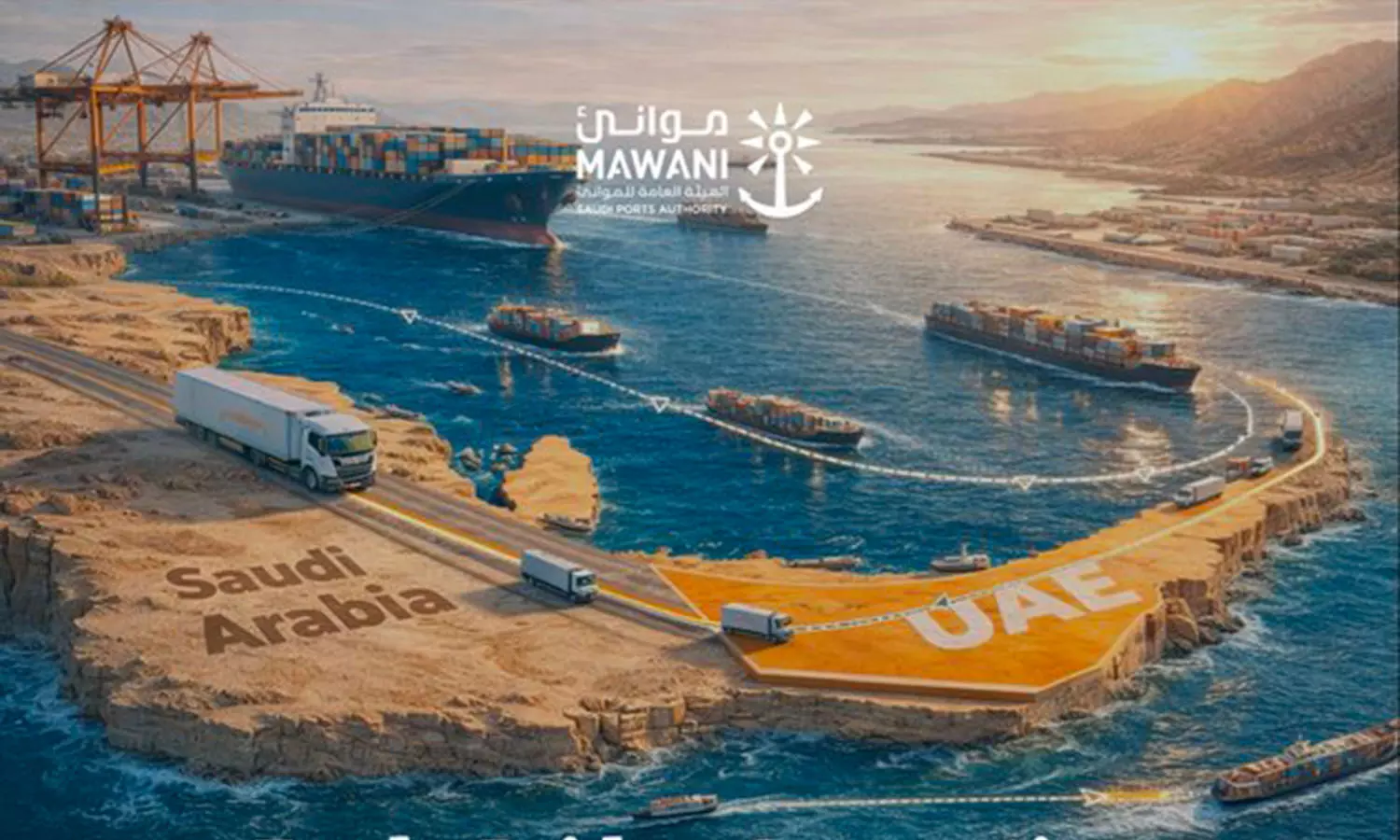
Source: www.mawani.gov.sa


The Strait of Hormuz has long been one of those geographic vulnerabilities that strategists worry about in theory but rarely see tested in practice. That changed in March 2026. With Iran actively attacking vessels transiting the waterway between its coast and Oman, the strait has effectively closed for commercial shipping. What was once a worst-case planning exercise is now the lived reality for Gulf traders, importers, and logistics planners.
The ripple effects are significant. The UAE and Saudi Arabia, the two largest economies in the Middle East, depend heavily on the Hormuz corridor to move energy exports and consumer goods to and from global markets. With the strait no longer a reliable artery, the pressure to find viable alternatives has shifted from theoretical to urgent.
Saudi Ports Authority and Sharjah-based logistics operator Gulftainer have announced a coordinated partnership to establish a direct sea-land corridor linking Sharjah with Dammam on Saudi Arabia's eastern coast. Founded in 1976, the Saudi Ports Authority is the government body responsible for managing, developing, and regulating Saudi Arabia's commercial seaports. It oversees nine major ports, including King Abdulaziz Port in Dammam, the Kingdom's principal gateway on the Arabian Gulf. Under the Vision 2030 framework, Saudi Ports Authority has been modernising steadily, signing privatisation contracts and awarding long-term concessions to operators such as Saudi Global Ports and Red Sea Gateway Terminal. Its mandate to position Saudi Arabia as a global logistics hub makes this corridor initiative a natural extension of that broader strategy.
Gulftainer has managed Khorfakkan Container Terminal since 1986 and recently had its concession extended until 2058. The operator also launched a second bonded dry port at Sajaa in early 2026, a 70-hectare facility positioned between Sharjah and Khorfakkan. That facility, with its warehousing capacity and multimodal road access, now forms a critical node in the new corridor.
Khorfakkan Commercial Terminal sits on the UAE's east coast, on the Gulf of Oman side rather than the Arabian Gulf side. Cargo arriving or departing through Khorfakkan never needs to pass through the Strait of Hormuz. It is a pre-built bypass that has existed for decades, now being formalised into a regional trade framework. Cargo moves through Sajaa Dry Port in Sharjah and then connects via road and sea to Dammam. This tri-modal linkage is designed to maintain cargo flow efficiency and reduce transit time at a moment when every hour of delay carries real economic cost.
The Khorfakkan corridor was not invented in response to the current crisis. What the conflict has done is accelerate the commercial logic for activating and formalising these connections at a regional level.
This initiative reflects a structural shift in how Gulf states are beginning to think about logistics. For decades, the assumption was that Hormuz would always remain open. That assumption has been shattered, creating new urgency around overland corridors, east-coast port capacity, and multi-modal inland connectivity. US President Donald Trump temporarily postponed military strikes on Iran's energy infrastructure following diplomatic talks, which creates a narrow window of calm but does not resolve the underlying tensions. The strait remains effectively closed, and the strategic logic of the Khorfakkan corridor holds regardless of short-term diplomatic developments.
The Dammam and Sharjah corridor has the infrastructure, the operator experience, and the geographic positioning to become one of the region's defining trade arteries, not as a temporary crisis measure, but as a permanent feature of a more resilient Gulf supply chain architecture.