
GMR Airports expands cargo operations and hits record volumes
GMR Airports Limited reports record-breaking cargo volumes for Q2FY27, securing a major FedEx facility in Delhi and a European MoU for Hyderabad.
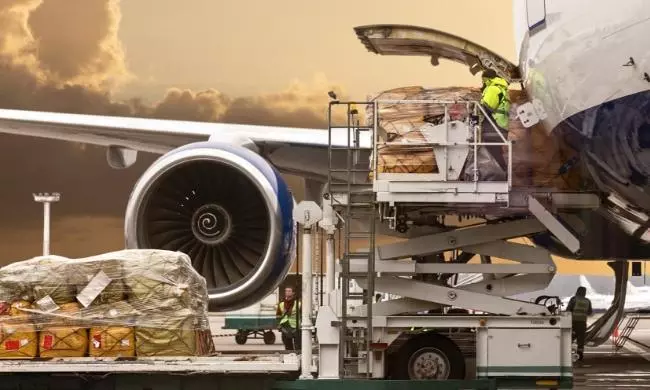


GMR Airports Limited (GAL) has demonstrated exceptional growth and strategic expansion within its air freight and logistics operations during the second quarter and first half of the financial year 2027. The company's dedicated focus on its cargo business platform has yielded record-breaking handling volumes, significant infrastructure expansions, and key international alliances across its portfolio of airports. The company's broader adjacency business strategy identifies cargo as a crucial, perpetual business line that requires less capital intensity while offering high revenue growth potential and economies of scale across both domestic and international markets.
At the forefront of this logistical growth is the Delhi International Airport (DIAL), which successfully handled its highest-ever cargo volumes during both the second quarter and the first half of FY27. Specifically, Delhi Airport recorded a 12% year-on-year increase in overall cargo volumes, successfully processing 0.63 million tonnes during the first half of the financial year. This surge in physical volume translated directly into strong financial performance, with cargo revenues at Delhi Airport increasing by 15% year-on-year to reach ₹2.8 billion in H1FY27. Within the broader financial ecosystem of Delhi Airport, cargo operations now account for a substantial 14% of the total non-aeronautical revenue, which stood at ₹20.1 billion for the half-year period.
To further bolster its cargo infrastructure and service capabilities at Delhi Airport, GMR Cargo and Logistics Ltd. (GCLL) entered into a significant licence agreement with FedEx Express Transportation and Supply Chain Services (India) Pvt. Ltd. This strategic partnership entails the operation of a dedicated express cargo terminal located at Cargo City within the Delhi Airport premises. The groundwork for this expansion was laid earlier when GAL was granted the concession to operate, maintain, and manage the existing cargo terminal at Delhi starting in mid-May 2025, a transition that occurred following the termination of the security clearance of one of the previous cargo operators. Financially, the Delhi Cargo business, operating as part of the GAL Standalone platform, reported a total income of ₹2,368 million for Q2FY27, generating an EBITDA (post-revenue share) of ₹676 million and a Profit Before Tax (PBT) of ₹646 million. For the entire first half of FY27, Delhi Cargo's total income reached an impressive ₹4,707 million, yielding an EBITDA of ₹1,364 million and a PBT of ₹1,319 million.
Parallel to the success in the national capital, Hyderabad Airport (GHIAL) also achieved historic milestones in its air freight operations. The airport handled its highest-ever cargo volumes, processing 52.0 thousand metric tonnes in Q2FY27 and approximately 102 thousand metric tonnes throughout H1FY27. To enhance its international logistics network, Hyderabad Airport signed a Memorandum of Understanding (MoU) with Brussels Airport, a strategic move designed to significantly strengthen air cargo connectivity and open efficient trade lanes between Hyderabad and Europe. The cargo operations at Hyderabad are managed by a 100% owned subsidiary of GHIAL. This dedicated cargo subsidiary reported a total income of ₹830 million for Q2FY27, achieving an EBITDA of ₹321 million and a Profit After Tax (PAT) of ₹194 million. Over the six-month period of H1FY27, the Hyderabad cargo subsidiary accumulated a total income of ₹1,679 million, an EBITDA of ₹708 million, and a PAT of ₹445 million. It is also noteworthy from a regulatory standpoint that while cargo, ground handling, and fuel farm revenues are traditionally treated as aeronautical revenues as per the local Tariff Order, GHIAL recently secured a favourable judgment from the Telecom Disputes Settlement and Appellate Tribunal (TDSAT) to treat these segments as non-aeronautical revenues.
Beyond the established primary hubs of Delhi and Hyderabad, GAL is actively expanding its cargo footprint to newer airports within its growing portfolio. The newly operationalised Vizag (Bhogapuram) Airport, which commenced commercial operations on 17 August 2026, has been designed from the ground up with a dedicated cargo handling capacity of 25,000 metric tonnes annually. Immediately following the commencement of airport operations, Vizag operationalised its non-aeronautical concessions, including its air freight facilities. In its nascent stage during Q2FY27, Bhogapuram Cargo reported a total income of ₹3 million, alongside an EBITDA loss of ₹9 million and a PBT loss of ₹11 million. Similarly, the cargo operations at Mopa (Goa) Airport are gradually scaling up, recording a total income of ₹10 million in Q2FY27 with a corresponding EBITDA loss of ₹13 million and a PBT loss of ₹22 million. Over the first half of the year, Goa's cargo income reached ₹23 million.
The strategic emphasis on cargo across the entire GAL network is supported by resilient long-term historical growth trends. Data indicates a robust Cargo Compound Annual Growth Rate (CAGR) of 4.1% at Hyderabad Airport, 3.0% at Delhi Airport, and 2.8% at Nagpur Airport. By continuing to invest heavily in specialised facilities like the FedEx express terminal and forging high-value international alliances such as the Brussels Airport MoU, GMR Airports Limited is cementing its position as a dominant, long-term force in the regional and global air cargo logistics supply chain. This dedicated focus on the cargo adjacency business allows the platform to ensure higher volumes, better yields, and improved profitability outside the standard regulated aeronautical tariffs, driving sustained value creation for the broader corporate entity.