
Evaluating Cold Chain effectiveness
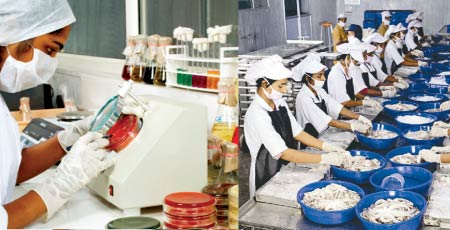


With the growing demand for Indian seafood products across the world, the supply chain dynamics of the seafood export business in India is changing rapidly. This has impelled a need for cold chain infrastructure to meet the tremendous potential that marine exports depict in the near future.
Deeba Kazi
India with a long coast line and abundant fishery resources has emerged as one of the leading seafood suppliers in the world. Lakhs of people from the coastal belt of India source revenue from fishing and allied activities. Driving this growth is improved quality standards and the changing export matrix for India, which has seen growth from export of mostly dry fish/shrimps to neighbouring countries to exports of frozen shrimps to countries like Southeast Asia, USA and Japan. According to the Marine Products Export Development Authority (MPEDA), the nodal agency for promotion of export of marine products from India; during the financial year 2014-15, the Indian fish and seafood industry touched an all-time high with an annual export value of $5.5 billion. Frozen shrimps continued to be the flagship product accounting for 3,57,505 tonnes of exports in the year 2014-15, generating a value of $3.7 billion. The Indian seafood export found its largest market in the United States (26 percent share of the produce) followed by South East Asia (25.7 percent) and the collective members of the European Union (20 percent). Besides shrimp, frozen fish was the second largest commodity, accounting for an 11 percent share in the total export value of fish and seafood products from India. MPEDA envisages export of marine products worth $6.6 billion during the year 2015-16. Leena Nair, chairman of MPEDA, said the increase in exports has been achieved despite problems in the world market like depreciation of Euro, weak economic condition in China and devaluation of Yen. India today has amongst the best seafood processing facilities, with more than 300 out of the 400 processing units having the European Union approval that follow quality control procedures meeting the most stringent of international standards. One such processing facility is Capithan, a leading seafood exporter in Kerala, that follow rigorous quality measures where the seafood has to go through myriad of processes like quality check, sorting, grading, treatments, processing, freezing and glaze hardening, post which the product is packed in cartons and stored in cold stores with a temperature of minus 18 degree Celsius or below until shipment. Capithan exported 350 containers (6000 MT) of Cephalopods and Crustaceans in 2015 amounting to $30 million to destinations like Europe, USA, Middle East & South East Asia. The process does not end there, once the packaging is complete, a sampler from one of the EU approved labs visits the factory and draws consignment samples for the analysis of heavy metal, antibiotic and microbiology. “Only after the results are received and the parameters are within the limit as per the regulations of the importing destination, the shipment is transported in reefer containers under the monitoring of Central Excise to the nearest port in Kochi. After unloading, the containers are stationed at the port where the shipper and the customs keep a check on the temperature which is supposed to be minus 18 degrees Celsius. It takes around 20-30 days for the shipment to reach its destination,” said Alphonse Joseph, managing director, Capithan. Nevertheless, not every journey is as smooth as it is described. “There was this one time when one of our containers was delayed in an Italian port for over a month without our knowledge due to the shipping line’s mistake. The trans–shipment of the container from that port was missed; the container was delayed for ten days on that port which made the port officials carry out procedures relating to health inspections which took one month to complete. By the time the container reached the destination it was too late, the demand for cuttlefish had gone down and the product was sold to the buyer at a much lower rate than the rate which was fixed before. Thus our company suffered a huge loss,” shared Joseph. India’s seafood industry is not without challenges. The global seafood market is a complex system of trade and sustainability issues, especially when it comes to the transport and handling of temperature- sensitive products. “Maintaining the required temperature from the factory to the port of destination is the biggest challenge for seafood exports so that the product reaches the customer in perfect condition,” said Goutam Gupta, traffic manager at Kolkata Port. Kolkata port shipped 109504 tonnes of seafood from 2015-16 (upto 31.01.16) to destinations like Japan, Vietnam, China, Thailand, Gulf Countries, USA, and Europe (Mediterranean ports). Kolkata port provides ‘green channel’ entry to the reefer containers through a dedicated gate to avoid detention. “The challenge of maintaining temperature has been largely addressed by introduction of trailers fitted with gen-sets to provide power in transit in order to maintain the required temperature of the product. Utmost care is taken at the time of handling at the port so that the containers do not get damaged. We have a nominated officer at the Container Terminal who acts as a ‘Customer Support Officer’ exclusively for reefer shippers/reefer container agents for addressing their problems/concerns,” Gupta added. Kolkata port has 144 plug points for power supply to reefer containers at the dedicated reefer yard. Additional 40 points are under implementation and is expected to be commissioned by the end of this financial year. According to a report by YES Bank, the fish industry utilizes only one percent of the cold storage capacity available in the country today. There is a strong need for the cold chain industry to come up with innovative and cost-effective transportation and storage facilities to ensure supply of superior product to the customer.