
Aspera unveils Eureka, autonomous amphibious cargo aircraft
Bengaluru startup Aspera unveils Eureka, a pilotless seaplane targeting 1-tonne payloads and 2,000-km range
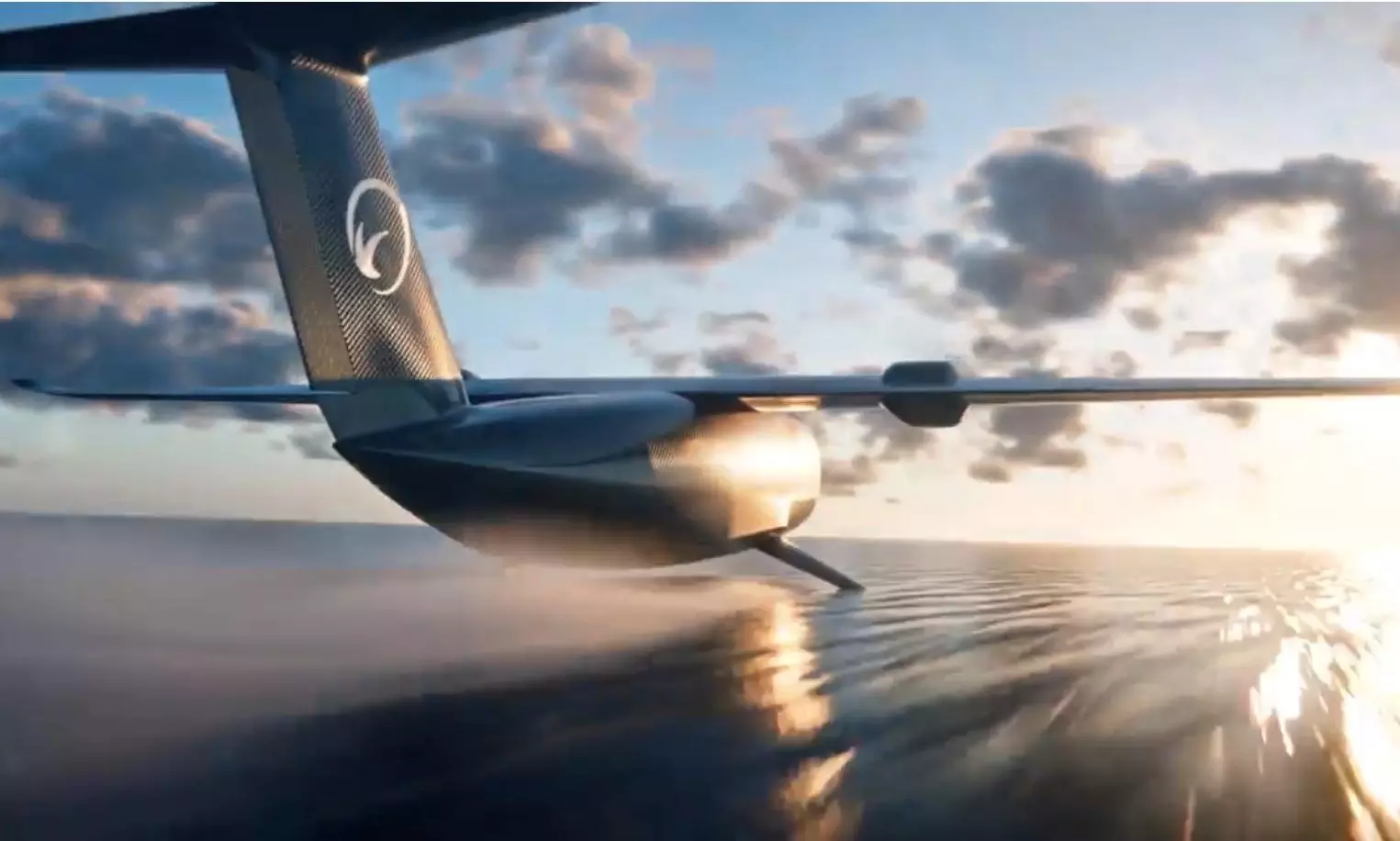


Aspera Industries, a Bengaluru-based deep-tech aerospace startup, has unveiled its first aircraft, Eureka, an autonomous amphibious plane designed to take off and land directly on water. The company's pitch is straightforward: most of the world's cargo still moves by ship because flying it costs roughly twenty times more, and Aspera believes that gap is an engineering problem, not an economic law of nature.
Eureka is a fixed-wing, pilotless aircraft built to take off and land on water using retractable hydrofoils rather than the stepped hull that older seaplanes relied on. That stepped-hull design is precisely why seaplanes fell out of favour after the 1950s: it worked well on water but created too much drag once airborne. Aspera's hydrofoil approach is designed to solve that trade-off. The aircraft is built to autonomously carry a 1,000-kilogramme payload, cruising at around 6,500 feet, with a stated range of 2,000 kilometres.
Aspera founder Khushi Mittal frames the core problem in terms of two numbers: how much of an aircraft's total weight is actual cargo, and how much drag is paid per kilogramme of lift. Aspera says Eureka is engineered to optimise both, targeting freight costs under $1 per tonne-kilometre at launch, falling to under 50 cents at fleet scale.
The reasoning behind this: 150 of the world's 193 countries have a coastline, and most major cities, ports, and factories have historically been built along the water's edge. Water covers 71% of the planet and could, in Aspera's view, double as a usable runway without requiring new airport infrastructure.
While India remains part of the company's long-term roadmap, Aspera says it will initially focus on New Zealand, Australia, and Southeast Asia, targeting logistics providers, freight forwarders, and defence organisations as its first customers. The company plans to build and operate its aircraft in-house rather than only manufacturing them, giving it more control over both the customer experience and the aircraft's cargo-specific design.
Aspera was founded in June 2025 by Khushi Mittal, who dropped out of a physics and computer science degree at the University of Alberta to start the company. The company has so far raised $750,000 in seed funding from Inuka Capital and remains at the prototyping stage, having moved from design through simulation to a working-scale prototype whose water tests have validated its core aerodynamic and hydrodynamic assumptions.
Backing the company as an advisor is Madhavan Nambiar, who previously served as Secretary in India's Ministry of Civil Aviation, giving Aspera a direct line into the regulatory and policy considerations it will face as it looks to move from prototype to commercial certification.
Eureka's announcement places Aspera alongside a small cluster of young Indian aerospace startups betting that autonomy and smarter aircraft design can finally make flight cost-competitive with ground and sea transport. Among them is Airbound, which recently raised $37 million for its own autonomous cargo aircraft. Whether Eureka can deliver on its stated cost targets at scale remains unproven, with the aircraft still in prototyping. But the company’s ambition, as it puts it, is a future where the cost of not flying goods is higher than the cost of flying them.