
What new US customs rules mean for Indian exporters
90 to 180 days to get shipment-ready, two scenarios that decide how hard it hits, and a digital way to stay ahead of it.
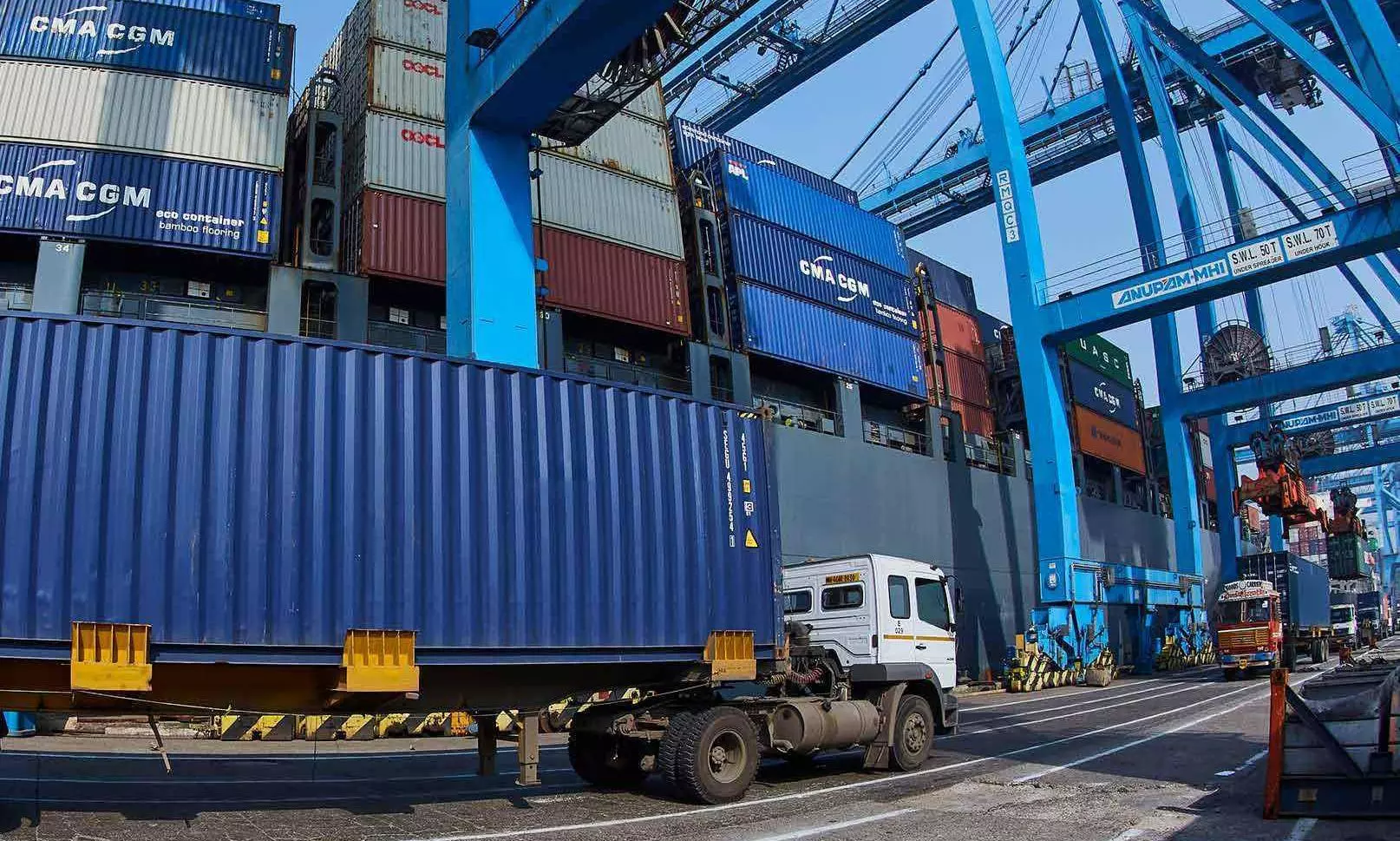


In June 2026, the US government tightened the rules on who is allowed to bring goods into the country and what they must prove before doing so. In August 2026, a related report went further and specifically named India as one of the countries most likely to be used to route goods around higher tariffs, a practice called “transshipment.”
Neither development changes the actual tariff rate Indian goods pay today (18%, down from a 50% peak after the February 2026 interim trade deal). What they change is the paperwork: how much proof is needed, how fast it must be produced, and how far back the US government can reach if something looks wrong: up to a full year.
Compliance has moved from “prove it if asked” to “prove it before you ship, and keep proving it for a year after.” Exporters who can produce clean, fast, retrievable documentation will keep moving. Exporters who can't will face delays, held shipments, lost orders, or retroactive bills.
Two separate but connected developments sit behind this note:
- A new US Executive Order (EO 14411, “Strengthening Customs Enforcement,” signed June 3, 2026) tightened the rules for the “Importer of Record” (IOR): the party legally responsible for a shipment at the US border. Foreign companies acting as IOR face the toughest new requirements: no more simple low-value entry filings, mandatory security certification, higher bonds, and proof of financial standing in the US.
- A separate White House report (August 2026) named India a “Tier 1” country at highest risk of transshipment: goods, often originally made elsewhere (commonly China), routed through a third country with only minimal processing to disguise their true origin and dodge higher tariffs on that origin.
Put simply: one rule change raises the bar for anyone who clears US customs directly. The other raises suspicion on India as a country, regardless of who clears customs, meaning genuine Indian manufacturers now carry a heavier burden of proof, even when they've done nothing wrong.
Two scenarios, explained through the trade process: Not every exporter is affected the same way. The impact depends almost entirely on one question: who is named as the “Importer of Record” when the goods reach the US? Below, we walk through both common situations step by step, the way the shipment actually moves, and show exactly where the new rules insert themselves.
Scenario 1: “I sell FOB / CIF; my US buyer handles customs”
Under FOB (Free on Board) or CIF (Cost, Insurance, Freight) terms, an Indian exporter's responsibility largely ends once the goods are loaded onto the ship (FOB) or reach the destination port (CIF). From there, the US buyer, or their customs broker, takes over, including filing the customs entry and being named the Importer of Record (IOR).
The trade process, step by step
- Buyer places an order and exporter manufactures and ships the goods
- Goods arrive at a US port
- US buyer (or their broker), as Importer of Record (IOR), files an entry with US Customs and Border Protection (CBP), declares value and country of origin, and pays duty
- CBP reviews and clears the shipment
- Goods are released to the buyer
Where it changes now
- The buyer, as IOR, must now prove far more to CBP: financial standing, bonding, ownership details, and (critically) the documentation that was originally filed with Indian customs before the shipment left India.
- Since the buyer cannot produce Indian paperwork on their own, they will lean on the exporter to supply certificates of origin, manufacturing and bill-of-materials records, shipping bills, and similar documents, quickly and in a clear, audit-ready format.
- If the exporter's documentation is slow, incomplete, or scattered across emails and messages, the buyer's shipment can be delayed, held, or even rejected, and buyers now facing personal liability will simply favour exporters who can respond in hours, not days.
In practice
A garment exporter ships a container FOB to a US retailer. The retailer's broker now asks, within 24 hours, for GST and shipping-bill records, fabric-source certificates, and mill invoices to prove the garments were genuinely made in India, not merely finished there. If those records take days to assemble, the shipment sits at the port accruing demurrage, and the buyer's sourcing team starts looking for a backup supplier who won't cause that again.
Severity: Indirect but real. A documentation-speed problem that becomes a commercial risk
Scenario 2: “I ship DDP, or sell direct to the US: I am the Importer of Record”
Under DDP (Delivered Duty Paid) terms, or when selling direct-to-consumer through a website or marketplace, the Indian exporter, or its own US-based entity, is the one responsible for clearing customs. That makes the exporter itself the Importer of Record.
The trade process, step by step
- Order placed: wholesale, a D2C website, or a marketplace like Amazon US
- Exporter ships the goods, often as smaller, individual parcels
- Exporter (or its US entity), as IOR, files the customs entry (for low-value parcels this was often a quick “informal entry”)
- Duty is paid, goods are released, and the parcel is delivered to the end customer
Where it changes now
- Foreign Importers of Record can no longer use the simple, low-value “informal entry” route at all: every shipment now needs a full formal entry, regardless of its value.
- The exporter, as a foreign IOR, must hold CTPAT certification (a recognised US supply-chain security accreditation), or route every shipment through a broker who already holds it.
- Continuous bonds, the standard “one bond covers all my shipments” arrangement, are no longer automatically available to foreign IORs; CBP must approve this individually, or the exporter needs a bond for each shipment.
- Minimum US-based tangible assets or significantly higher bonding amounts are required: real money and infrastructure, not just paperwork.
- If the exporter, or any related entity in its corporate family, has a past compliance issue, the whole import privilege can be put at risk under new “good standing” rules.
In practice
A jewellery brand selling direct to US customers through its own website has shipped small parcels DDP under informal entry for years. That route disappears. Every parcel now needs a formal entry, the brand needs a CTPAT-validated broker (or its own certification), and it must show real financial footing in the US. Without fast action inside the 90–180 day compliance window, the brand's US website effectively stops being able to fulfil orders.
Severity: Direct and structural. Requires real operational and financial change
The hidden layer that touches both scenarios: Transshipment risk
Regardless of which scenario an exporter falls into, there is a second layer of risk that does not care about who signs as Importer of Record: the transshipment crackdown. Because India has been named a Tier 1 “high risk” country, any shipment where the “Indian-made” story is not airtight (genuine, provable, substantial transformation of raw materials or components into a finished product in India) can be pulled aside for extra scrutiny.
Two details make this especially important. First, CBP now has the authority to retroactively claim tariffs on a company's shipments over the previous year, not just the one shipment in question: weak record-keeping today can turn into an expensive bill twelve months from now, for a matter the business thought was long closed. Second, this scrutiny applies to genuine manufacturers too, not only bad actors; the burden of proof has simply gone up for everyone shipping from a flagged country.
Why this is hard to manage the old way?
Across both scenarios, the common thread is the same: the new rules demand documentation that is complete, fast, consistent, and retrievable for a full year back. Most exporters currently manage this through a mix of email, WhatsApp, spreadsheets, and paper files spread across production, quality, logistics, and finance teams. That works fine when nobody asks a hard question. It breaks down exactly when a US buyer or a CBP officer asks a specific question with a tight deadline attached, which is precisely what is now happening far more often.
Digital solution is the way: What it needs to do?
The exporters who come through this transition well will not be the ones who work harder at customs compliance; they will be the ones who make compliance a system instead of a scramble. A digital compliance layer built for this moment needs six capabilities, each mapped directly to a pain point described above.
- Centralized document vault: Every shipment's certificate of origin, manufacturing and bill-of-materials record, shipping bill, and Indian customs filing stored in one searchable place, so a buyer's or broker's document request can be answered in minutes, not days. Directly solves Scenario 1's speed problem.
- Origin & “substantial transformation” verification: A structured checklist and workflow that proves, shipment by shipment, that goods were genuinely transformed in India, turning a vague “we make it here” claim into a defensible paper trail. Directly reduces transshipment exposure in both scenarios.
- IOR / Bonding / CTPAT status tracker: A live dashboard showing whether the exporter's own entity, or its regular US buyers and brokers, are in good standing, CTPAT-validated, and adequately bonded, so gaps are caught before a shipment is booked, not after it is held at port. Directly addresses Scenario 2's structural risk.
- Transshipment risk flag: Automatic pre-shipment scoring of how “clean” a shipment's origin story is, based on component sourcing, so high-risk shipments get extra documentation attached before they ship, rather than after CBP asks.
- One-year audit trail: Every document, timestamped and retrievable for at least twelve months, so a retroactive CBP claim can be answered with evidence instead of a scramble through old inboxes and filing cabinets.
- Compliance calendar & alerts: Tracks the 90- and 180-day regulatory deadlines and any updated CBP guidance, nudging the exporter, or their broker or buyer, before a deadline becomes a crisis.
Why act now
Most EO 14411 provisions phase in within 90 to 180 days of its June 3, 2026 signing, putting full enforcement well within this calendar year. Exporters who wait for a held shipment or a buyer's ultimatum will be organising their documentation under pressure and at a competitive disadvantage to those who are already audit-ready.
Before and after: What changes with a digital compliance layer
Nothing in these changes makes it harder to sell into the US: tariffs on Indian goods are, in fact, lower today than they were a year ago. What has changed is the standard of proof and the speed at which it must be delivered. Exporters who treat documentation as a system (built once, maintained continuously, and instantly retrievable) will experience this mostly as a formality. Exporters who treat it as an afterthought will experience it as a series of expensive surprises, one shipment at a time.