
Making inventory fresh again through milk-run and agile replenishment strategies
As supply chains move away from traditional storage models, integrating milk-run and agile replenishment strategies allows businesses to keep inventory aligned with real-time demand while minimising operational waste.
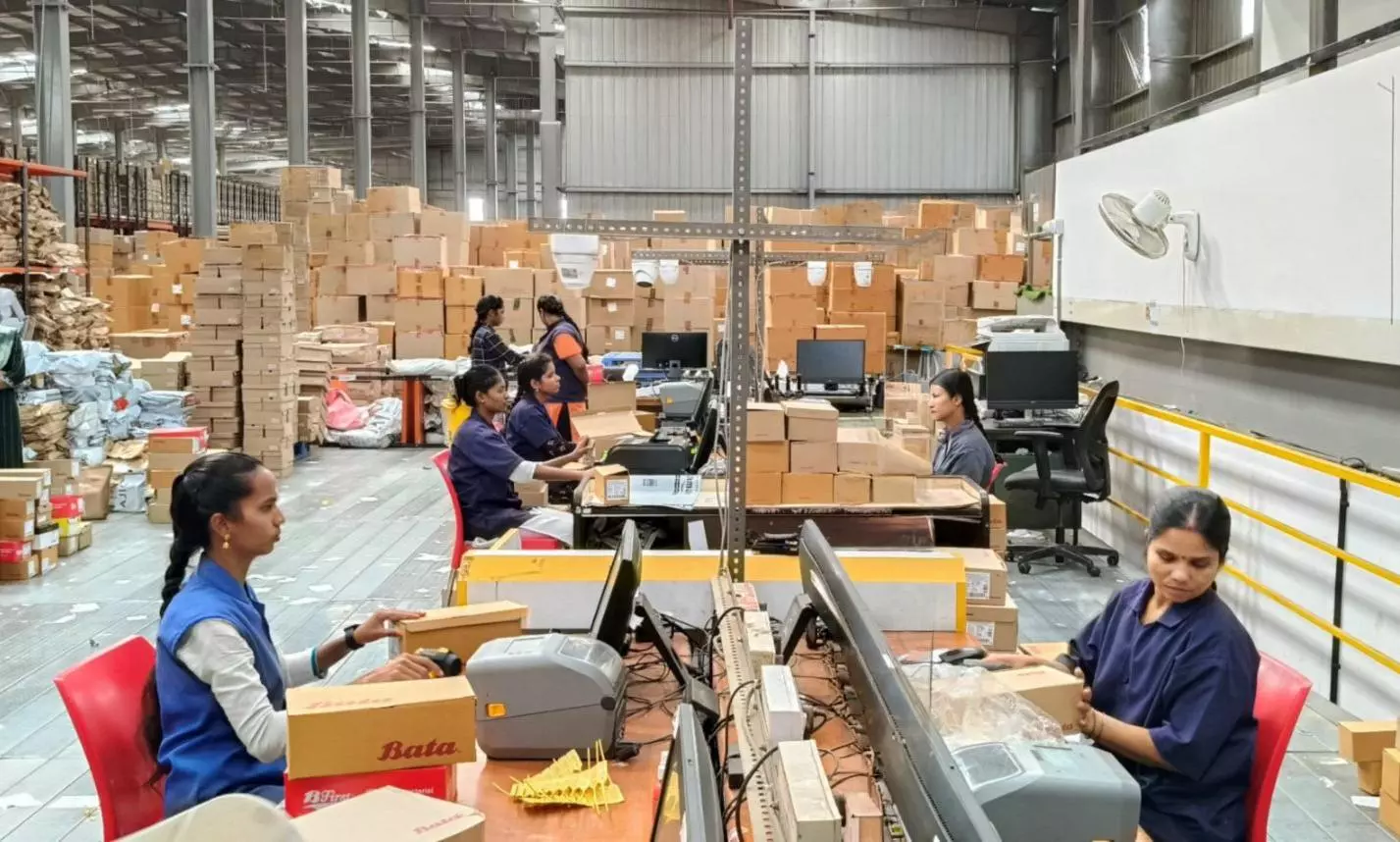


Inventory has long been treated as a sign of preparedness. In many businesses, a fuller warehouse once felt safer than a lean one, because it seemed to protect service, reduce risk and buy time. But supply chains do not run on comfort anymore. They run on precision, speed and the ability to read demand before it has fully formed. In that environment, inventory is no longer valuable simply because it exists. It is valuable only when it is moving in step with the market.
That is why the idea of freshness matters so much today. A stock line that lingers too long in the wrong place is not a cushion. It is a quiet cost. It locks up capital, increases handling, raises the risk of obsolescence and weakens the ability of the business to respond to what customers are actually buying. The supply chains that will matter most in the years ahead will not be the ones that hold the most inventory; they will be the ones that know how to keep inventory alive, relevant and close to demand.
The hidden cost of sitting inventory
The financial case is just as important as the operational one. Inventory is not free simply because it is already paid for. It occupies space, ties up working capital, creates handling costs, and slowly loses value when demand shifts or product lifespans end. That is not just theory. According to recent reports, supply chain visibility remains a weak point and many companies are still relying on inventory buffers, whereas 46% of finance leaders now see working capital optimisation as a major priority. That is why excess inventory is rarely a sign of strength. More often, it is the cost of being late to the market.
Why milk run logistics matters again
This is where the milk run has become relevant again. A milk run is a delivery method in which one vehicle visits multiple suppliers to pick up loads. The idea is simple, but its implications are powerful. In retail and consumer categories, that distinction matters even more because product freshness is often linked to commercial freshness. A size that sits unsold in the wrong store, a colour that is oversupplied in one region, or a seasonal line that reaches the shelf after demand has already shifted, all create the same problem. The inventory may be physically present, but commercially it is already old. Milk run structures help reduce this mismatch by moving smaller quantities more frequently and by making replenishment a recurring rhythm rather than a one-time event. For categories with wide SKU variety, regional demand differences and fast-changing consumer preferences, that rhythm can be more valuable than a large shipment that arrives at the wrong moment.
"The supply chains that will matter most in the years ahead will not be the ones that hold the most inventory; they will be the ones that know how to keep inventory alive, relevant and close to demand."
India’s logistics shift and the need for smarter flow
India makes this conversation especially relevant. According to National Council of Applied Economic Research (NCAER) and DPIIT estimates, logistics costs are about 7.97 per cent of GDP. The figure shows how much value still sits inside logistics design itself. When a country has room to improve the cost and speed of movement, companies that build smarter replenishment networks stand to benefit twice. They reduce avoidable costs inside their own operations, and they also become better aligned with a broader national push toward more efficient movement of goods.
The best supply chains today therefore do not choose between efficiency and agility. They separate the activities that should be stable from the activities that must remain fluid. Procurement may need a structured rhythm. Planning may need tighter review cycles. Transport may need route discipline. Store replenishment, however, must be responsive enough to reflect what customers are actually buying, not what a monthly forecast once predicted. That is why milk run and agile replenishment work well together. One creates the physical cadence; the other creates the decision cadence. One keeps the truck moving in a planned way; the other keeps the inventory relevant.
Leadership beyond technology
This is also where leadership matters. Technology can surface the signals, but only operating discipline turns those signals into action. A supply chain head has to ensure that planning, transportation, warehouse operations and sales teams are looking at the same truth. If transport is judged only on truck utilisation, stock freshness will suffer. If planning is judged only on forecast accuracy, service may suffer. The mature response is to create a replenishment model that is frequent where demand is volatile, buffered where demand is stable, and precise everywhere.
Inventory freshness is ultimately a reflection of how closely a business listens to its market. When inventory moves well, businesses hold less dead stock, reduce unnecessary markdowns and respond faster to shifts in demand without constantly carrying excess buffers. But beyond the operational gains, it sends a larger signal. It shows that the organisation is not reacting to the market from a distance but staying connected to it in real time. That distinction is becoming increasingly important because consumer behaviour is changing faster than traditional supply chain cycles were designed to handle. In such an environment, success will not come from building the largest stock positions. It will come from building supply chains that know when to move, where to move and how much to move before the market moves again.
The views and opinions expressed in this article are those of the author and do not necessarily reflect the views of Indian Transport & Logistics News.