
Trade bodies back brokers on NMIA delays
Industry bodies and forwarders tell ITLN that delays, manpower gaps and rain-exposed cargo at NMIA are recurring, with peak season approaching.
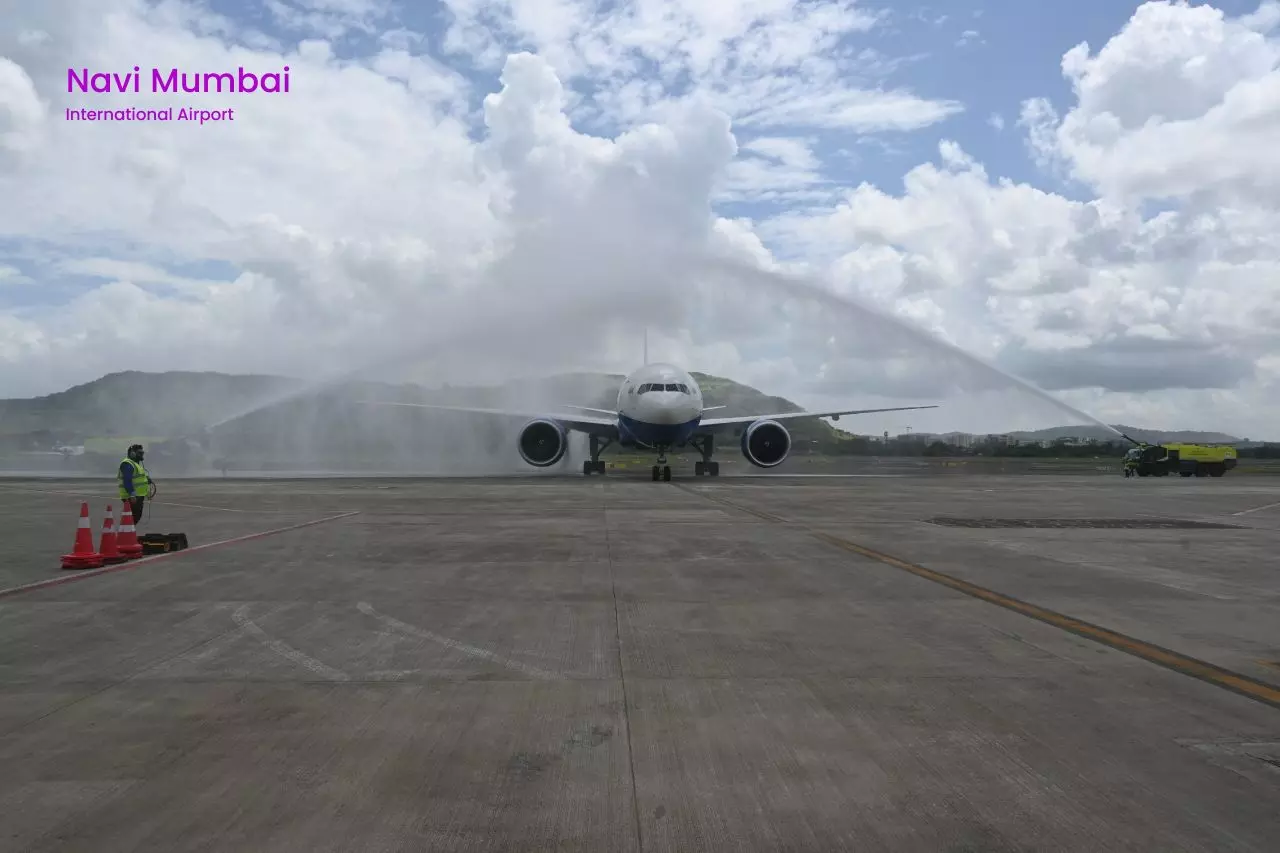
Silk Way West Airlines operated its first B777F freighter flight to NMI on 15 September 2026.


Air cargo industry bodies have said the operational problems at Navi Mumbai International Airport's (NMIA) cargo complex are not isolated incidents. Customs brokers, freight forwarders and industry associations report delays in flight checking, cargo handling and account registration since freighter operations began at the airport in August this year.
ITLN has reported on Challenge Group's decision to suspend its freighter flights to NMIA and on BCBA's letter to Customs flagging flight-checking delays of more than 72 hours. In exclusive responses to ITLN, the Brihanmumbai Customs Brokers' Association (BCBA), the Air Cargo Agents Association of India (ACAAI) and forwarders have now described the scale of the disruption and what they want done.
BCBA: Over half of consignments affected
BCBA first raised its concerns at a 13 September meeting with the Chief Commissioner of Customs and NMIA officials. The meeting covered Provisional Duty (PD) account, segregation, traceability, delivery, infrastructure and communication, and NMIA assured the stakeholders it would resolve the issues. Some were resolved, but many were not, and BCBA wrote formally to Customs on 1 October.
BCBA President Paresh Thakkar told ITLN that the association was not ruling out taking the matter to higher regulatory authorities if conditions did not improve. He said this would require collective action, and called on bodies including the Federation of Indian Export Organisations (FIEO) and the Federation of Indian Chambers of Commerce and Industry (FICCI) to engage as well. Some organisations had already extended support, he said, but he declined to name them, calling it premature.
Thakkar estimated that more than 50% of consignments had been affected by delays, though exact figures were still being compiled. BCBA plans to formally ask NMIA for detailed statistics on PD account openings, segregation volumes and pending deliveries.
He said the most pressing problem was the PD account process, which should have started three months before the airport opened. Some members, he said, had been forced to maintain two PD accounts, one with NMIA and another with a third-party vendor. "Why two accounts should be there?" he asked. He estimated that 200 to 300 accounts remain pending, though he said this was unconfirmed.
Thakkar confirmed that cargo damage was real. "There are confirmed videos and photographs shared by our members," he said, describing water seepage in consignments kept outside Container Freight Stations during rain. No financial loss had been formally reported yet, since damage can usually be confirmed only once cargo reaches its destination, but he said the seepage had certainly caused some damage. Asked who should be held responsible, he said: "They are the custodian, authorised by the Government of India, by the customs, by the departments. So, they are to be blamed and held responsible."
On progress since the 13 September meeting, he said: "There have been some improvements, but not to the extent that we had expected." He considered one month from the meeting a reasonable window for visible progress.
Thakkar declined to comment directly on Challenge Group’s decision to suspend operations, calling it an individual airline’s call. He said, however, that other private airlines could consider similar action if conditions did not improve.
He gave NMIA the benefit of the doubt, describing the problems as teething troubles at a brand-new facility rather than structural failure, and contrasted it with the already well-known poor conditions at Welcome to Chhatrapati Shivaji Maharaj International Airport (CSMIA). "Customs clearance and deliveries have to be seamless," he said. "If India wants to grow, then logistics services, whoever the service provider may be, has to be very much in line, because any disruptions in logistic services lead to cost escalation and delay, and bad names to the country."
Cargo awaiting handling at Navi Mumbai International Airport during Hongkong Air Cargo’s charter flight arrival from Hong Kong.
ACAAI: Clear signal for corrective action
Air Cargo Agents Association of India (ACAAI) Honorary Secretary General Rajen Bhatia said the problems were not confined to one or two isolated incidents. The association was receiving member feedback on delays in flight checking and cargo availability, inadequate trained manpower and handling equipment, difficulty locating cargo, and space and storage constraints, echoing much of what BCBA had documented. He stopped short of saying every shipment or operator was affected, but said the recurring bottlenecks at a facility now handling live international cargo needed to be resolved quickly "before they become entrenched".
On accountability, Bhatia said a transition of this magnitude involved several stakeholders, including the airport operator, Customs, airlines and ground handlers, and he would not attribute every issue to one party. "There has to be clear operational ownership and accountability," he said. "It should not matter where the breakdown occurs, the cargo has to move safely, efficiently and within the required timelines."
He said ACAAI had consistently emphasised that lessons from the existing difficulties at Mumbai's (BOM) Air Cargo Complex (ACC) should be built into the new facility. While authorities were working to stabilise operations, he said, the response "needs to be much faster and more execution-oriented".
ACAAI does not yet have a consolidated financial figure, Bhatia said. The delays, however, were adding to storage costs, vehicle waiting time, re-handling, manpower costs and missed delivery commitments, and were causing cargo to miss onward flight connections. With peak-season volumes rising, he called the situation "extremely urgent". Some shippers were already looking at alternative routings, he noted, though not yet a wholesale diversion.
"When an airline itself suspends cargo operations because it cannot achieve the required operational reliability, it is a clear signal that the situation needs immediate corrective action,” he said.
Bhatia said ACAAI's immediate priorities are to put adequately trained manpower, enough loaders and handling equipment, and proper covered storage in place. The association also wants reliable systems for tracking and locating cargo, faster flight checking, smoother coordination with Customs, clearly defined SOPs and a 24x7 escalation mechanism that responds promptly.
"There can be no compromise on cargo safety," he said, calling reports of export cargo exposed to rain particularly concerning.
Bhatia also recalled ACAAI Western Region’s site visit to NMIA in August 2025, when the facility was still under construction. It appeared well planned at the time, he said, and ACAAI specifically flagged the difficulties already faced at BOM ACC. These included delays that cause cargo to miss flights, and the need for a sterile pharma facility and a scanner for over-dimensional cargo. The issues now being reported could not have been identified during that visit, he said, since the facility was not yet live. But he said the problems now surfacing, in manpower, handling, coordination, cargo visibility and protection, stem from execution under live operations and need urgent correction.
IndiGo CarGo cargo prepared for handling at Navi Mumbai International Airport during its inaugural NMI–Sharjah freighter operation.
Infrastructure lacks automation
Shailesh Sharma, Director at D Wamadeo Logistics Services Private Limited and Honorary Secretary of ACAAI's Western Region, said NMIA's infrastructure lacks the automation the industry now needs. He called for a larger CT-based inspection system, of the kind used at some Chinese airports. Such a system scans an entire cargo unit in 3D without unpacking it, unlike conventional 2D X-ray screening, which can miss items hidden behind overlapping cargo.
A senior executive at a large Mumbai-based freight forwarding firm said the company has been routing import cargo through NMIA for about ten days. Two of its consignments each faced flight-checking delays of around 72 hours, he said. NMIA officials attributed the delays to a manpower shortage linked to the Ganesh Chaturthi festival period and described them as a teething issue.
These accounts add to the pressure on NMIA. They come as Challenge Group has suspended its freighter operations to the airport, saying current conditions cannot support reliable cargo services.