
Panel mulls Air Cargo Community System’s management on PPP model
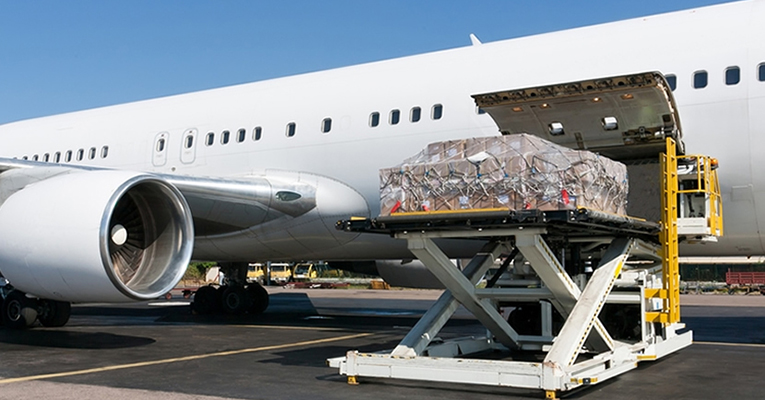


Jan 07, 2017: Air cargo plays a crucial role in the economic development of a country. The leading international cargo terminals are functioning smoothly whereas India is lagging to keep pace with the emerging trends of technology in global air cargo scenario. Lack of efficiency, transparency and consistency across the supply chain results in several pain areas for the different stakeholders in air cargo. To address these issues, a Committee of air cargo stakeholders was constituted under the chairmanship of Dr Renu Singh, Senior Advisor, Ministry of Civil Aviation. The need to create an Air Cargo Community System (ACS) was a key initiative by the National Civil Aviation Policy 2016, to ensure global competitiveness and sustainable growth of the Indian air cargo industry,
In a report by the Committee on ACS, the panel recommended that ACS will be owned by a Special Purpose Vehicle (SPV) formed with 51 per cent stake with the Government. Ministry of Civil Aviation, Ministry of Commerce and Ministry of Finance may jointly hold this ownership. The remaining 49 per cent stakes may be distributed amongst airport operators (AAI/MIAL/DIAL/BIAL/HIAL etc.) The committee
Regarding the ownership and management of ACS, the Committee recommended Public Private Partnership (PPP) model with key consideration. “The SPV shall appoint a competent service provider to setup the system/infrastructure and operational management of the system. Stakes in the SPV can be given in lieu of upfront investments by each party with an agreed cap on shareholding on individual entity in order to have balance in the structure,” the report suggested.
A single window system for uniform interface between all the stake holders of air cargo community using international standards is highly desirable as in the current system the information exchange is many-to-many resulting in complex/duplicate processes. There is lack of uniformity for message interface, lack of data harmonization and lots of paper documents are still printed.
To read the complete report on National Air Cargo Community System click